


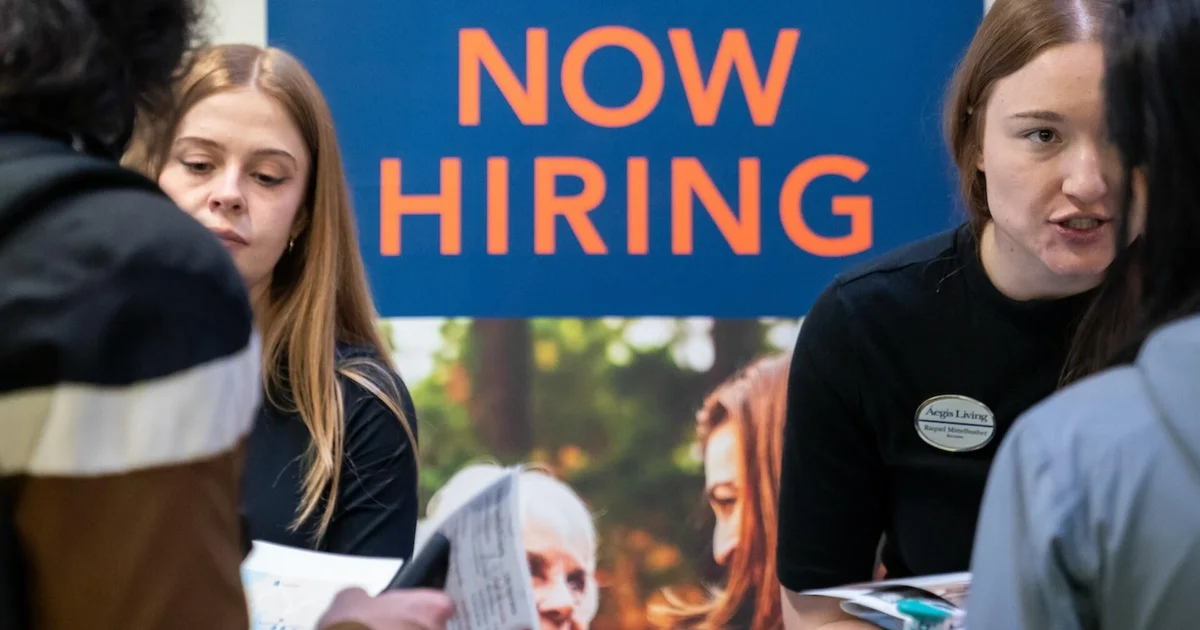
The US added just 29,000 jobs in September, far short of economists’ forecast of 90,000, while the unemployment rate edged up to 4.2% from 4.1% in August.
The weaker-than-expected September jobs report suggests some businesses are delaying recruitment amid higher inflation and surging energy prices. The figures also raise questions about the strength of the labour market after the Federal Reserve’s first interest rate increase since 2023.
Hiring was subdued across much of the economy. Healthcare, which has been a major source of job growth this year, added 17,000 workers, while financial services employment fell by 7,000.
“Only healthcare and construction were hiring, and it was weak,” said Heather Long, chief economist at Navy Federal Credit Union. “Across America, people don’t like this labor market. It’s not hard to see why. There’s still not much hiring going on.”
September jobs report prompts questions over labour market
The Labor Department also revised down its estimates for payroll growth in July and August by a combined 60,000 jobs. The revisions tempered the apparent rebound in August and added to concerns that hiring is gradually losing momentum.
“One month doesn’t make a trend, and monthly payroll numbers can bounce around quite a bit,” said Steve Rick, chief economist at TruStage. “What matters more is whether the three-month trend continues to show a labor market that is gradually cooling rather than falling off a cliff.”
Jerry Templeman, vice-president of economic and fixed income research at Mutual of America, said the 29,000 increase raised “questions about the durability of the labor market” following the Federal Reserve’s rate rise.
Pay growth also remained under pressure. Wages rose by 3% over the year in September, below the 3.4% annual increase in consumer prices recorded in August. The September inflation figures are due to be released on 14 October.
Long said September’s wage growth was the lowest since May 2021 and that inflation had erased wage gains since March. “That’s a real financial squeeze,” she said.
Separate figures from outplacement firm Challenger, Gray & Christmas showed that job cuts through September were down 40% from the same period a year earlier. Layoffs in September fell 20% compared with September 2025, reaching their lowest level in four years.
What the jobs figures mean for US interest rates
The rise in unemployment and softer hiring will be closely watched by the Federal Reserve as it considers its next move on interest rates. The central bank is aiming to bring annual inflation down to 2%, while August’s rate stood at 3.4%, driven in part by higher energy costs.
Ken Mahoney, chief executive of Mahoney Asset Management, said the figures could lead the Federal Reserve to hold off on another rate cut at its October meeting.
“For the Fed, these numbers do not make a case for a rate increase in October,” he said. “A hike would have to come from the inflation data, not from a labor market that produced 29,000 jobs against a 90,000 estimate and then subtracted 60,000 from the prior two months.”
