


Missouri’s congressional map remained caught in a legal tug-of-war on Wednesday after a federal appeals court declined to suspend a ruling requiring the state to use new Republican-backed districts in November.
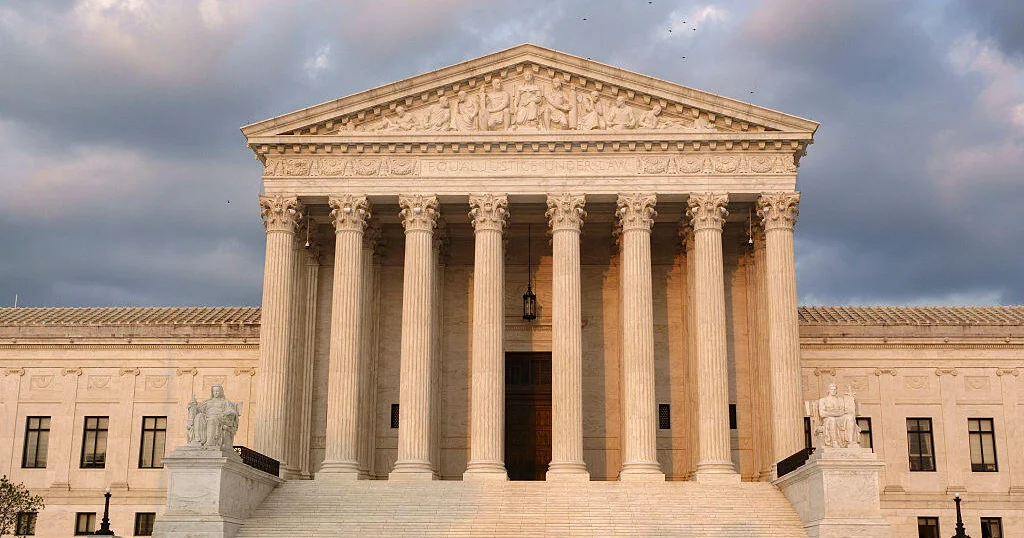
The decision came a day after the US Supreme Court refused to block a Missouri Supreme Court ruling that had ordered officials to revert to an older map. The conflicting judgments have left state election authorities facing uncertainty less than two months before the general election on 3 November.
The US Court of Appeals for the Eighth Circuit rejected an emergency request from People Not Politicians, the group opposing the redistricting plan, to put the federal order on hold. It said the court might not have jurisdiction over the appeal or that the legal test for granting a stay had not been met.
People Not Politicians immediately took its challenge to the Supreme Court. Justice Brett Kavanaugh has asked supporters of the new map to respond by Thursday morning, leaving open the possibility of another intervention from the justices.
The dispute centres on House Bill 1, legislation passed by Missouri lawmakers in September 2025 that redrew the state’s eight congressional districts. The new boundaries were used in the Republican and Democratic primaries on 4 August, but the Missouri Supreme Court ruled last week that they could not be used for the November poll.
Missouri’s highest court said a citizen referendum petition had suspended the legislation and that the new map was therefore not legally in force. Secretary of State Denny Hoskins has since placed the issue on the November ballot as Proposition A.
However, US District Judge Stephen Clark issued a temporary restraining order on Tuesday directing Missouri to use the new map for now. He said changing boundaries after the primary could cause irreparable harm because voters would be asked to choose candidates who had not been nominated in their districts, while candidates would be forced to stand in areas where they had not campaigned.
Clark noted that Missouri’s deadline for finalising the general-election ballot was 5pm on 8 September. He said replacing the map used in the primary could effectively nullify the votes of people whose districts had changed.
The new boundaries are particularly significant in Kansas City, where they would transform the Democratic-held Fifth Congressional District into a Republican-leaning seat. The plan removes parts of the city and extends the district eastwards into more conservative rural areas.
Democratic Representative Emanuel Cleaver was unopposed in his party’s primary. Republican state senator Rick Brattin won his party’s nomination in the reshaped district.
Missouri currently sends six Republicans and two Democrats to the House. Republicans, including President Donald Trump, had backed the redrawing effort as part of a wider attempt to strengthen their narrow majority before the midterm elections.
Republican Attorney General Catherine Hanaway argued before the Supreme Court that switching maps between the primary and general election would violate voters’ federal rights and create administrative chaos. Richard von Glahn, who challenged the new districts, countered that state officials had delayed acting on the referendum petition until the last possible moment.
The legal uncertainty is now expected to continue while the Supreme Court considers the latest appeal. In the meantime, Missouri election officials must prepare for an election in which the boundaries governing the primary may or may not be the same as those used in November.
