


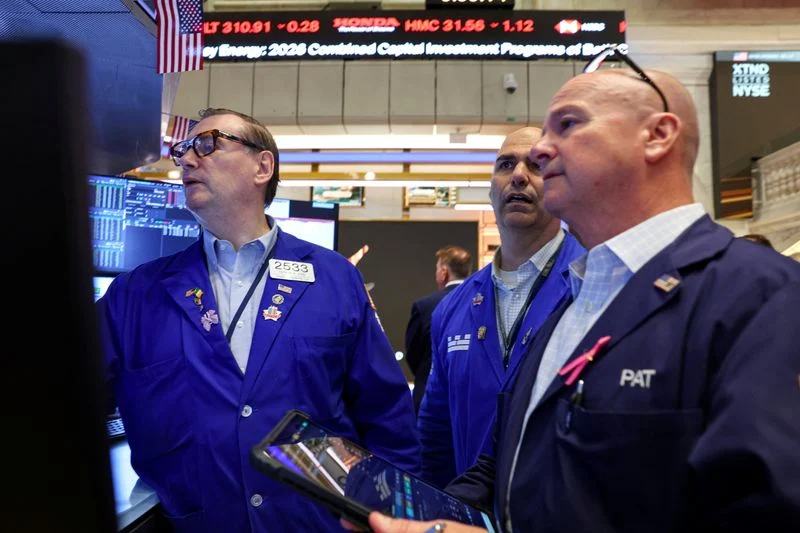
US stock market futures were little changed on Wednesday as Brent crude rose above 100 US dollars a barrel for the first time since July, reviving fears that the escalating Middle East conflict could intensify inflationary pressure and delay interest-rate cuts.
Brent futures were up 2.06 per cent at 99.94 dollars a barrel after briefly breaking through the 100-dollar mark. The benchmark last traded above that level on 24 July.
The rise followed a fresh deterioration in the US-Iran conflict, with attacks on energy facilities and shipping routes raising concerns over the reliability of oil supplies from the region. Disruption around the Strait of Hormuz has already sharply reduced crude flows, while attacks linked to the Iran-backed Houthis have threatened an alternative route through the Red Sea.
At 5.05am Eastern time, Dow Jones futures were down 84 points, or 0.16 per cent. Futures tracking the S&P 500 were flat, while those linked to the Nasdaq 100 edged 0.04 per cent higher.
Technology stocks offered some support in early trading. Qualcomm, Arm Holdings and Nvidia were among the chipmakers rising in pre-market dealings as investors continued to seek shelter in companies associated with artificial intelligence.
But the market remained vulnerable to higher energy costs and interest rates. Traders were pricing in a 60.4 per cent probability of a quarter-point increase when the Federal Reserve meets next week, according to CME FedWatch data.
Investors await US inflation figures
Attention is turning to the latest US inflation readings, with producer price data due on Thursday and the consumer price index scheduled for Friday. The figures will be closely watched for evidence of whether the oil shock is beginning to feed through into broader prices.
Federal Reserve chairman Kevin Warsh has stressed the need to keep inflation under control. In remarks last month, he said the central bank’s preferred inflation measure remained well above its 2 per cent target and that price stability should be its main focus.
Bond markets will also be in focus after the US Treasury said it would at least double the size of its longer-dated bond buyback operations from 9 September, raising the maximum from 2 billion dollars to at least 4 billion dollars per operation. Any movement in government bond yields could affect equities, which tend to come under pressure when borrowing costs rise.
Investors were also weighing concerns about complex financing arrangements between companies at the centre of the artificial intelligence boom. Analysts have warned that, unless the deals produce sustained revenue growth, they could expose markets to a wider network of interconnected risks.
