


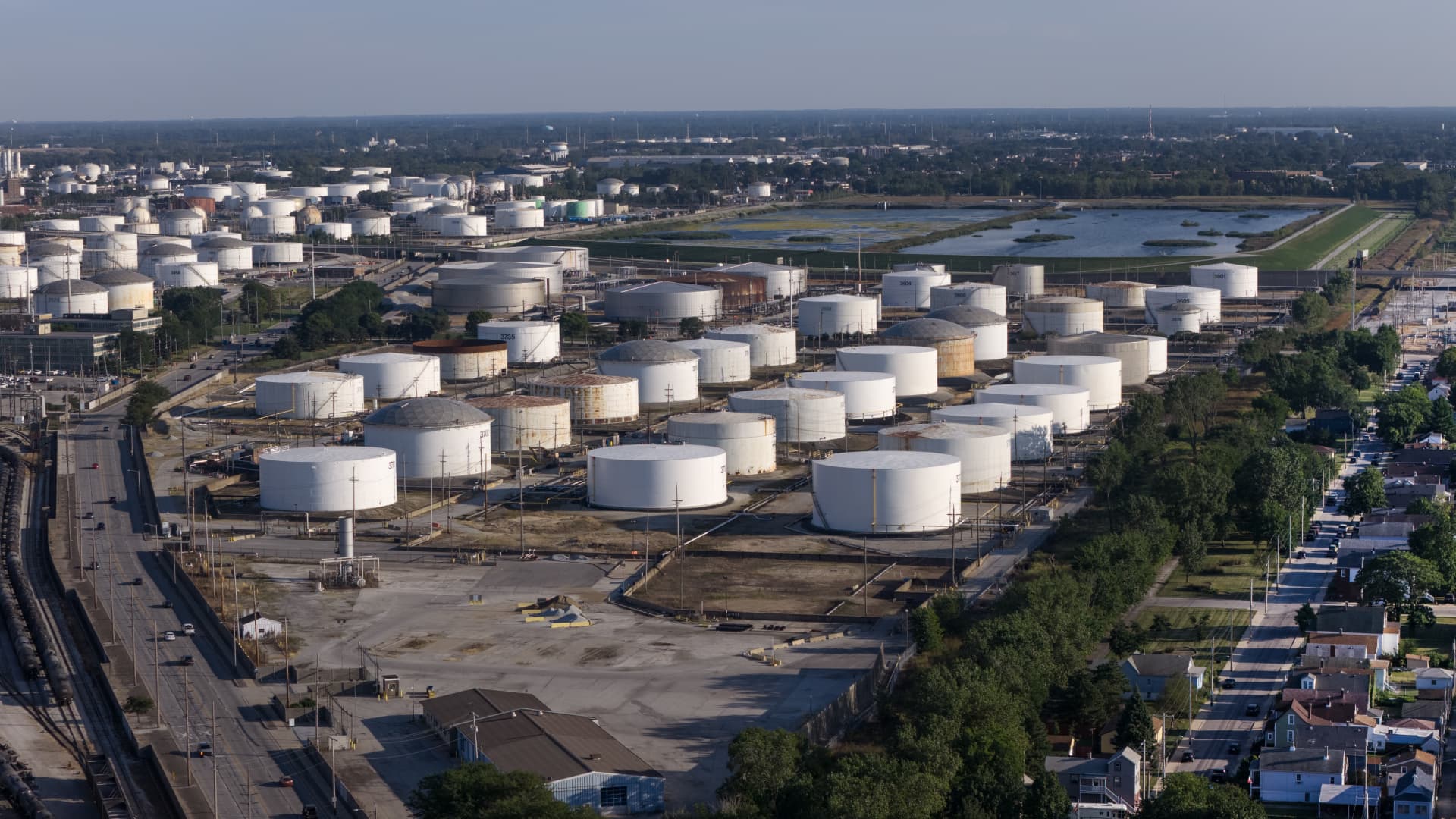
Ultra-wealthy investors and family offices are returning to oil and gas assets as the war involving Iran and the rapid expansion of artificial intelligence sharpen concerns about energy security and demand.
The renewed interest is being felt across mineral rights, producing fields and energy infrastructure, although advisers say rising competition from institutional investors and private-equity firms is making attractive deals increasingly difficult to find.
Oil and gas deal spending reached a two-year high during the first half of 2026, according to Wood Mackenzie. Gas production accounted for much of the increase, with spending exceeding $32 billion — its highest level for more than a decade.
“It’s a seller’s market,” said Jeff Peterson, chief investment officer of single-family office Gillon Capital.
Peterson, who has managed investments for descendants of oil tycoon H. L. Hunt for 14 years, said greater competition was being compounded by sharp movements in commodity prices, making it harder for buyers and sellers to agree terms.
Since the beginning of June, Brent crude has traded between $70.14 and $102 a barrel, a range of about 45 per cent. Prices rose by almost 10 per cent in a single session in July.
Family offices had been able to make opportunistic investments in the years following the Covid pandemic, when many traditional investors reduced their exposure to fossil fuels amid pressure from environmentally conscious shareholders and stakeholders.
That retreat left smaller and less heavily competed-for opportunities available to private investors. But the market has since become more crowded as energy security has moved up the investment agenda and strong demand expectations have drawn capital back into the sector.
Interest grows in energy infrastructure
Andrew Dock, Bank of America’s head of energy wealth management, said investors were increasingly looking beyond direct exposure to oil prices and considering pipelines, export facilities and other infrastructure.
“It’s not a cyclical play. This isn’t a commodity trade anymore. It’s a structural shift,” Dock said.
However, the supply of infrastructure assets available to buy remains limited. Permitting delays, complex construction requirements and the long timescales involved in developing major projects have restricted the number of opportunities reaching the market, Dock said.
Family offices can still find openings in smaller transactions, according to Cody Carper, a partner and co-chair of the oil and gas practice at law firm Baker Botts.
“A family office can dive in and buy a $30 million non-operated asset that’s really kind of undervalued because there’s just not a huge buyer universe that is focused on that band of value,” he said.
Such investments can give buyers exposure to producing wells without requiring them to run drilling operations themselves. The approach also allows smaller investors to target assets that may be overlooked by larger funds seeking transactions worth hundreds of millions or billions of dollars.
Peter Suberlak, director of investments at Tolleson Wealth Management, said clients were generally not trying to profit from short-term movements in oil and gas prices.
Instead, they were looking for protection against inflation and relatively predictable income, often through stakes in mature fields with producing wells. Experienced operators may be able to cut costs or increase output, providing investors with cash flow as well as the possibility of additional gains.
“Generally in the family office space, because you have such a longer investment term horizon, it allows you to have enough time for the real value creation pieces to come out,” Suberlak said.
He said the difficulty of forecasting commodity prices made it sensible for investors to favour assets whose returns did not depend entirely on correctly predicting the next stage of the market cycle.
“It’s so difficult to predict commodity prices and where we are in the cycle, and so it’s prudent to favour these more quality cash-flow investments where the returns don’t necessarily depend completely on getting the macro call exactly right,” he said.
