


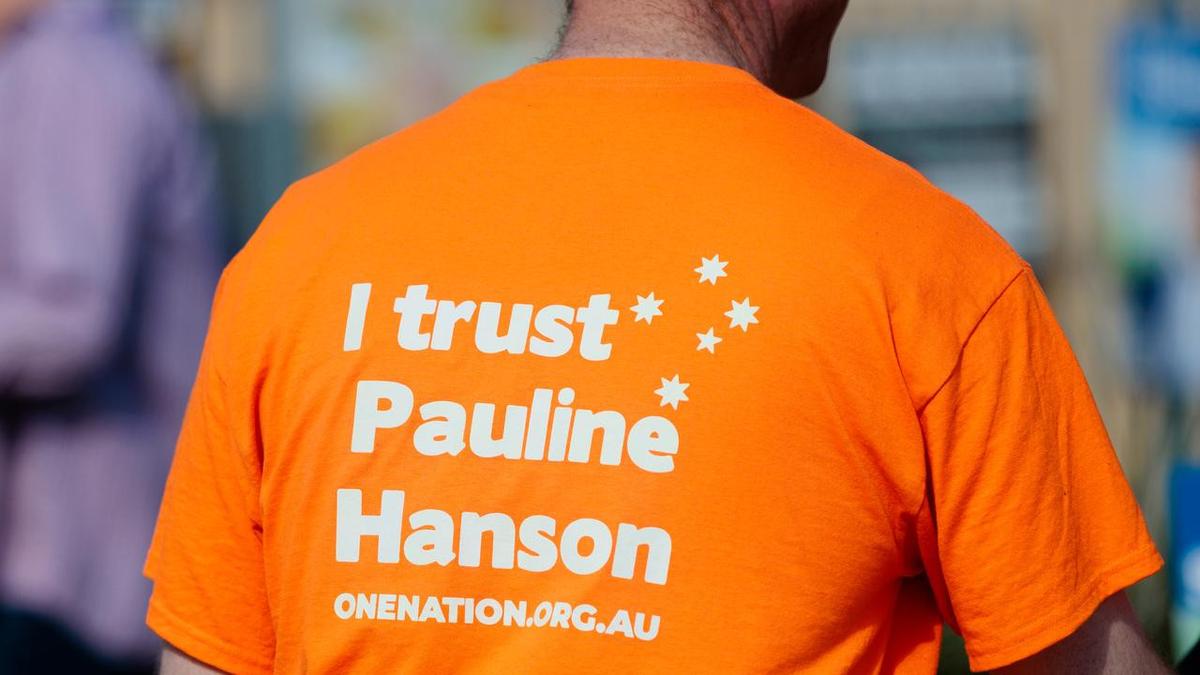
One Nation has emerged as Australia’s most popular party on the primary vote, overtaking Anthony Albanese’s Labor government after a shock by-election victory in Western Australia and a week of confusion over its migration policy.
The latest Newspoll, published by The Australian on Monday, put Pauline Hanson’s party on 30 per cent, narrowly ahead of Labor on 29 per cent. The Coalition remained in third place on 19 per cent, while the Greens slipped to 13 per cent.
The result marks a significant rise for One Nation, which has capitalised on voter frustration with the established parties and concerns about migration, housing and the cost of living.
One Nation MP Barnaby Joyce said supporters were attracted by what he described as a “dry pragmatism” and a desire to disrupt the traditional two-party system.
“They don’t like this idea that you have two people who sort of have a closed shop, a political closed shop, and you can only go to one or the other,” Mr Joyce told the ABC.
The poll followed One Nation’s victory in the Secret Harbour by-election in Perth’s southern suburbs, where Luke Herdegen won the party’s first lower-house seat in Western Australia.
The seat had been regarded as safe Labor territory and was held by former minister Paul Papalia with an 11.5 per cent margin before his resignation. The scale of the swing against Labor has prompted renewed concern among federal MPs about the party’s prospects in outer-suburban seats.
The Coalition also suffered from the result and remains behind One Nation federally. Its leader, Angus Taylor, was the preferred prime minister of just 23 per cent of those surveyed, compared with 46 per cent for Mr Albanese. Ms Hanson recorded 31 per cent.
Mr Albanese used a speech to the Queensland Labor conference on Sunday to warn that “hard right populists” posed a danger and vowed to defeat them.
“They’ll say anything and do anything to win votes,” the Prime Minister said, accusing such parties of spreading division and offering no serious solutions to Australia’s problems.
Ms Hanson responded by accusing the government of adding fuel to an already heated political debate. Her party has faced criticism and booing at anti-migration protests, despite making migration cuts a central part of its political pitch.
That message was weakened during the week when David Farley, One Nation’s newest federal MP, suggested the party’s overall migration intake could be closer to 230,000 a year once skilled and Pacific workers were included.
Ms Hanson subsequently reaffirmed that One Nation’s stated net overseas migration target was 130,000, describing it as less than half the government’s current level. The competing explanations exposed tensions within the party and fuelled speculation that Mr Farley could eventually leave.
Mr Joyce dismissed the reports, saying Mr Farley was capable of defending his views inside the party room.
“David’s got very broad shoulders,” he said. “He’s been in tough corporate environments, and he’s more than capable to hold his own and to express his views within the One Nation Party room.”
Attention will now turn to Victoria, where One Nation is hoping to convert its growing support into multiple seats at the state election in November.
