


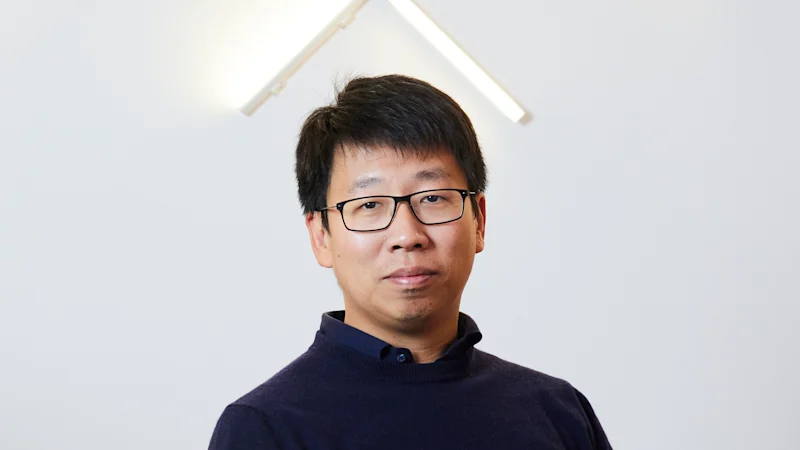
Airwallex chief executive Jack Zhang has become embroiled in an increasingly bitter online dispute over the Australian-founded payments company’s links to China, after a US venture capitalist accused it of being vulnerable to demands from Beijing for access to American users’ data.
Keith Rabois, a Trump-aligned Silicon Valley investor and board member of rival payments start-up Ramp, has repeatedly alleged that Airwallex could be required to assist Chinese Communist Party espionage. Airwallex has rejected the characterisation, while Zhang has described Rabois’s comments on X as “unhinged conspiratorial rants”.
Rabois responded by warning that Zhang would be “pleading the fifth soon”, referring to the constitutional protection against self-incrimination in the United States. Zhang replied with a meme from the television drama Mad Men.
The dispute has intensified scrutiny of Airwallex as it prepares for a major expansion in the US. Founded in a Melbourne cafe 11 years ago, the company is now domiciled in the Cayman Islands and was recently valued at $16 billion, making it Australia’s second-most valuable start-up after Canva.
Airwallex faces scrutiny in the US
Rabois’s concerns have reached Capitol Hill. A Republican-controlled congressional committee warned Treasury Secretary Scott Bessent that Airwallex’s links to China could put sensitive American data at risk.
Republican senator Tom Cotton said in June that, although Airwallex “markets itself as an Australian company, its ties to communist China run deep”.
Zhang has said the criticism reflects prejudice towards his country of birth. In a letter to the congressional committee, he wrote: “I was born in China. I cannot change that fact, nor would I seek to. I am a proud Australian citizen. I arrived in Melbourne as an immigrant at 15 with little English and no safety net, and Australia gave me the education, the opportunity and the freedom to build something.”
There is no suggestion in the material reviewed that Australia’s financial crimes regulator has linked its investigation to China. In January, AUSTRAC ordered an external audit of Airwallex’s anti-money-laundering and counter-terrorism-financing programme at the company’s expense. The inquiry remains under way and put plans for a 2026 Nasdaq listing on hold.
The company has also faced criticism over its workplace culture, which it has portrayed as a consequence of the pressures of rapid growth. Those reports have added to the reputational challenges surrounding a business whose founders, including Zhang, have cultivated an intensely ambitious image.
Airwallex threatened legal action in January against media organisations that did not remove articles based on leaked internal documents, including material concerning its working environment. It also emerged that the company had sought influencers to promote Zhang’s “thought leadership”.
Since then, Airwallex has strengthened its public affairs operation. Former Australian treasurer Josh Frydenberg and former US senator Roy Blunt joined its economic advisory council in May, while senior communications appointments have included executives with backgrounds at Google, Meta, Andreessen Horowitz, the Biden administration, Bloomberg and Politico.
The company has also increased its profile through a partnership with Premier League club Arsenal and an advertisement directed by Spike Lee featuring former Arsenal player Thierry Henry.
According to the material, Airwallex has been moving employees who do not work in China-facing roles out of the country in response to security concerns. Those concerns may have delayed its planned initial public offering until next year, although investors have continued to provide funding and push its valuation higher.
For now, the company’s rapid growth has not ended the dispute over its Chinese connections. Zhang continues to defend Airwallex’s Australian identity as Rabois’s allegations keep the issue in the spotlight.
