


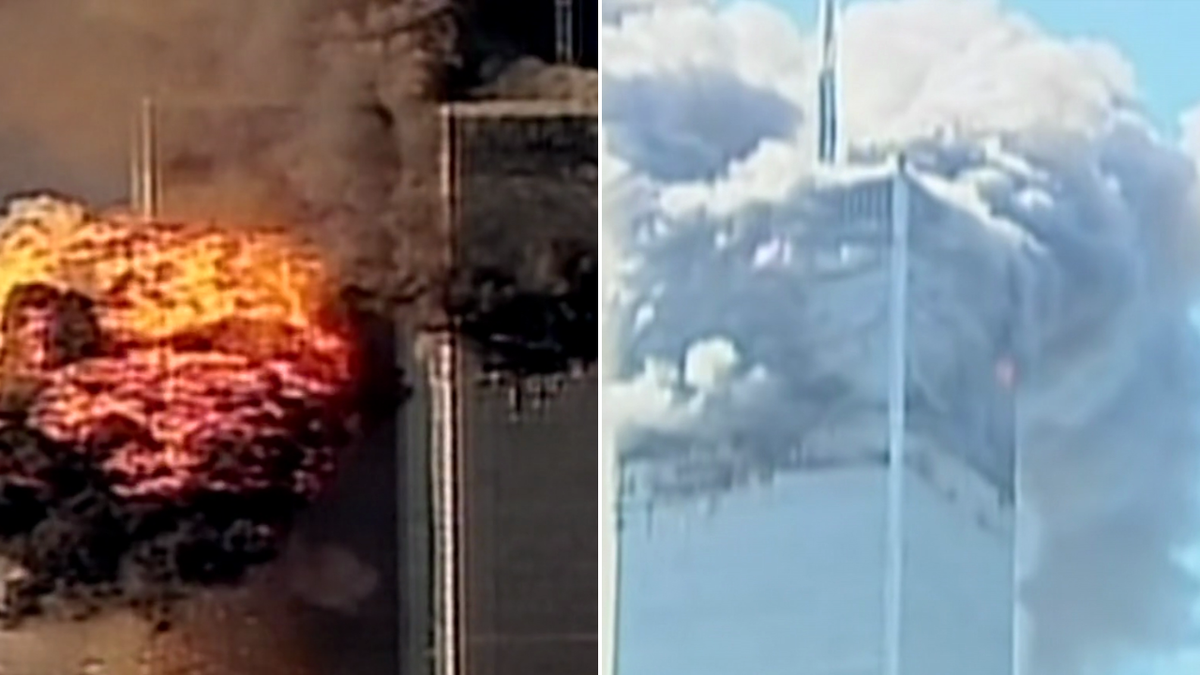
As the United States prepares to mark the 25th anniversary of the September 11 attacks, two Australians whose lives were changed by the atrocity are confronting memories that have never fully faded.
Simon Kennedy will travel from Sydney to the US this week to honour his mother, Yvonne, who was killed aboard American Airlines Flight 77 when it crashed into the Pentagon on 11 September 2001.
Yvonne, 62, had recently retired after 25 years with the Australian Red Cross and was travelling on what her family regarded as a holiday of a lifetime. Her name is among those of 10 Australians killed in the attacks.
“You can’t help but notice that great Yvonne-shaped hole that’s missing in our family,” Mr Kennedy said.
For years, he has marked the anniversary quietly at a memorial plaque in Sydney. This time, he plans to attend the official service at the Pentagon, where relatives and others will gather to remember the victims.
The National September 11 Memorial & Museum in New York is also due to hold its 25th anniversary commemoration on Friday, with victims’ names read aloud by family members.
Australian families still living with the legacy of 9/11
Mr Kennedy said he no longer watched footage of the attacks, but remained haunted by the frantic calls made as his family tried to establish what had happened to his mother.
“The hope goes up and then it’s down again,” he recalled. “Hope’s up and down again. And that is just, it’s hard.”
Eventually, he said, “logic came in and told me it was time to start calling the family”.
He has wrestled with whether forgiveness is possible, or whether the only way forward is to abandon hatred.
“Holding on to hate is like drinking poison and expecting the other person to die,” he said.
Mr Kennedy has previously visited Guantanamo Bay, where men accused of involvement in the attacks were detained. He said the experience of seeing the prison from close quarters became an unexpected part of his recovery.
“I don’t know why I went, and I don’t know what I was looking for or what I thought I would find,” he said. “But it ended up being quite a healing process for me.”
The 9/11 Memorial & Museum recorded another connection to Yvonne’s life last year when her son donated one of her Red Cross uniforms, her hat and her original credentials to its collection.
For Tony Milne, the memories are tied to the restaurant where he worked at the top of the World Trade Centre.
Mr Milne was manager of Windows on the World and had finished his shift just hours before the planes struck. He was initially listed on television as missing and potentially dead.
“We lost 86 [staff],” he said.
He attended two funerals before the scale and nature of the recovery became too distressing. “And then we started burying thumbs and limbs. And then that just became really too difficult,” he said.
Mr Milne later moved to Australia, where he was diagnosed with post-traumatic stress disorder. He said he struggled to carry on after witnessing the consequences of the attack.
His unlikely source of stability became the Sydney Swans and Australian rules football. He has missed only five home matches in 21 years and describes the club as his “lifesaver”.
“It’s 100 per cent helped me because it gives me a focus,” he said. “It’s all one massive family.”
Mr Milne has not returned to the United States in the 25 years since the attacks. Mr Kennedy, meanwhile, will make the journey in the hope that confronting the past can help him continue to live with its consequences.
Both men accept that the grief may never disappear. Almost 3,000 people were killed on September 11, and for survivors and relatives around the world, the effects of that day remain a continuing part of life.
