


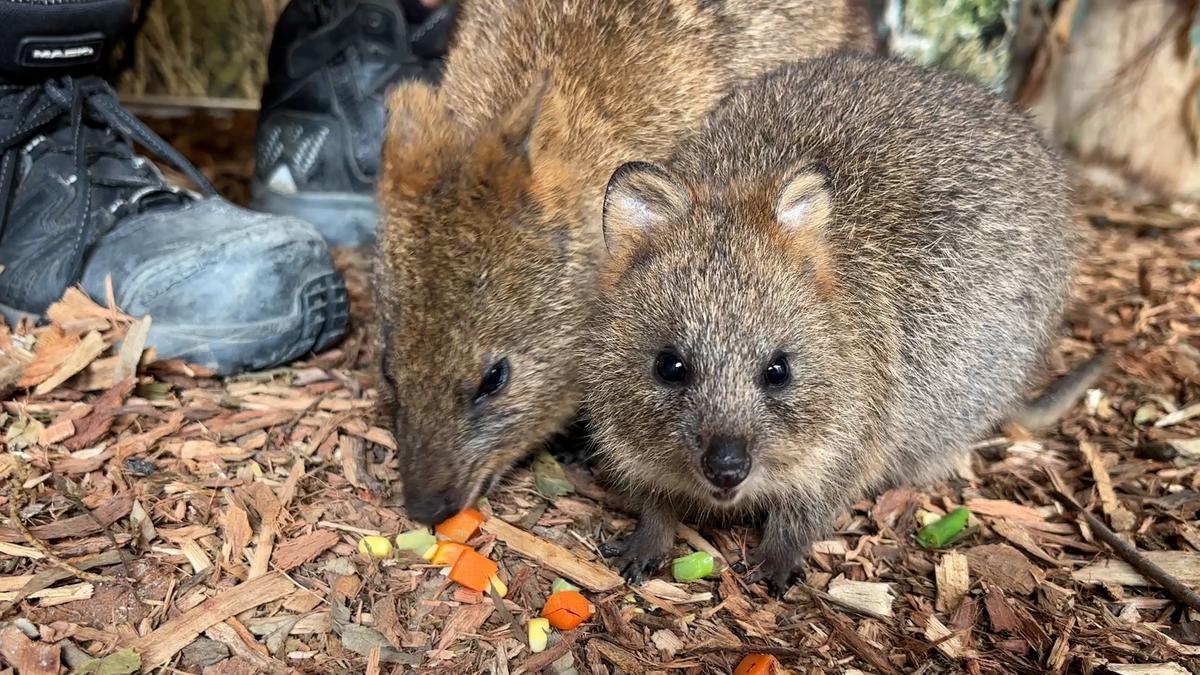
A seven-month-old quokka named Quiche has made her debut outside her mother’s pouch at Sydney Zoo, where she is now voluntarily joining the attraction’s Quokka Encounters.
Quiche first emerged from her mother Quinoa’s pouch at the end of September. She had already become familiar with visitors, regularly poking her head out while Quinoa took part in the encounters.
Kelly Davis, Sydney Zoo’s native animals care manager, said the young quokka had quickly grown in confidence.
“She’s very sweet. She’s very confident … She’s a daddy’s girl. She loves to hang around with Quinton,” Ms Davis said.
Quiche has also shown little hesitation around cameras, approaching and sniffing the lens while her family ate nearby. She is one of five quokkas now living at the zoo.
Sydney Zoo quokka joins family encounters
Like the zoo’s other quokkas, Quiche has the species’ naturally upturned mouth, giving the appearance of a permanent smile.
Ms Davis said quokkas living on islands off Western Australia had no natural predators, which helped explain why they could appear confident around people. Mainland populations are smaller, with foxes and cats among the threats they face.
Quokkas typically weigh between 2.5kg and 5kg, measure 40cm to 54cm in body length and live for about 10 years. Their diet is mainly made up of native grasses, leaves, stems and bark, although corn and sweet potato are among the treats offered during encounters at Sydney Zoo.
The animals are most active around dawn and dusk, when temperatures are cooler, and may sleep through the middle of the day. Visitors are advised that quokkas choose whether to take part in the encounters and remain wild animals capable of defending themselves.
Quiche’s parents, Quinton and Quinoa, arrived in Sydney from a South Australian facility with another female, Queenie. The transfer was arranged to maintain genetic diversity and support compatible relationships within the group.
The quokkas travelled by air-conditioned car, while their habitat is fitted with misting systems and fans for hot weather. Their food is managed by a nutrition manager to ensure they receive the nutrients they need.
Ms Davis said the best times to see the animals were around 9.30am, 11.30am or between 3pm and 4pm, when they were more likely to be active.
The zoo hopes to expand its quokka population and may eventually establish two separate groups.
The quokka’s unusual reproductive ability
Beyond their distinctive appearance, female quokkas have an unusual reproductive system known as embryonic diapause. They can pause the development of an embryo if conditions are not favourable or while caring for another joey.
Ms Davis said the process allowed females to delay development for months, despite an active pregnancy lasting about a month. Mothers can also produce milk suited to joeys at different stages of development.
