


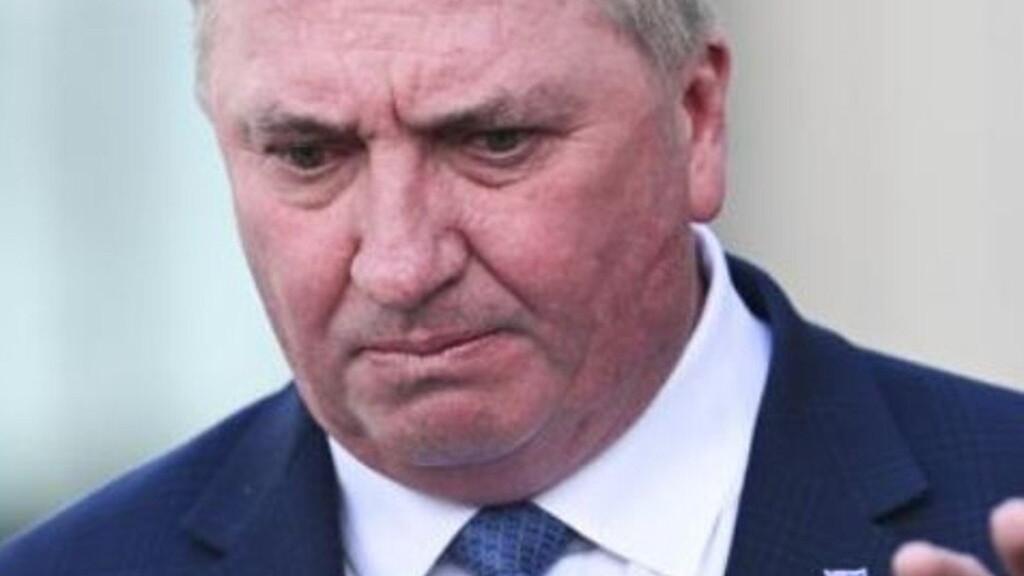
Barnaby Joyce became embroiled in a heated television exchange after he was unable to answer questions about the financial impact of One Nation’s plan to let renters and mortgage holders access part of their superannuation early.
The party’s treasury spokesman was challenged by ABC 7.30 presenter Sarah Ferguson to explain how much Australians could lose from their retirement savings under the proposal.
When pressed to provide figures for workers of different ages and incomes, Mr Joyce objected that he had not been given the examples in advance and said the calculations required detailed financial modelling.
“The Treasury spokesman, not Jesus Christ,” he told Ms Ferguson during the exchange, after she argued that he should understand the policy put forward by his own party.
One Nation’s proposal would allow people who rent or hold a mortgage to redirect 3 per cent of their compulsory 12 per cent superannuation contribution into their take-home pay for up to three years. The party says a full-time worker earning about A$90,500 could receive roughly A$2,300 a year.
Mr Joyce defended the scheme as a way to help households facing immediate cost-of-living pressures, arguing that people should be able to use their own money to keep a roof over their heads.
However, analysis from the Super Members Council suggests a typical 30-year-old worker on that salary who opted in could be about A$25,000 worse off in retirement. The estimate includes around A$6,900 received early but more than A$18,000 in lost investment growth.
Mr Joyce subsequently acknowledged that One Nation had not modelled the effect of its plan on workers’ retirement balances, saying he could return with answers later.
The proposal has also drawn criticism from the Association of Superannuation Funds of Australia, whose chief executive, Mary Delahunty, described it as “economically disastrous” and warned that it could increase inflation while leaving retirees poorer.
Mr Joyce has rejected claims that the plan would fuel price rises, saying the inflationary effect would be “incredibly small”. Economists have argued that putting more money into household budgets while the Reserve Bank is trying to restrain spending could intensify inflationary pressure.
