


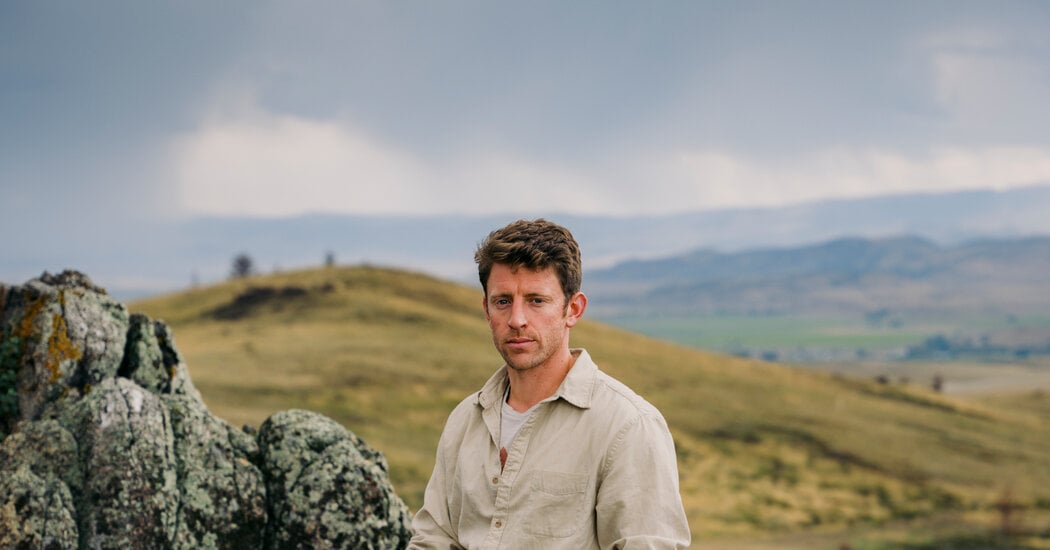
Housing costs have become the defining issue in Montana’s western congressional race, giving Democrat Sam Forstag a chance to turn public anger over the state’s affordability crisis into an unlikely challenge to Republican Aaron Flint.
The contest for the open seat has drawn national attention because it could help determine control of the US House. It is also a test of whether Democrats can regain ground in rural America, after years of losses in places that were once considered politically competitive.
Forstag, a smokejumper, union leader and self-described progressive, is campaigning on the pressures facing workers who can no longer afford to live in the communities they serve. He says he struggled to pay for housing while earning $19 an hour fighting wildfires.
“No one can afford a damn roof over their head,” Forstag said.
The seat became open when Republican congressman Ryan Zinke announced in March that he would not seek re-election. Montana’s official candidate list confirms Flint and Forstag as the leading Republican and Democratic contenders, alongside a Libertarian candidate. ([zinke.house.gov](https://zinke.house.gov/media/press-releases/after-30-years-public-service-congressman-ryan-zinke-mt-01-announces-he-will?utm_source=openai))
Affordability crisis shapes Montana House race
In Ennis, a mountain town south-west of Bozeman, the economic strain is visible on Main Street. A tea shop has closed after its owner was unable to recruit staff who could afford local rents, while another business shut for a weekend because of a labour shortage.
The Burnt Tree brewery has remained open partly because its owners converted cabins and apartments into accommodation for employees. Around Ennis, average house prices have climbed from roughly $400,000 before the Covid pandemic to about $650,000, according to Zillow.
Even those figures appear modest beside prices in nearby Big Sky and the Yellowstone Club, where wealthy buyers have helped turn western Montana into a destination for retirees, remote workers and investors seeking mountain properties.
Forstag has sought to link those changes to a wider crisis in wages, healthcare, food and fuel. At a campaign gathering in Ennis, he told supporters that healthcare costs had risen sharply, rural hospitals were under severe pressure and small-town households were being squeezed by everyday bills.
The Democratic Congressional Campaign Committee has now placed the district on its Red to Blue programme, describing Forstag as a union leader and smokejumper running on lower costs and higher wages. The committee’s decision follows his victory in the Democratic primary, where he secured 26,276 votes, according to the Montana secretary of state. ([dccc.org](https://dccc.org/2026-red-to-blue/?utm_source=openai))
Flint, a conservative radio host and former Zinke congressional staffer, is also making affordability central to his campaign. His slogan, “Make Montana Affordable Again”, echoes Donald Trump’s political brand, while he has portrayed Forstag as a socialist aligned with Bernie Sanders and Alexandria Ocasio-Cortez.
Flint has the backing of prominent Republicans including Trump, Senator Tim Sheehy and Governor Greg Gianforte. Trump endorsed him in May, calling him a decorated combat veteran and a supporter of lower taxes and a lower cost of living. ([democrats.senate.gov](https://www.democrats.senate.gov/newsroom/trump-transcripts/transcript-president-trump-vlog-aaron-flint-endorsement-for-congress-51826?utm_source=openai))
The issue has cut across party lines, but not necessarily in a way that benefits Democrats. Some conservative voters said prices were their biggest concern while blaming Joe Biden for persistent inflation and rejecting the idea of voting for a Democrat. Others worried that Democratic proposals would bring higher taxes.
Kalena Wise, who was clearing out her closed café in Ennis, said affordable housing was needed to keep local businesses alive. But she also said she remained a Trump supporter and was likely to vote Republican.
“Everybody’s cut back their hours, cut back their days,” Wise said, describing the difficulty of finding workers who could afford to live nearby.
Scott Kelley, owner of the Burnt Tree brewery, plans to vote for Forstag but warned that the Democratic label remained a serious obstacle in rural Montana. “Democrats have abandoned rural America for too long,” he said.
The candidates are nevertheless entering the general election with substantial financial support. Federal Election Commission records show that Forstag’s campaign had raised about $1.38 million by the end of June, including more than $1.2 million from individual donors, and held around $550,000 in cash. ([fec.gov](https://www.fec.gov/data/committee/C00932822/?utm_source=openai))
For voters such as Jason Bean, who runs an excavation business in Ennis, the choice may ultimately depend less on party identity than on whether either candidate can ease the cost of living. He said rising fuel prices had pushed his diesel bill to about $600 a day and that even a simple shop for his family had become unaffordable.
“Bring down prices,” Bean said, identifying the one result he wanted from the next member of Congress.
