


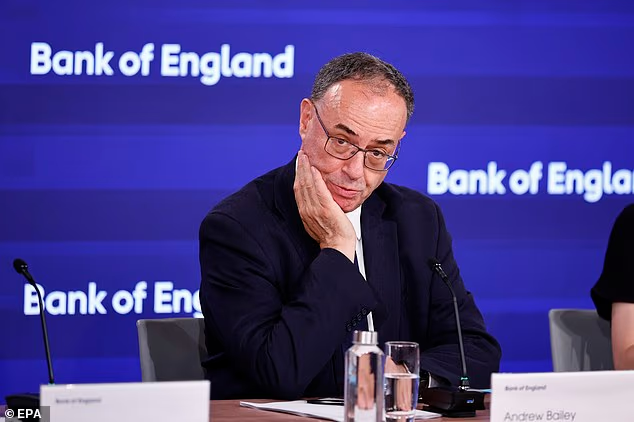
The Bank of England has held interest rates at 3.75 per cent but warned that a prolonged Middle East crisis could force it to raise borrowing costs to bring inflation back under control.
Governor Andrew Bailey said higher global energy prices had so far had a “limited effect on price and wage setting in the UK”. But he cautioned that the longer the volatility continued, the greater the threat to inflation.
“The longer this volatility persists, the bigger the impact it will have on inflation, and the more likely it is we will need to raise Bank Rate to ensure that inflation falls back to our 2 per cent target,” Mr Bailey said.
The decision marked the sixth consecutive meeting at which the Monetary Policy Committee (MPC) has left rates unchanged. Three of its nine members – Huw Pill, Megan Greene and Catherine Mann – voted instead for an increase to 4 per cent.
Financial markets are predicting a possible rate rise at the MPC’s next meeting in November, followed by as many as three further quarter-point increases next year.
Bank of England changes gilt sales plans
In a separate move, the MPC partially suspended quantitative tightening, the process of unwinding the government bond purchases made during the financial crisis and subsequent period of exceptionally low interest rates.
The Bank bought almost £900 billion of government bonds through quantitative easing between 2009 and 2021. It began selling down those holdings in September 2022, but slowed the pace of reduction last year from £100 billion a year to £70 billion.
Of the £488 billion of gilts still held, £120 billion due to mature in 2049 or later will remain on the Bank’s books permanently to support its banknotes. A further £222 billion will be allowed to mature by 2034, while £146 billion will be sold.
The changes amount to around £20 billion of annual sales and £46 billion of overall unwinding. Sales will also be paused until April while the Bank consults on whether gilts can be transferred directly to the Treasury’s Debt Management Office at market prices.
Government borrowing costs fell to their lowest level in a month after the announcement, providing relief for the Treasury.
The decision came as UK inflation rose to 3.1 per cent in August, up from 2.9 per cent and at its highest level for five months. The figure is now further above the Bank’s 2 per cent target.
Services inflation remained at 3.4 per cent, however, suggesting that higher energy costs had not yet triggered broader wage and price pressures across the economy.
That could change when the next Ofgem energy price cap takes effect in October, with bills for a typical dual-fuel household expected to rise by 4 per cent. Economists have warned that inflation could climb further if energy prices continue to increase.
Suren Thiru, chief economist at the ICAEW, said the MPC had chosen “patience over panic”, weighing the inflationary impact of the energy shock against limited evidence of persistent, economy-wide price pressures.
Nigel Green, head of financial advisory firm deVere Group, criticised the Bank’s decision to wait. “Every major central bank at the table is acting except one: the feet-dragging Bank of England,” he said.
Mortgage borrowers are already facing higher costs as lenders raise their own rates, despite the Bank’s decision to hold the base rate. Motorists are also at risk of further increases, with the RAC warning that diesel could exceed £2 a litre in the coming days.
The rate decision comes ahead of next month’s Budget, amid concerns that Chancellor John Healey may raise taxes again. The public finances are also under pressure from higher debt interest costs and the need to fund Andy Burnham’s multi-billion-pound spending commitments.
