


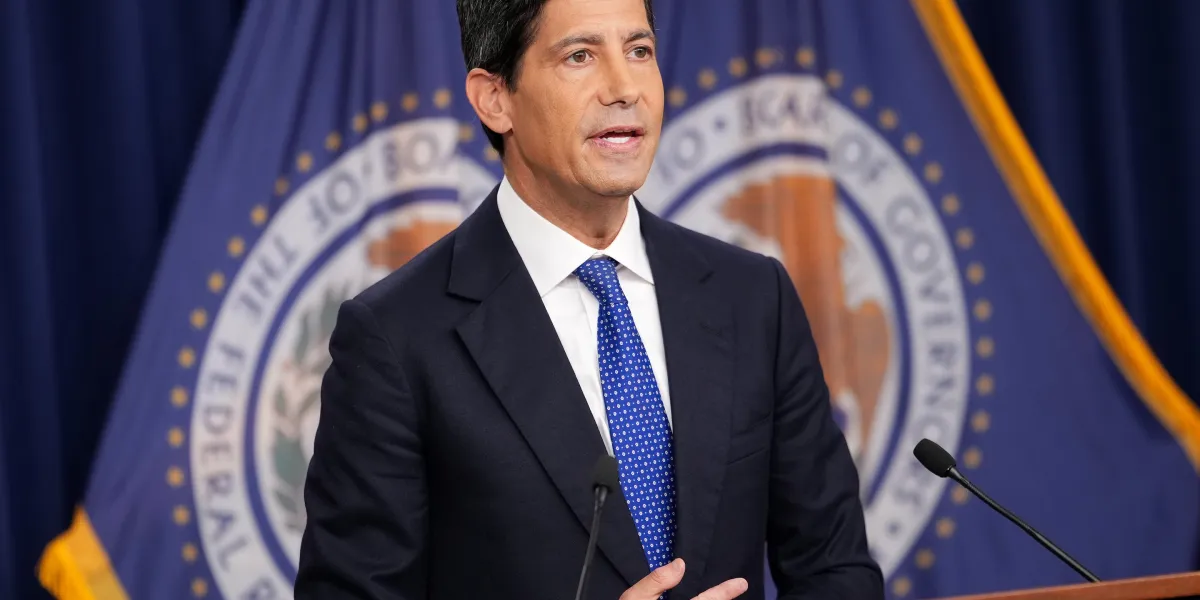
The Federal Reserve has raised its benchmark interest rate by a quarter of a percentage point to a range of 3.75% to 4%, marking its first increase since July 2023 and the first policy move under chairman Kevin Warsh.
The unanimous decision puts Mr Warsh at odds with Donald Trump, who has publicly called for interest rates to be cut. The Fed’s latest projections suggest the increase may not be a one-off, with officials forecasting a median federal funds rate of 4.1% by the end of 2026, up from 3.8% in June.
Markets had largely anticipated the Federal Reserve rate hike, but shares ended lower and Treasury yields moved higher after the announcement. Yields had already been close to multi-year highs amid concerns about the sustainability of US government debt.
Higher borrowing costs for companies
The increase will immediately raise costs for businesses using floating-rate credit lines and term loans. Yiming Ma, an associate professor of finance at Columbia Business School, said companies should prepare for a broader period of tightening rather than treating the move as an isolated event.
“Usually, when the Fed starts to hike their interest rates, it’s the beginning of an entire cycle,” Ms Ma said. Markets are already pricing in at least one further increase, according to the analysis provided to finance chiefs.
Companies have also been advised to test the combined effect of higher borrowing and production costs. Tariffs, an energy shock and increased capital spending linked to artificial intelligence have been identified by officials as inflationary pressures.
Rising energy prices could add to costs for oil-reliant businesses while also increasing the amount of liquidity they need. Ms Ma said firms would benefit from testing “joint scenarios” in which funding becomes more expensive at the same time as input costs rise.
The pressure extends beyond short-term borrowing. Corporate bonds are generally priced against longer-term Treasury yields, and increases in the 10-year and 30-year yields could make new bond issuance and refinancing more costly across a company’s debt maturities.
The rate rise may reassure investors that the Fed is prepared to act firmly against inflation. But it could also reinforce fears that price pressures are becoming entrenched, adding to the upward pressure on yields caused by concerns over US debt.
“It’s just a very nervous time in markets,” Ms Ma said, describing the dollar as being pulled between inflation concerns and worries about debt. For corporate finance chiefs, the decision points to a potentially prolonged period of higher funding costs, compounded by energy pressures and uncertainty over debt sustainability.
