


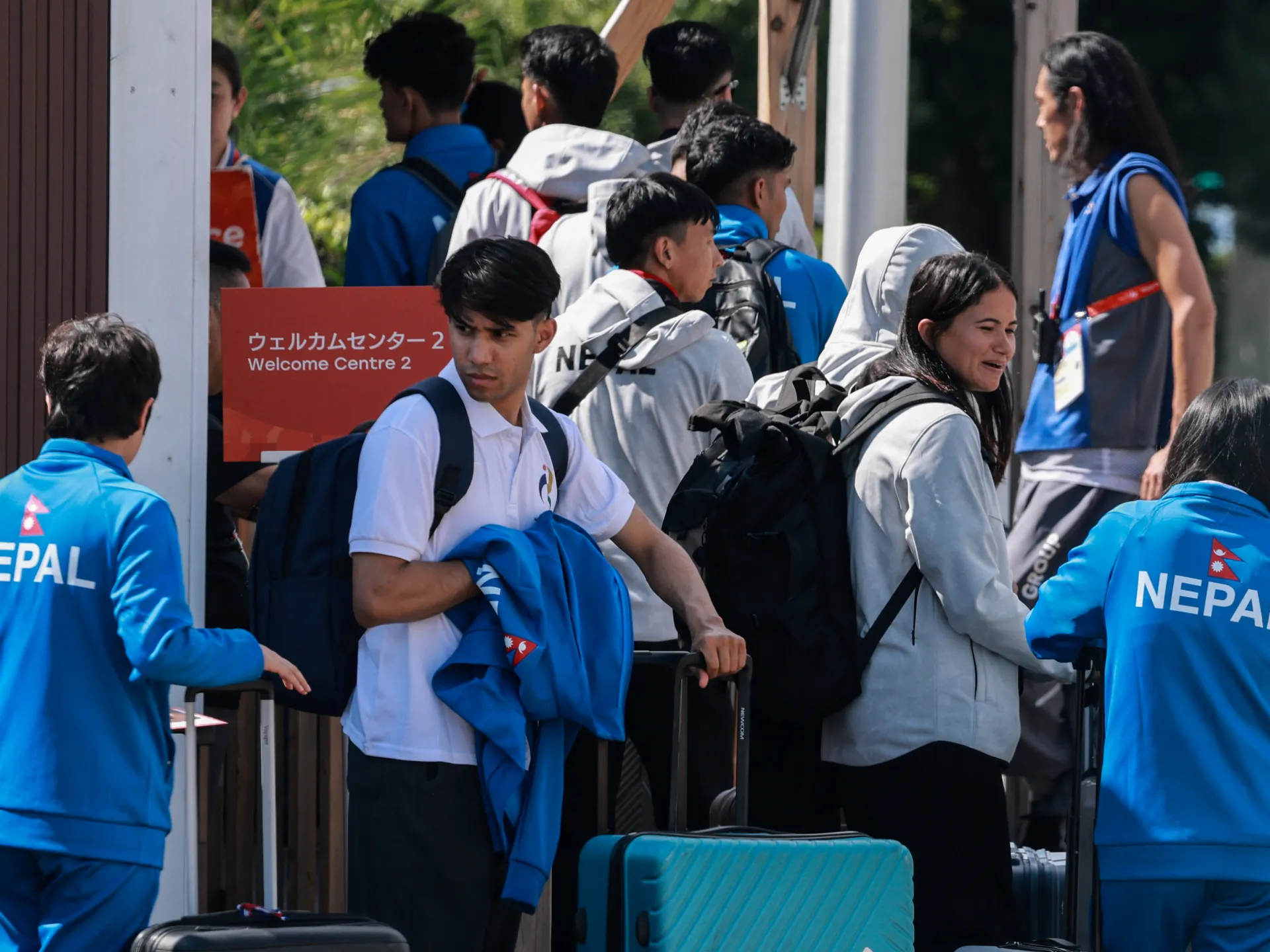
The Asian Games accommodation crisis has left organisers scrambling to resolve complaints from athletes and officials as the Aichi-Nagoya Games prepare to get under way in Japan.
Rather than building a dedicated athletes’ village for about 17,000 competitors and officials, organisers have opted for a mixture of a cruise ship, temporary wooden cabins and hotel rooms in an effort to reduce costs.
The arrangements have drawn criticism in the days before the continental competition, with South Korean officials describing the beds in container-style huts as the “worst-ever”.
Where will Asian Games athletes stay?
The Italian cruise ship Costa Serena arrived in Nagoya on Tuesday and is due to accommodate 4,000 athletes and officials. A further 2,000 will stay in wooden, shipping container-style huts in the dock area of Japan’s biggest port.
Hotels are being used for other participants, while Japan’s Olympic Committee has secured additional rooms as a contingency after anticipating difficulties with the accommodation plans.
Hisashi Mizutori, Japan’s deputy chef de mission, said athletes had begun entry procedures when the cruise ship village opened.
He said some room allocations had placed coaches, team officials and athletes together. In other cases, rooms had been assigned according to numbers alone, creating situations in which men and women were accommodated together or trainers had to share rooms despite needing space for medical equipment.
“While the numbers match on paper, practically it creates challenging situations such as men and women being assigned together, coaches being assigned with athletes, or trainers who need to accommodate a lot of medical equipment being assigned together,” Mizutori told a news conference.
Japanese officials are negotiating changes where possible. If arrangements cannot be resolved, they are considering using the backup hotels prepared for Team Japan.
Complaints over temporary accommodation
South Korea’s basketball team has raised particular concerns about the cabins. Jung Jae-yong, vice-president of the Korea Basketball Association, said players more than two metres tall could not stretch out on the beds.
“Athletes who are over two metres tall cannot even stretch their legs out on the beds. It’s unreasonable,” he said.
Jung also accused organisers of failing to respond to South Korea’s concerns. Basketball player Byeon Jun-hyeong posted a video on social media showing a leaking sink and water covering the floor of his hut, accompanied by the words: “Please help us.”
Abraham Tolentino, president of the Philippine Olympic Committee, said all of his athletes had been given rooms, but some coaches and other officials had been moved to hotels and Airbnb accommodation.
Hideaki Omura, the chief organiser and governor of Aichi prefecture, said organisers were responding to complaints as they emerged and would continue to make improvements.
“If there are different opinions, then we will respond to them appropriately,” he said.
Omura added that a committee of former athletes, including Olympians, had inspected the temporary huts and considered them functional and suitable.
Cricket teams offered hotel rooms
Cricket teams are being offered hotel accommodation under arrangements made between the Asian Games organising committee and the Asian Cricket Council.
Naoki Alex Miyaji, head of Japan’s cricket association, said the two organisations had discussed housing for a long time, while other sports were being placed in more limited facilities such as the cruise ship and container hotels.
The housing issue comes as several competitions, including basketball, football, cricket, hockey and modern pentathlon, have already started ahead of the opening ceremony.
