


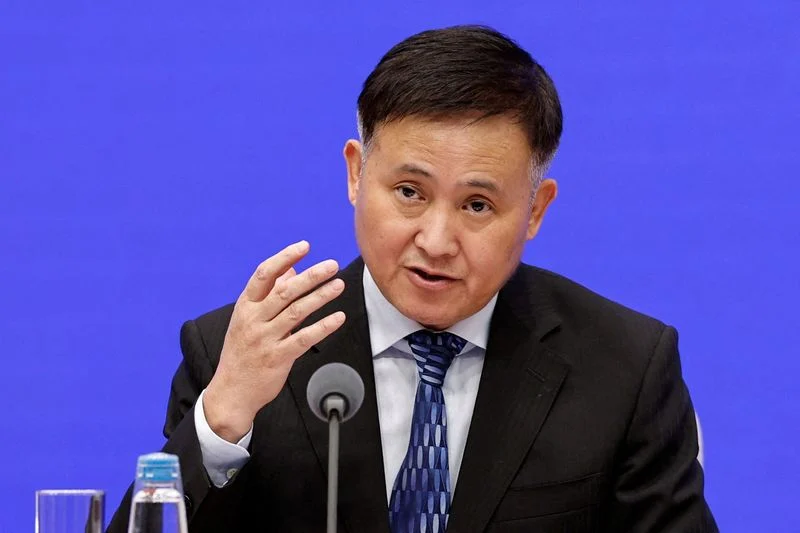
China does not deliberately pursue a trade surplus and will continue to expand domestic demand and open its economy, People’s Bank of China governor Pan Gongsheng has told a meeting of G20 finance ministers and central bank chiefs.
Pan made the remarks during the two-day gathering in Asheville, North Carolina, which concluded on Tuesday. His comments came as Beijing faces growing international criticism over the scale of its exports and the impact on trading partners.
China recorded a trade surplus of almost $1.2 trillion in 2025, according to the central bank statement outlining Pan’s remarks. The figure has unsettled governments and manufacturers abroad, prompting calls for tougher measures to protect domestic industries from rising Chinese imports.
Pan said global trade imbalances should be addressed through structural reforms by all countries. Deficit nations, he argued, should reduce fiscal deficits and increase domestic saving, while surplus economies should encourage stronger consumption and investment.
He attributed the worsening imbalances in recent years to rising trade protectionism, the broadening use of national security arguments in economic policy and an increasingly unpredictable policy environment.
Trade disputes and protectionist measures had harmed the global economy by disrupting supply chains, increasing inflationary pressures and unsettling market expectations, Pan said.
The meeting also exposed divisions within the G20 over how to address trade imbalances. A chair’s statement said participating countries, with China’s exception, agreed that governments should remove “non-market policies” that worsen such disparities.
