


Qualcomm has unveiled its next-generation Adreno Neural Fusion GPU, which will bring dedicated artificial intelligence processing into the graphics pipeline of its forthcoming flagship Snapdragon chipset.
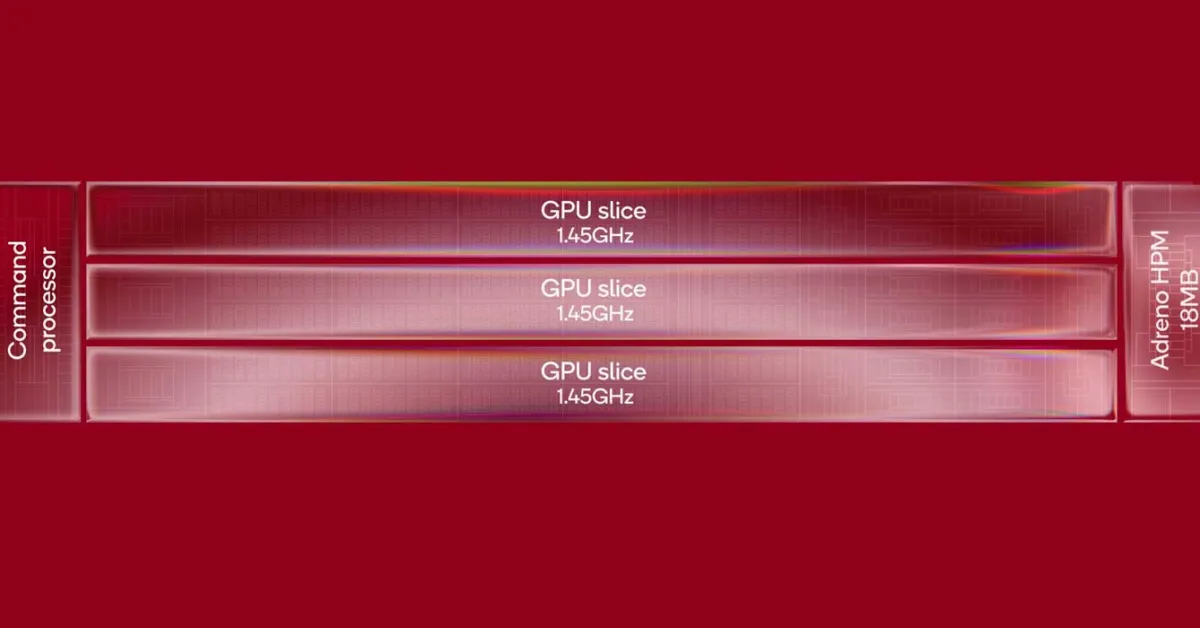
The design introduces dedicated “Matrix Cores” within each of the GPU’s three 1.45GHz slices. Qualcomm says the hardware will allow AI models to run alongside graphics processing, rather than relying solely on separate system components.
The company has also built an 18MB High Performance Memory cache directly into the Adreno GPU. It is intended to keep data such as rendering tiles, frame buffers and compute workloads close to the graphics hardware, reducing the need to move information repeatedly to and from system memory.
Qualcomm says the combination of the Matrix Cores and local memory will deliver a 40% power improvement when the Neural Fusion technology is enabled. The company argues that processing AI nearer to the GPU should reduce latency and improve efficiency, potentially allowing longer gaming sessions on mobile devices.
The technology is designed to support AI-enhanced rendering, including image upscaling and more stable frame rates, while maintaining lower power consumption. Qualcomm’s Neural Fusion software stack has already been integrated into Unity and Unreal Engine, the two widely used game-development platforms.
The announcement follows Qualcomm’s earlier disclosure of the Oryon CPU architecture intended for the same upcoming Snapdragon system-on-chip. Further details, including information about the chip’s neural processing unit, are expected at the company’s Snapdragon Summit in September.
The event is scheduled to take place from September 22 to 24, when Qualcomm is expected to provide a fuller account of how the new Adreno GPU, CPU and other processing components will work together.
