


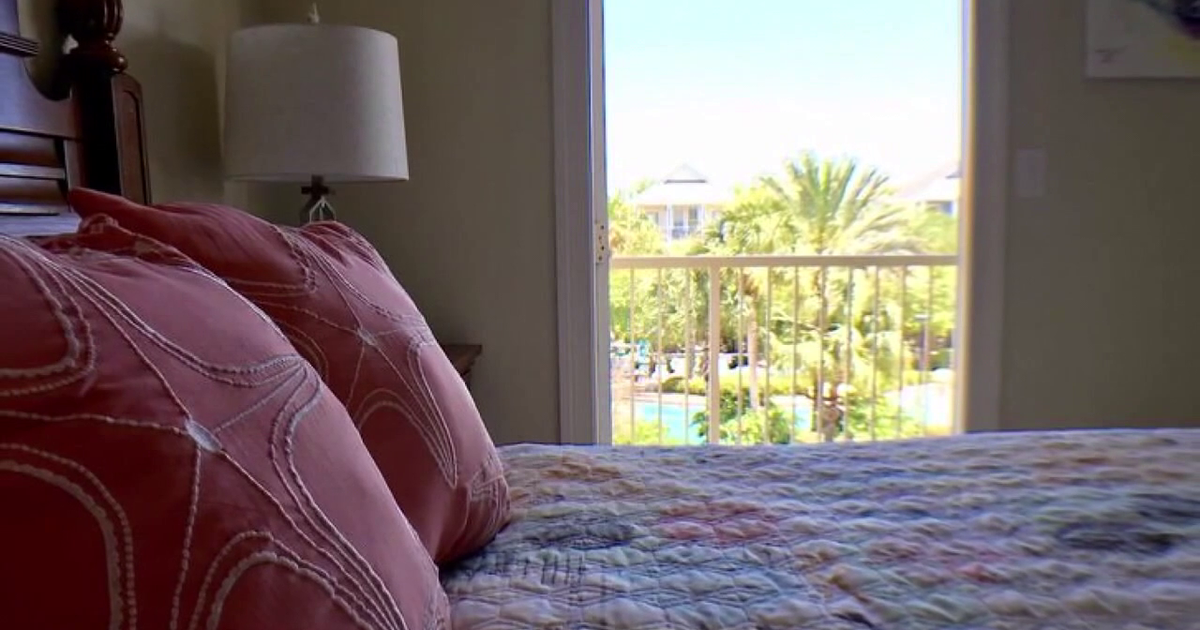
Manatee County commissioners are weighing a new short-term rental programme that could require thousands of holiday-let properties to register, undergo inspections and meet occupancy and safety standards — but county staff estimate the first year of enforcement could cost about $1.5 million.
The issue is due to be discussed at a commission work session in Bradenton on Wednesday, 2 September 2026. No ordinance is being voted on at the meeting, which is intended to help commissioners decide how the county should proceed. ([mymanatee.org](https://www.mymanatee.org/connect/meetings-and-events/event-detail/2026/09/02/county-calendar/board-of-county-commissioners-work-session-2026-Sep-02?utm_source=openai))
Officials are considering two broad options. One would strengthen existing rules covering noise, rubbish, parking and lighting. The other would establish a dedicated short-term rental programme for properties in unincorporated Manatee County.
That programme could include compulsory registration, inspections, limits on the number of occupants, proof of state licensing and tax registration, a named person responsible for each property and penalties for breaches.
Short-term rental rules could require 11 new posts
Preliminary county estimates are based on roughly 3,000 holiday rentals. They suggest 11 positions could be needed during the first year, at a cost of about $1.5 million, while specialist software could add a further $237,000 annually.
Processing the initial applications could take between 50 and 75 weeks. Staff are also considering a $450 registration fee and a $150 inspection charge, bringing the proposed upfront cost to about $600 per property.
The figures are planning estimates rather than an approved budget. Commissioners have been warned that introducing a new system would place a significant strain on staff and enforcement resources.
Commissioner Amanda Ballard said at a June meeting: “I am concerned about potential cost and staff’s ability to actually enforce it without additional staffing. It’ll be a heavy lift.”
The debate follows months of complaints from residents who say some large holiday rentals have brought persistent noise, overflowing bins, parking problems and groups of visitors into residential neighbourhoods.
In the Pine Meadow community, the homeowners’ association says more than a quarter of its approximately 100 properties are now used as short-term rentals. It says most are managed responsibly, but five homes advertised for between 13 and 20 guests account for most of the recurring complaints.
Residents have also argued that existing enforcement is poorly suited to disturbances that occur at night or during weekends. One resident told commissioners that the current rules were “not working”, claiming complaints effectively begin again whenever a new group of guests arrives.
Owners warn against wider bureaucracy
Rental owners and property managers have urged the county to target problem properties instead of imposing new requirements on every operator.
John McNaught, a local holiday-rental owner, told commissioners that responsible landlords should not be penalised for the actions of a smaller number of businesses.
“Good government should target bad behavior, not create bureaucracy for thousands of responsible citizens who already follow the rules,” he said.
The question has been under review for more than a year. Commissioners first instructed staff to prepare an ordinance in January 2025, but a motion to proceed failed on a tied 3-3 vote in May that year.
The issue returned to the agenda in June 2026, when commissioners voted unanimously to ask staff to revisit the proposal and prepare an enforceable version.
Florida law limits the county’s options. Manatee cannot simply prohibit short-term rentals, restrict how often a property may be rented or impose a countywide limit on the number of such homes. Officials are instead focusing on matters including occupancy, life-safety inspections, parking, rubbish, noise and enforcement.
State law does, however, allow local governments to require registration and charge reasonable fees for registration and specified inspections, within the limits set by legislation. ([flsenate.gov](https://www.flsenate.gov/PublishedContent/Session/2024/BillSummary/CombinedPDF/2024SessionSummary.pdf?utm_source=openai))
Following Wednesday’s work session, county staff are expected to draft or revise the relevant ordinances in line with commissioners’ instructions. Any proposal would then return to the board for further consideration, public input and three public hearings before a final decision.
