


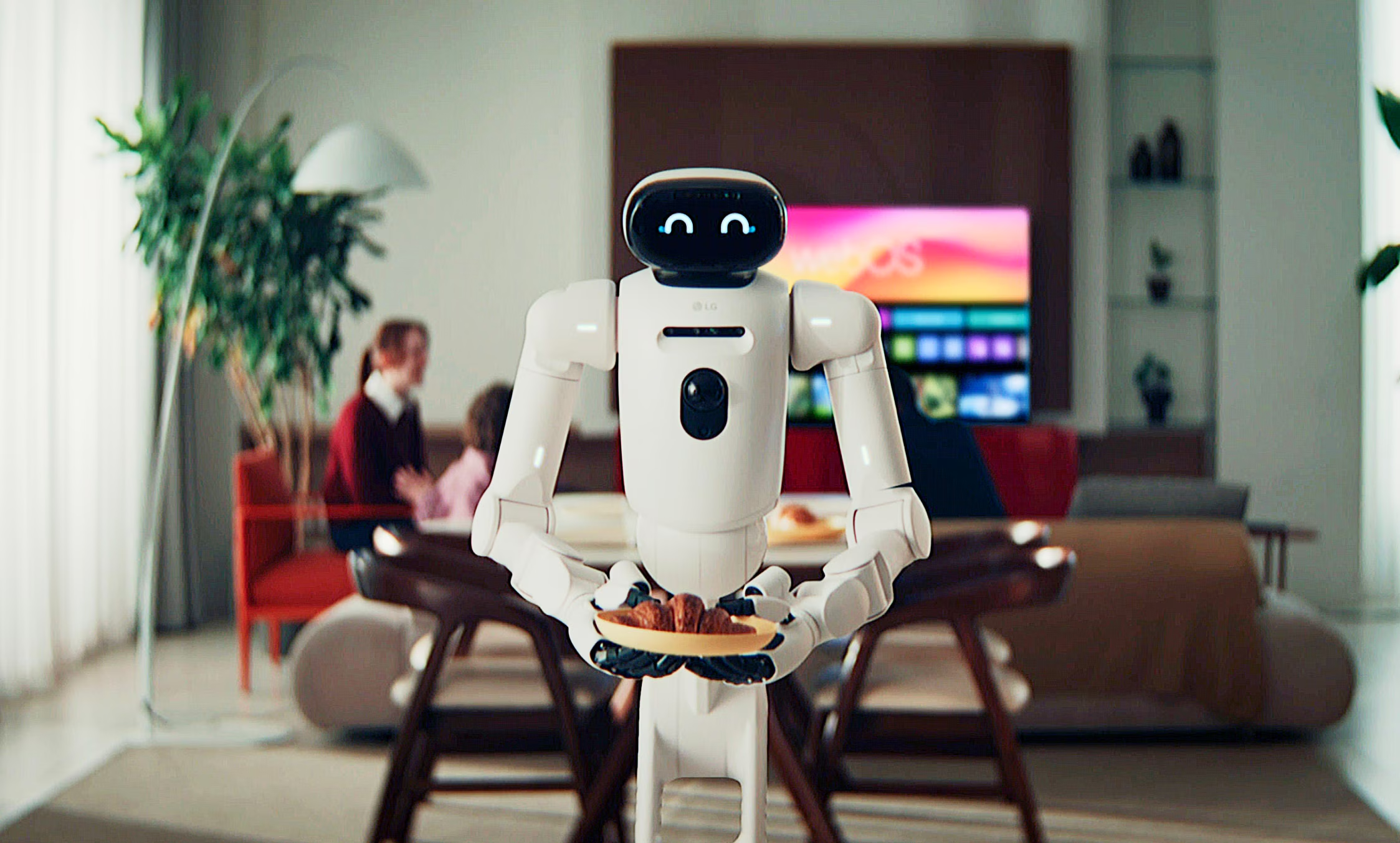
LG is stepping up efforts to develop a domestic robot capable of carrying out household chores, announcing plans to train hundreds of its CLOiD machines in a Seoul-based facility designed to replicate a home environment.
The South Korean electronics giant says the training programme will generate about 100,000 hours of data by the end of this year. That material will be used to develop a “robot foundation model” for CLOiD, using Nvidia’s Cosmos open-world models.
The company is expected to showcase the wheeled robot at the IFA technology show in Berlin, where a number of manufacturers will demonstrate humanoid and home-focused machines.
Unlike the full-sized, two-legged humanoids being developed for factories and general-purpose work, CLOiD is designed to move around on wheels. It has two articulated arms, each with seven degrees of freedom and five individually powered fingers.
LG has demonstrated the robot performing relatively simple domestic jobs, including folding clothes, removing items from a refrigerator and loading a washing machine. It has also been shown operating connected appliances such as a washer, dryer and oven.
The company’s approach reflects a growing divide in the home robotics industry. Some firms are pursuing a single machine that can navigate stairs, manipulate objects and perform a wide range of chores. Others are focusing on smaller robots that coordinate existing smart appliances around the home.
LG’s CLOiD robot is being trained for household tasks
Developers face significant practical hurdles in bringing a general-purpose robot into ordinary homes. Domestic spaces are cluttered and unpredictable, while stairs and uneven surfaces make legged machines more difficult and potentially hazardous to operate.
Robots must also be able to handle a vast range of everyday objects and situations. Demonstrations have shown that tasks which appear straightforward to people, such as opening a bottle of laundry detergent, remain difficult for current machines.
That has led to interest in an artificial-intelligence “brain” for the smart home: a system able to monitor conditions, decide what needs doing and direct specialised devices accordingly. In practice, it could send a robotic vacuum to clean up spilled pet food, run a washing machine when electricity is cheaper or activate a robotic lawnmower when required.
Tuya, a global smart-home technology provider, is also due to introduce Doova at IFA. The compact robot travels on wheels and has no arms, but is intended to support older people living alone by offering companionship, controlling household appliances and contacting relatives by video if its owner fails to respond in an emergency.
Doova’s price and release date have not been disclosed, although Tuya says it plans to bring the product to market.
Both approaches depend on cameras and sensors to understand the home and its occupants, raising questions about privacy and how household data will be stored and used.
For now, the prospect of a mechanical butler remains some way off. The emerging model is more likely to combine a central smart-home controller with several specialised robots, while machines such as CLOiD gradually learn the limited physical tasks that require arms and hands.
