


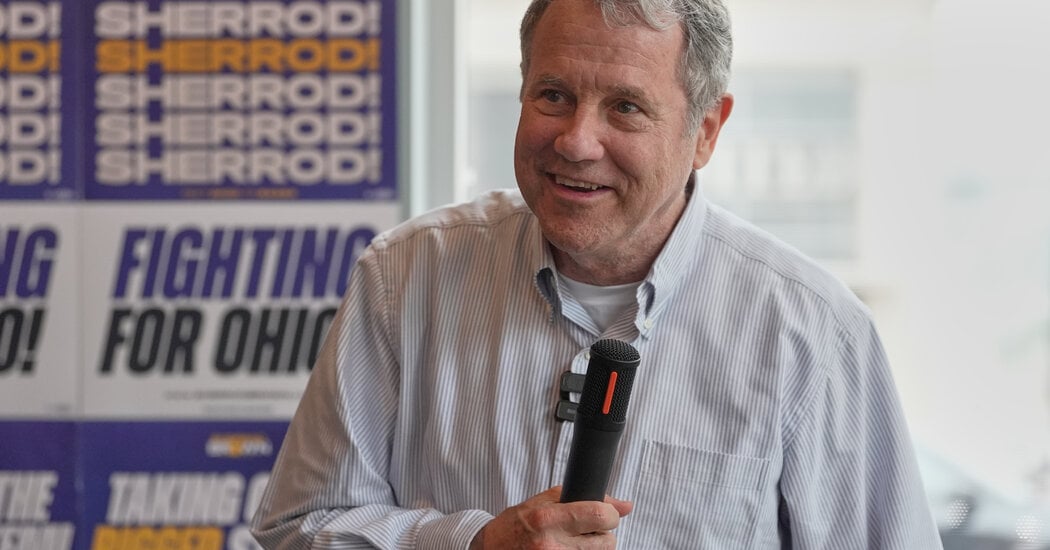
The cryptocurrency industry is launching a $30 million advertising campaign against former Ohio senator Sherrod Brown, marking its most aggressive intervention yet in the midterm elections.
Fairshake, the industry’s principal super PAC, said the campaign against Mr Brown, a Democrat seeking to return to the Senate, would begin on Tuesday with television adverts and mail attacking his record.
The move follows Senate Democrats’ decision last week to block the Clarity Act, legislation that would have protected the crypto industry from a regulatory crackdown under a future Democratic administration. Fairshake’s spending this year is now expected to favour Republicans heavily, although the group said it would continue backing candidates from both parties in some House and Senate contests.
The Ohio race is among the contests that could determine control of Congress. Fairshake spent $41 million targeting Mr Brown in 2024, when he was a leading Democratic critic of the industry and the senior Democrat on the Senate Banking Committee. He lost that election, with many Republicans crediting the crypto sector’s spending with helping secure victory.
Mr Brown’s Republican opponent, Senator Jon Husted, already has a substantial financial advantage. Republicans in Ohio are expected to outspend Democrats on advertising by about $30 million even before Fairshake’s latest campaign begins, according to figures from the media tracking firm AdImpact.
Fairshake and two affiliated groups have $120.4 million available, according to federal filings released on Sunday. The super PAC had been considering carrying much of that money into the 2028 election cycle, but is now preparing to deploy a significant sum after the collapse of the industry’s main legislative priority.
The organisation has presented itself as bipartisan and supported several Democrats in the 2024 elections. But the crypto sector has benefited from relatively light regulation and close relations with Republican leaders since Republicans took control of Washington.
Every Senate Democrat voted against the Clarity Act, including Michigan senator Elissa Slotkin and Arizona senator Ruben Gallego, both of whom received Fairshake backing two years ago. Several Republicans also opposed the measure, including Maine senator Susan Collins, considered one of the party’s most vulnerable incumbents in November.
Some of Fairshake’s donors have since adopted a more openly partisan tone. Brad Garlinghouse, chief executive of Ripple, a major donor to the super PAC, wrote on X: “The politics of the democrats (the anti-crypto army) was elevated over good policy.”
Tyler Winklevoss, the crypto billionaire and Fairshake donor, wrote: “Not a single Democrat voted for Clarity. There’s a lesson in that.”
Mr Brown could return to the Senate Banking Committee if he wins in November. During the campaign, however, he has moderated his public criticism of crypto, insisting that he had not been outspoken against the industry in the 2024 election.
“I’ve not moderated,” he said. “I’m simply saying that crypto has a part, a role, in our economy. They do. They likely will for a lot of years to come. I don’t have great interest in going beyond that for now.”
His campaign manager, Patrick Eisenhauer, did not address Mr Brown’s position on crypto when responding to the planned advertising campaign.
“Of course the special interests are panicking,” Mr Eisenhauer said. “They know Sherrod will fight the rigged system they’re feasting on to stand up for working Ohioans.”
