


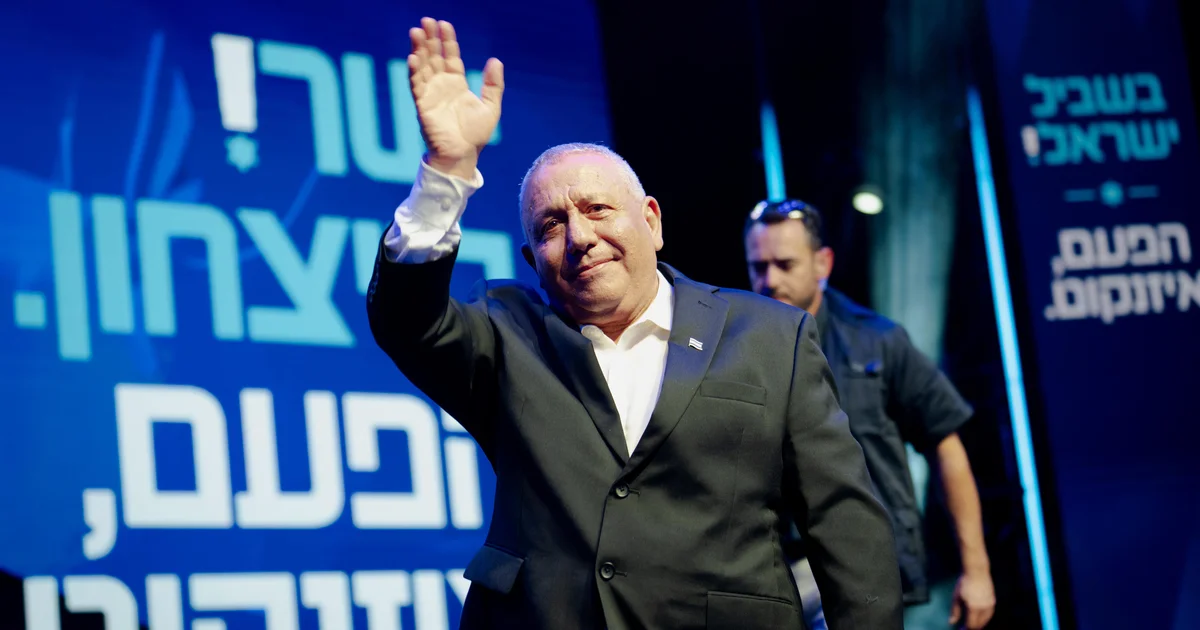
Israeli President Isaac Herzog has given opposition candidate Gadi Eisenkot the first opportunity to form a governing coalition after an election that left neither major bloc with a parliamentary majority.
The decision is a setback for Benjamin Netanyahu, who will remain caretaker prime minister while coalition negotiations take place. Eisenkot, a former military chief, led the main alliance seeking to remove Israel’s longest-serving premier.
Representatives of most of Israel’s principal parties recommended Eisenkot during consultations with Mr Herzog this week. His four-party bloc won 48 of the Knesset’s 120 seats, while Mr Netanyahu’s allies secured 53.
Arab-majority parties won 19 seats after recording their highest turnout, meaning both sides need support beyond their existing alliances to assemble a government. The leaders of the two largest Arab parties have said they would be prepared to help Eisenkot’s bloc oust Mr Netanyahu.
Most Jewish-led parties opposed to Mr Netanyahu had pledged before the vote not to depend on Arab parties to form a government. Eisenkot has nevertheless indicated that he could work with them if they accept conditions including describing Hamas as a terrorist organisation that must be destroyed.
Mr Netanyahu called for a “national unity government” in a video statement shortly before Mr Herzog’s announcement. He also warned against “hastily swearing in a government with terrorist supporters”, an apparent reference to the Arab-led parties supporting Eisenkot.
Netanyahu and his allies have repeatedly presented Arab-led parties as a national security threat. Eisenkot’s Yashar party accused the prime minister of using divisive language and urged members of Likud to reject alliances with what it called “radical parties” — understood to refer to some settler-linked and ultra-Orthodox groups in Mr Netanyahu’s religious-nationalist coalition.
Mr Netanyahu has also alleged, without evidence, that some Arab countries interfered in the election. Din Livne, acting director-general of the Central Elections Committee, said in a letter that “there is no basis to the claims regarding a systematic compromise of the integrity of the elections.”
Once the new Knesset is sworn in, Eisenkot’s bloc and the Arab parties could begin passing legislation because together they would control a majority. If no coalition can be agreed, Israel would have to hold another election, with Mr Netanyahu remaining prime minister in the meantime.
