


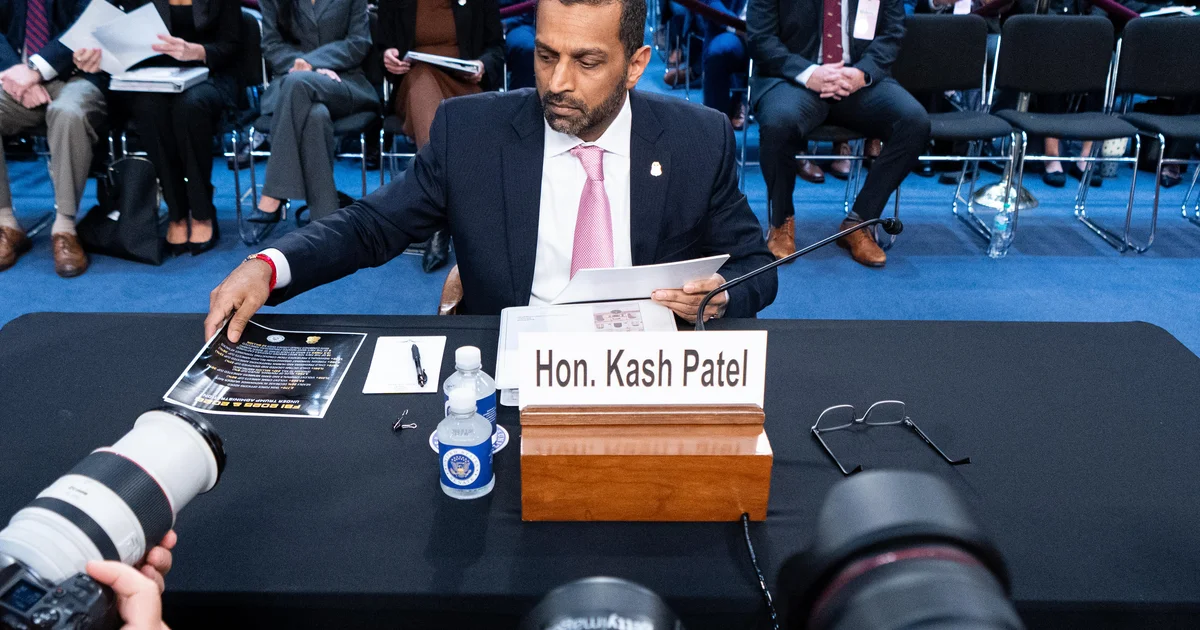
FBI Director Kash Patel has defended changes to the bureau’s hiring standards, telling US senators that applicants who were victims of trafficking or sexual abuse should not automatically be barred from employment because of what they were forced to endure.
Patel faced repeated questioning from Republican and Democratic members of the Senate Judiciary Committee over the decision to remove automatic disqualifications relating to bestiality, prostitution and employment theft.
He said the changes were intended to ensure that victims of sexual assault or trafficking involving animals were still able to apply for jobs at the FBI, while insisting that they would remain subject to the bureau’s wider recruitment checks.
“We did not want to punish victims of bestiality, victims who were trafficked,” Patel told Democratic senator Dick Durbin during Tuesday’s oversight hearing.
“We did not want to make it an automatic disqualification for the FBI to consider you if you are a victim of these awful, heinous acts. They still have to go through the same rigorous standards and application process,” he added.
Under the revised rules, candidates may be considered for employment if prostitution-related conduct took place more than 10 years ago and they have not hired sex workers or engaged in prostitution three or more times.
Applicants who stole from an employer may be considered if the theft occurred more than three years ago. In cases involving bestiality, candidates may remain eligible if the conduct took place before they were 18.
The changes do not distinguish between applicants who were coerced into sexual activity with animals and those who engaged in it willingly, according to people familiar with the requirements.
Several senators focused on the bestiality rules. Republican senator John Kennedy asked Patel what the previous policy had said.
Patel replied that anyone who had participated “on either side of it” had previously been automatically disqualified, adding: “Obviously, we are never going to hire the criminal side.”
When Mr Kennedy asked whether that meant “either side of the bestiality”, Patel said yes. The senator then asked: “So you disqualified the animal?”
“Well, we have great canines,” Patel replied.
Patel said some applicants had been trafficked and forced to take part in “degrading acts”, and argued that people in that category could later become qualified law enforcement officers before applying to the FBI.
He also said the prostitution-related changes were designed to prevent people forced into prostitution from being excluded automatically. Mr Kennedy questioned whether the policy concerned people who had used prostitutes or those who had been forced to work as one.
“If you were, yes, the victim forced into it,” Patel said.
The revised provisions also cover solicitation and the hiring of sex workers, including potentially an applicant who admits to hiring a sex worker where doing so is lawful.
Before the hearing, Democratic members of the Senate Judiciary Committee demanded a full explanation of the changes. They also asked the FBI to provide figures on applicants hired, given conditional offers or placed under case-by-case review since June 16 2026, where the applications would previously have been automatically rejected.
Current and former FBI agents and legal experts have expressed concern about the changes, saying they could point to difficulties recruiting new staff. They have also questioned the justification for the amendments, noting that applicants can disclose personal issues, including a history of sexual abuse, before taking a polygraph test.
Patel did not explain during the hearing why the bureau had changed its policy towards candidates who may previously have stolen from an employer.
