


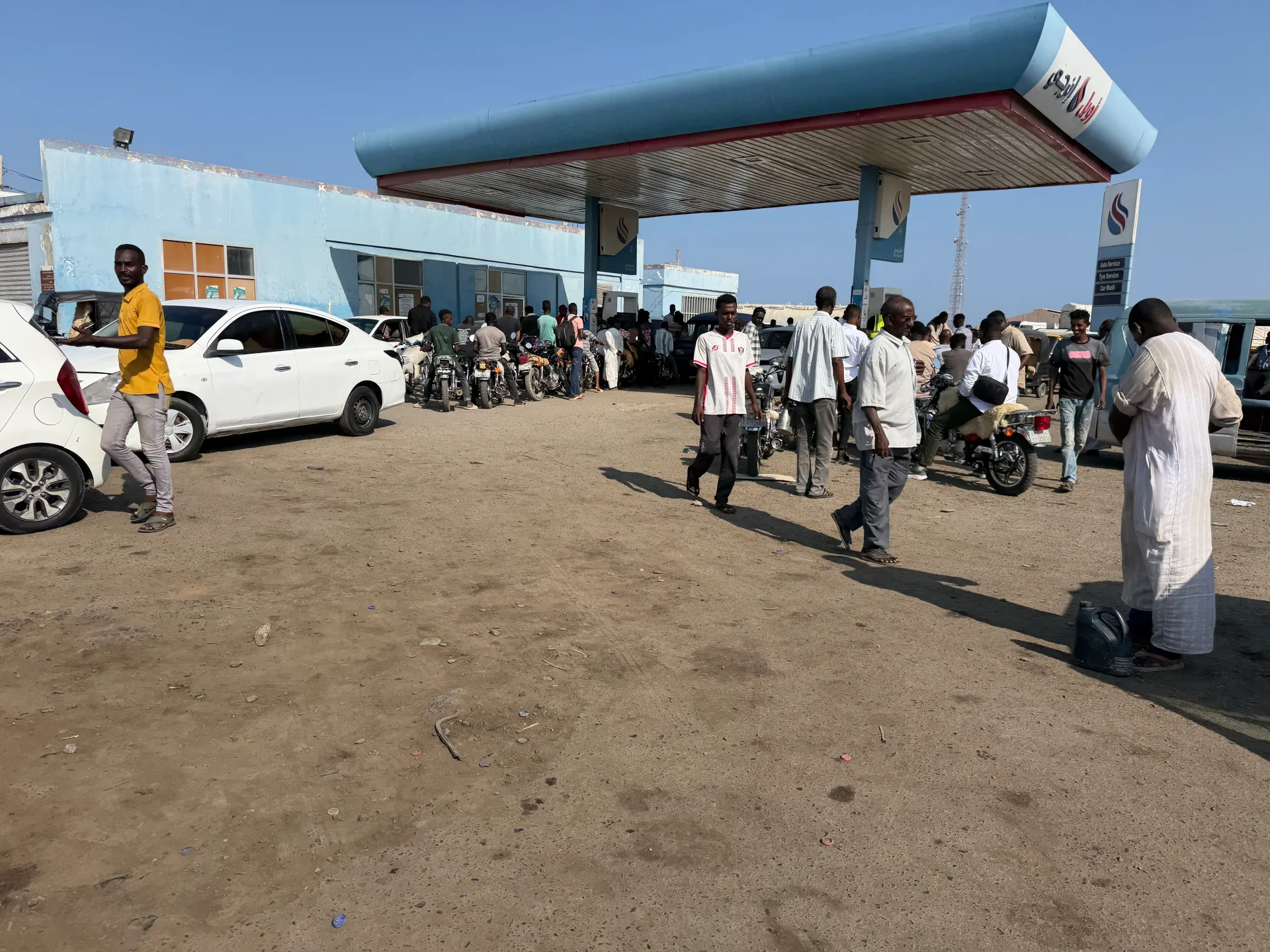
Sudan’s fuel shortages are squeezing workers, businesses and families, with rising petrol prices and lengthy queues cutting into incomes and pushing up the cost of transport across the country.
In Port Sudan, minibus driver Azhari Mohamed works from 6am to 9pm carrying eight passengers between the Shagar neighbourhood and the city centre. Yet he now spends two days driving and a third waiting for fuel.
The 60-year-old’s vehicle uses about three gallons, or 11 litres, of petrol a day. That costs roughly 105,000 Sudanese pounds, leaving him with only 50,000 pounds after operating expenses to support his wife and university-age daughter.
Queues at petrol stations can last more than five hours, and drivers sometimes reach the pumps only to find that supplies have run out. They must then join another queue elsewhere.
“We can no longer work because of the fuel shortages. The transport fares are no longer enough to cover the cost of running the vehicle and our household expenses,” Mr Mohamed said.
Petrol is now selling for 35,000 Sudanese pounds a gallon in Port Sudan and 40,000 pounds in Gazira State, south of Khartoum. The shortages have also prompted higher fares, with the Transport Chambers Union raising intercity bus charges by 40 per cent and minibus fares by 30 per cent this month.
Rising transport costs hit low-paid workers
For Aziza Ibrahim, the increased fares have made travelling to work unaffordable. The cleaner, who supports four children, has reduced her working days to three a week to limit the cost of getting between her home in Port Sudan’s Umm al-Qura neighbourhood and her workplace.
A journey that cost 700 Sudanese pounds before the war can now cost between 2,000 and 2,500 pounds on some routes. Ms Ibrahim said she needs 11,000 pounds a day for the return trip.
Transport now takes nearly half of her monthly salary of 400,000 pounds. She also faces the cost of treatment for diabetes and sometimes has to borrow money to reach work, repaying it when her wages arrive.
The United Nations Development Programme says the war has pushed average incomes in Sudan back to levels last seen in the 1990s. Fighting between the Sudanese Armed Forces and the paramilitary Rapid Support Forces began on April 15, 2023, damaging the country’s oil sector.
The Ministry of Energy and Petroleum estimated war-related losses at 20 billion dollars last year. Attacks on the Balila oil field disrupted supplies to the Khartoum refinery, which had previously met about 60 per cent of Sudan’s demand for petrol and liquefied petroleum gas, according to the World Bank.
Reduced domestic production has left Sudan dependent on imports, while higher international energy prices have added to the cost of petrol, diesel and gas.
Import rules add to pressure on fuel supplies
Economic analyst Sidi Ohaj said government requirements for petroleum importers had further reduced the number of companies able to operate. Importers must deposit 200kg of gold with the Central Bank and own fuel storage facilities.
“Some companies did not meet the requirements, which led to their exit from the market. This reduced supply relative to demand,” Mr Ohaj said.
He said import procedures should be eased urgently to increase domestic supplies, warning that fuel shortages were affecting the wider economy. Continued fighting, including drone attacks threatening infrastructure, remained a major challenge for the oil sector, he added.
Businesses are also passing on higher transport and power costs. Ahmed al-Haj, a trader in Omdurman market who sells products including petroleum jelly, said transporting a tonne of imported raw materials had become 30 to 50 per cent more expensive.
When power cuts force him to use a fuel generator for heating or packaging, his daily costs rise further. Deliveries within Omdurman that once cost 5,000 Sudanese pounds now cost between 10,000 and 12,000 pounds, while reaching customers in other states has become impossible because of transport charges.
Mr al-Haj said distribution workers had reduced the number of journeys they made, leaving goods to accumulate at traders’ premises.
