


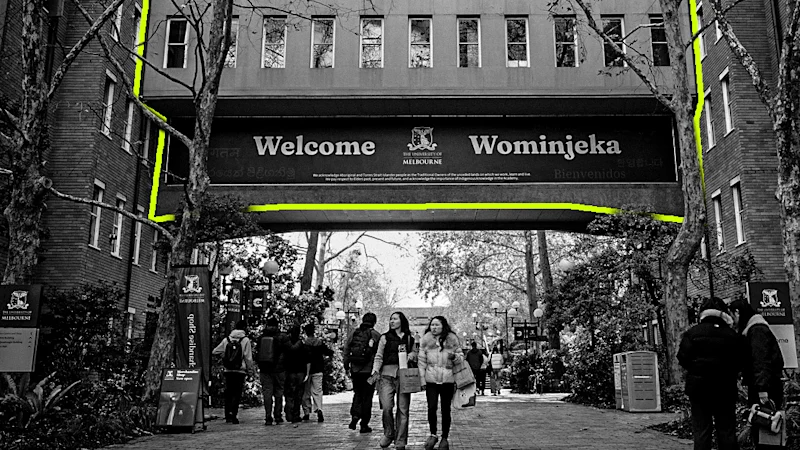
Melbourne Assembly will bring together leading figures from universities, medicine, technology and business to debate how education and innovation can help shape the city’s future.
The three-day civic forum, presented by The Age in partnership with the University of Melbourne, will be held at The Edge in Federation Square from October 19 to 21. Education and innovation will be one of four central themes, alongside urban planning, health and wellbeing, and sport and the arts.
Organisers say the discussions will examine how Melbourne can remain productive and prosperous as its population grows and the city is projected to become Australia’s largest.
Education is Victoria’s biggest services export, contributing $18 billion to the state economy in 2025. But speakers at the forum will consider the sector’s wider role in preparing workers, supporting research and ensuring Melbourne can compete in industries being reshaped by technology.
Professor Carolyn Evans, who will become the University of Melbourne’s vice-chancellor on October 5, is due to deliver one of her first major addresses in the role during the forum’s opening night.
Evans, who also chairs Universities Australia, has argued that higher education must equip students with skills that can be transferred as workplaces change. Her appearance will come as universities face growing questions about the impact of artificial intelligence on teaching, assessment, research and employment.
At a National Press Club address, Evans said Australia needed to innovate nationally to ensure graduates could move into high-quality jobs. She also praised the strength of the country’s research institutions, saying Australian universities “punch far above our weight when it comes to the quality of research”.
Former New York mayor Bill de Blasio and urban planning expert Carlos Moreno will open Melbourne Assembly by presenting ideas about the future of the city.
Education and innovation in focus at Melbourne Assembly
The forum’s second day will feature Professor Marek Tesar, dean of the University of Melbourne’s Faculty of Education, and Professor Sharon Lewin, director of the Peter Doherty Institute.
A panel moderated by The Age world editor Supratim Adhikari will bring together Lewin, Quantum Australia chief executive Petra Andrén, Aconex co-founder Leigh Jasper and Rohan Silva, regional managing director at applied artificial intelligence company Faculty.
The discussion is expected to range from scientific research and quantum technology to the commercialisation of ideas and the skills Melbourne will need to build successful companies.
Further coverage ahead of the forum will examine how education is responding to the opportunities and risks presented by artificial intelligence. Reporters Patrick Hatch and Jackson Graham will investigate the industries in which Melbourne is best placed to grow, while Graham will look at whether universities are prepared for the challenges ahead.
That examination will include the way degrees are delivered, the role of university campuses and whether existing infrastructure is suited to the business districts, research partnerships and start-ups increasingly seen as important to economic growth.
Hatch will also explore the risk of a brain drain, including whether Melbourne is doing enough to retain talented graduates, researchers and entrepreneurs.
The University of Melbourne has been developing new approaches to education and innovation, including flexible teaching and collaboration spaces designed to support project work, prototyping and industry engagement.
Melbourne Assembly is being supported by Melbourne Park, Bupa, Right Angle, the City of Melbourne and the Committee for Melbourne.
The organisers are inviting residents, students, researchers, business owners and other members of the community to share their experiences and ideas for the city. Their views will help inform the conversations at the forum, from the future of education and innovation to urban planning, community health and the revitalisation of the arts.
