


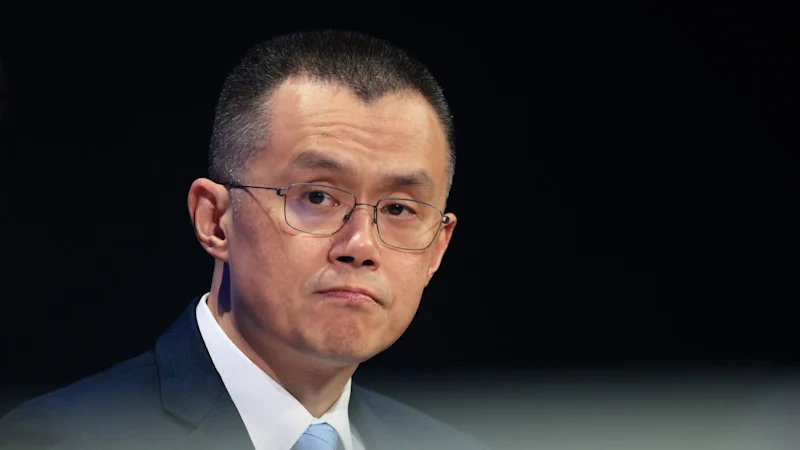
Changpeng Zhao, the billionaire founder of Binance, has rebuilt his influence from a luxury base in Abu Dhabi after serving four months in prison for violating US anti-money-laundering laws and receiving a pardon from Donald Trump.
The 49-year-old remains Binance’s majority shareholder and has become an influential advocate for cryptocurrency regulation, travelling by private jet and advising governments. He lives in a nine-bedroom villa with bodyguards, a chef and a yacht, while presenting himself as an ordinary technology entrepreneur.
Zhao’s return to prominence has brought him close to two powerful political and business networks: the ruling family of the United Arab Emirates and the Trump family.
Binance entered into a business relationship with World Liberty Financial, the cryptocurrency venture founded by Mr Trump and his three sons. World Liberty generated US$799 million for the President last year, making it his most lucrative asset, according to the material.
Mr Trump pardoned Zhao last October, a decision that was widely criticised as a possible quid pro quo. Zhao has denied any wrongdoing in his dealings with the Trump family.
Changpeng Zhao’s rise from Binance founder to crypto powerbroker
Zhao founded Binance in 2017, after selling the family home and investing about US$900,000 in bitcoin. Within months, the exchange had become the world’s largest, a position it has never relinquished.
Its rapid growth was driven in part by high-risk trading products and a relaxed approach to customer identification. For its first four years, Binance allowed customers to open accounts without providing basic “know your customer” information required by traditional financial institutions.
That approach created a highly profitable platform for unvetted traders and investment products. But US prosecutors later alleged that the exchange had also become a haven for Russian money launderers, Iranian sanctions evaders and Islamic State terrorists.
Zhao pleaded guilty in 2023 to violating the American Bank Secrecy Act and stepped down as Binance chief executive. The company agreed to pay a US$4.3 billion penalty.
At his sentencing in 2024, he said: “I deeply regret my failure, and I’m sorry.” A judge sentenced him to four months in a low-security prison in California.
Zhao’s wealth, estimated at US$114 billion, remained intact. After his release, he travelled by private aircraft to Abu Dhabi, where he resumed his business and political contacts.
Abu Dhabi offers a powerful ally and a safe haven
Zhao first moved to the UAE after years of travelling between jurisdictions. Binance had been forced out of China in 2017, while attempts to establish itself in Japan and Singapore had also failed.
He was introduced to Dubai by Gabriel Abed, a friend and businessman who had served as Barbados’s ambassador to the UAE. Within hours of arriving in Dubai in 2021, Zhao was visited by a government minister and offered a ten-year golden visa.
His application was approved in less than 12 hours. Later, an Emirati emissary brought passports for Zhao and his family after a royal had asked whether he wanted citizenship.
The UAE’s absence of income tax and its reputation for safety have attracted wealthy cryptocurrency investors. For Zhao, it also offered the advantage of having no extradition treaty with the United States.
He developed relationships with senior Emirati figures, including Sheikh Tahnoon bin Zayed Al Nahyan, the brother of the UAE’s ruler and chairman of the investment fund MGX.
MGX agreed early last year to invest US$2 billion in Binance in a deal that valued the exchange at US$75 billion, according to a person familiar with the transaction. Zhao wanted the payment made in bitcoin, but the Emiratis preferred stablecoins, which are designed to hold a value of US$1.
The parties ultimately used USD1, a stablecoin created by World Liberty Financial. MGX said it had considered several stablecoins before choosing USD1 for “business suitability”.
The decision has attracted scrutiny because USD1 was untested at the time. The Wall Street Journal reported that Binance had asked MGX to pay in USD1, while Zhao said the choice had been made by MGX.
Questions over the Trump family’s crypto interests
There were financial and political benefits for all the parties involved. A UAE-backed investment company took a 49 per cent stake in World Liberty in January 2025, days before Mr Trump’s inauguration, while Sheikh Tahnoon secured a seat on its board.
The Emiratis were also negotiating with the White House over access to advanced computer chips used in artificial intelligence. Binance, meanwhile, wanted the Trump administration to ease restrictions imposed after its 2023 settlement with US authorities.
Democrats in Congress described the arrangement as “stablecoin corruption”. Senator Richard Blumenthal, who has investigated Zhao and Binance, called it “an unprecedented” effort to curry favour with the administration.
World Liberty said it had no involvement in decisions over pardons. The White House also said that Steve Witkoff, whose son helped establish World Liberty, did not play a role in the pardon process.
Public filings show that Binance paid US$2.1 million to a lobbying firm run by Ches McDowell, who is close to Mr Trump’s elder sons. The work included services described as “executive relief”.
Zhao has insisted that nothing improper took place. He said he no longer held USD1 after using it to invest in bitcoin and other assets.
“I assume that President Trump has very good lawyers, and the set-up where the sons run businesses and the father is the president is completely kosher,” he said.
Two weeks after the US$2 billion transaction, the White House agreed to share access to the computer chips, despite concerns raised by some American national security officials.
Binance remains central to Zhao’s life
Zhao has sought to distance himself from the exchange since his plea deal barred him from “operating or managing” Binance. Yet the company remains closely tied to his family and business interests.
One of the two co-chief executives appointed to replace him was He Yi, a former Binance marketing executive and the mother of his three young children.
Binance also appointed a board with three supposedly independent trustees. Its chairman is Gabe Abed, the friend who first encouraged Zhao to move to the UAE.
The exchange has faced fresh allegations over its compliance procedures. Four compliance officials were fired or suspended last year after reporting that nearly US$2 billion had moved from customer accounts to entities linked to Iran.
Binance disputed the employees’ findings and denied that anyone had been disciplined for raising concerns. The US Justice Department later said two Chinese companies had used Binance to launder proceeds from Iranian oil sales, although it did not bring charges against the exchange.
Zhao has described his early failures at Binance as the result of inexperience rather than a deliberate willingness to break the law. But court filings cited his instruction to staff that it was “Better to ask for forgiveness than permission”.
He also discussed ways to conceal the exchange’s American customers despite Binance not being licensed in the US. According to legal filings, he told a subordinate: “Don’t leave anything in writing.”
Today, Zhao presents himself as a technology investor and crypto diplomat, promoting the industry in countries where he is treated as a visiting dignitary. His journey from a crypto entrepreneur facing prosecution to a wealthy powerbroker in Abu Dhabi has left him at the intersection of global finance, Gulf state ambition and the Trump family’s expanding digital-asset empire.
