


Iran has warned that any further attack on its interests will draw a “faster, heavier and more painful” response, after the United States destroyed three Iranian oil tankers and denied Tehran’s claim that it had struck an American vessel in the Strait of Hormuz.
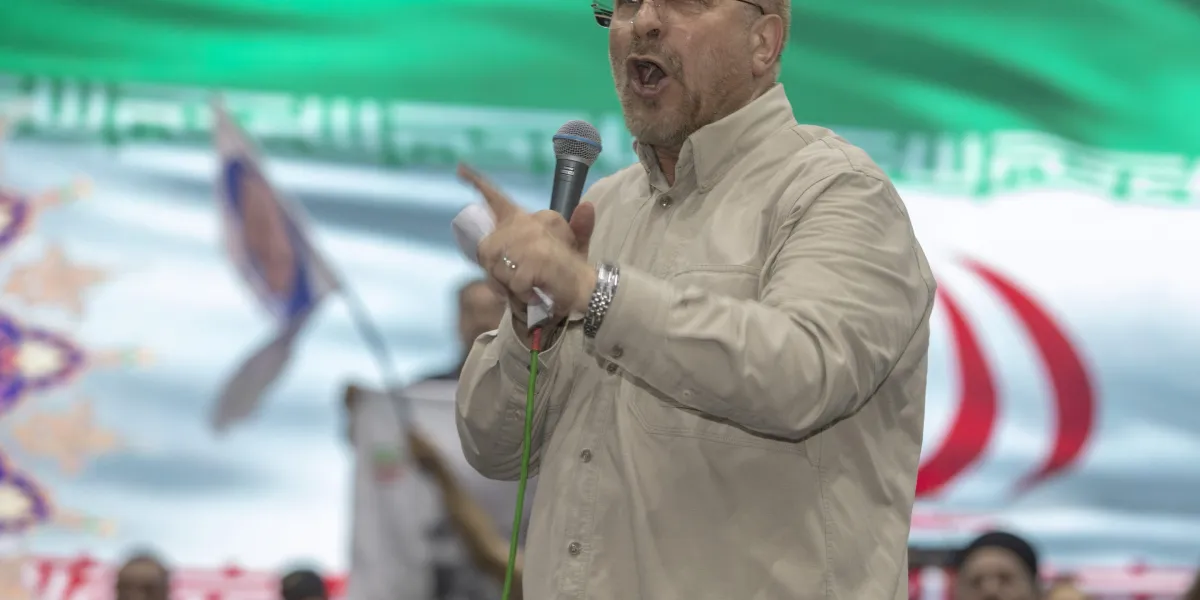
Mohammad Bagher Qalibaf, Iran’s parliament speaker and chief negotiator, said on Sunday that the era of “proportionate responses” was over. He added that recent Iranian strikes on US bases were “only the beginning”.
The warning followed a sharp escalation in the strategic waterway, where Iran’s Islamic Revolutionary Guard Corps launched ballistic missiles towards two US Navy warships, according to US Central Command.
The American military said an aircraft carrier and a guided-missile destroyer evaded multiple attacks, with no US personnel injured. In response, US forces struck three Iranian crude carriers linked by Washington to an alleged financial network supporting the Revolutionary Guard and its regional allies.
Central Command said two vessels, the Downy and the Stark 1, were permanently disabled off Kharg Island and near Jask respectively. A third, the unladen Kylo, also known as the Noxen, was destroyed in the Gulf of Oman after its crew was ordered to abandon ship.
“If you shoot at two of our ships, we will impose an even higher economic cost — taking out three of yours,” said Admiral Brad Cooper, the head of US Central Command. He added that American forces would not hesitate to destroy Iran’s “limited and exposed oil fleet” if necessary.
Iranian state media later claimed that Iranian forces had targeted three tankers and three US-linked vessels in retaliation, although those reports could not be independently confirmed.
Tehran also said it had struck an unmanned American military vessel attempting to enter a restricted area of the Strait of Hormuz. Captain Tim Hawkins, a spokesman for US Central Command, dismissed the claim as a “total lie”.
The disputed incident came as attacks between the two countries resumed last week after about a month of relative calm. The wider conflict began with US and Israeli strikes on Iran on February 28, while a ceasefire announced in June has failed to prevent repeated military action.
The Strait of Hormuz, through which the US Energy Secretary Chris Wright said about nine million barrels of oil a day were still passing, has become the main arena in the latest confrontation. Tanker movements depend heavily on US naval escorts and protection from possible Iranian attacks.
The latest exchange has raised fears that the conflict is entering a more dangerous phase, with Iran now threatening direct action against US warships and Washington targeting the oil network that helps sustain Tehran’s economy.
