


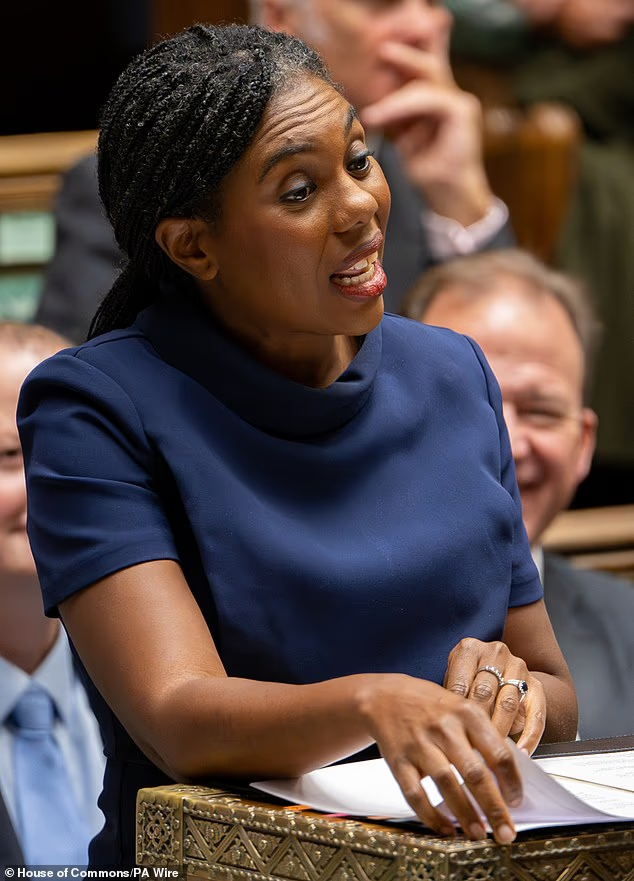
Kemi Badenoch has challenged Andy Burnham to raise defence spending to 3 per cent of national income by the end of the decade, unveiling a £10 billion package of welfare and public spending cuts to pay for the increase.
The Conservative leader said the proposals would provide the armed forces with the funding required to meet mounting international threats, while accusing the Prime Minister and Chancellor John Healey of failing to set out how they would finance a faster boost in military spending.
Mrs Badenoch said the Conservatives would restore the two-child benefit cap, reform housing support and redirect money from other areas of government to meet the target by the end of the current Parliament.
“The first duty of every Government is defence and the Conservatives will always put our defence first,” she said.
“That’s why we are setting out our plans to reach three per cent on defence spending by the end of this Parliament through further cuts to welfare and restoring the two-child benefit cap.”
Pressure over defence spending
Her intervention comes as Mr Burnham faces growing pressure from Labour MPs to bring forward a firm timetable for increasing defence spending, rather than deferring the decision until next year’s comprehensive spending review.
Tan Dhesi, the Labour chairman of the Commons Defence Committee, accused the Prime Minister of “kicking the can down the road” during Prime Minister’s Questions.
He warned that the Government’s assurances would not be enough without immediate financial commitments to strengthen the armed forces.
“Defence is definitely one area where vibes alone just will not be enough,” Mr Dhesi said.
“Rather than kicking the can down the road… will the Prime Minister urgently commit to charting a pathway to reaching three per cent of GDP being spent on defence by 2030?”
Mr Burnham appeared to reject the criticism, telling him: “I have made that commitment, I have made it very clearly.”
However, Downing Street later clarified that the Government’s firm commitment is to reach 3.5 per cent of GDP on defence by 2035, with the route to that figure due to be set out at a future spending review. The Government’s current plans would take defence spending to 2.7 per cent of GDP from 2027, with a commitment to reach 3 per cent during the next Parliament.
Mrs Badenoch said Mr Healey should now support the Conservative proposals after resigning as defence secretary in June over the Government’s refusal to commit to the 3 per cent target.
“John Healey resigned from Keir Starmer’s government saying Labour were not keeping our country safe,” she said. “Now he is the Chancellor he should adopt our plans and make sure our Armed Forces have the funding they need.”
The Conservatives said their proposals would save at least £4 billion a year through housing benefit reforms. Restoring the two-child benefit cap would raise a further £3.1 billion, while ending VAT exemptions for Motability vehicles would provide another £1 billion.
The remainder of the package would come from abandoning Labour’s proposed Chagos Islands handover and redirecting funding from new wind farms and civil research and development.
Shadow defence secretary James Cartlidge said the party wanted to invest an extra £10 billion a year in the armed forces, arguing that delays posed a growing risk to national security.
Warnings over Russia
The dispute has intensified amid warnings about Russia’s intentions and the prospect of a wider confrontation with Nato. Mr Healey said in his resignation letter in June that British intelligence agencies believed Moscow could attack a Nato country by 2030.
Russia has also threatened Britain with “catastrophic consequences” over its support for Ukraine, while Germany has said Moscow was responsible for a failed drone attack on Leipzig airport.
Britain’s position among Nato allies has come under scrutiny as other European countries increase military spending more rapidly. Germany is expected to reach 3.5 per cent of GDP by 2030, while Poland is already spending 4.7 per cent.
Under the Government’s present plans, British defence spending is due to rise from 2.6 per cent next year to 2.7 per cent by the end of the decade.
Mr Burnham insisted that the defence investment plan would be fully funded.
“The very reason I appointed this Chancellor to his position is because of his strong commitment to the defence of our country,” he told MPs. “We will fully fund the defence investment plan.”
Mrs Badenoch said that assurance was not enough and urged the Prime Minister to “get serious about defending our nation”.
