


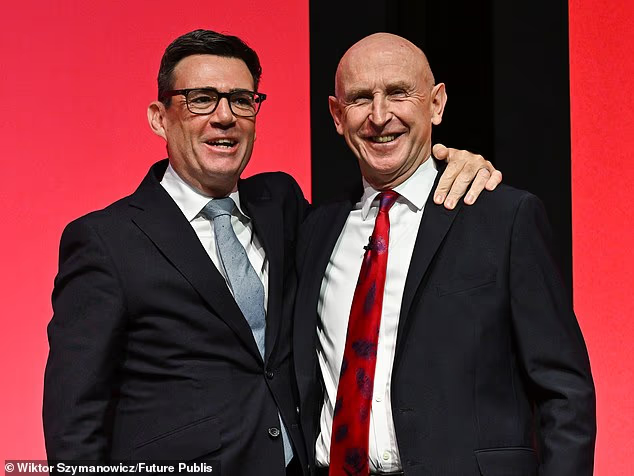
Labour unrest is growing around John Healey’s preparations for a difficult Budget on October 28, with MPs demanding greater clarity over the Chancellor’s plans for tax and spending.
Concern within the party has been heightened by fears that financial markets could react badly if Mr Healey fails to restore sufficient headroom against the Government’s fiscal rules.
The £24 billion margin built up by Rachel Reeves through a series of tax rises is understood to have been reduced by at least half as borrowing costs have increased.
The Chancellor is also under pressure to find funding for Andy Burnham’s spending pledges, cover an estimated £5 billion shortfall in the defence investment plan and potentially provide help for households facing high fuel costs.
Yet Mr Healey’s speech at the Labour conference offered little detail on the choices ahead. He warned that there could be no repeat of Tony Blair’s spending spree and pledged to maintain the fiscal rules.
One Labour MP told the Guardian that they had expected more guidance on the approach to taxation and public spending. “It was Rachel’s speech delivered by John,” they said.
There has also been criticism from within the Treasury over the pace of the Budget process, with claims that preparations are running behind schedule.
An insider said: “He’s slow to get through his boxes and it’s hard to get meetings in the diary because he needs time to prepare before each one. It all feels a bit underpowered.”
Those close to Mr Healey rejected the criticism and said he would set out his plans in full in the Commons.
Banking bosses summoned ahead of the Budget
Mr Healey has summoned banking bosses to a meeting next week as the industry urges him not to impose further taxes on the sector.
Additional levies have been demanded by trade unions and many Labour MPs, increasing the pressure on the Chancellor as he weighs how to raise money without further unsettling the economy.
Lord O’Neill, a former minister and Goldman Sachs economist who has advised Mr Burnham, has also warned against another tax increase.
He said the Government should instead accept a reduction in its fiscal headroom in the hope that conditions would improve in the coming months.
“Rather than risking some tax increases in a way previous Governments have… in this instance I personally suspect it might be the wisest thing to do,” he told BBC Radio 4’s Today programme.
“Because it is so extraordinarily difficult with what’s going on around the world I don’t think it would be that unwise in these circumstances.”
Lord O’Neill pointed to better-than-expected growth figures and said ministers should seek to build on economic activity rather than put further pressure on it.
