


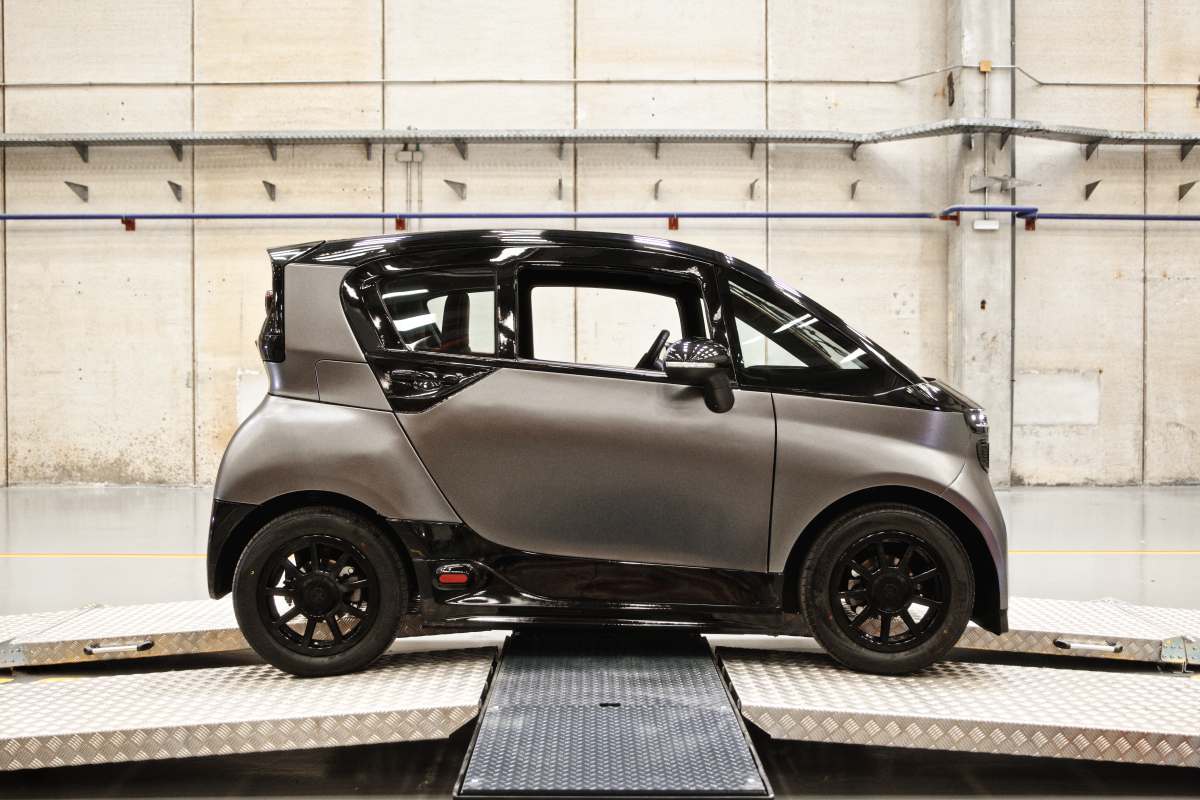
A Spanish start-up is preparing to launch a sustainable electric microcar aimed at challenging the growing number of Chinese-built small cars on European city streets.
Liux has secured Europe-wide homologation for its Liux Big and expects sales to begin in the first half of 2027. The company says the vehicle will cost less than €18,000 before any electric vehicle subsidies.
The compact two-seater is being developed in Spain, where Liux has opened the country’s first new car plant in more than 30 years. However, its founders acknowledge that a completely European supply chain is not realistic, with the batteries sourced from outside Europe.
Instead, co-founders Antonio Espinosa de los Monteros and David Sancho have made the car’s construction and eventual recyclability central to its pitch. The body uses a linen-based biocomposite designed to allow the material to be separated and recycled at the end of the vehicle’s life.
“One thing that’s very clear for David and me is that recycling isn’t just a lab concept,” Espinosa said. “You can recycle almost anything in a lab. What makes something recyclable has to do with how it’s built.”
The Liux Big is also intended to be rechargeable at home, including from electricity generated by solar panels. Its makers say it has been designed to be straightforward to maintain, in an effort to avoid the short replacement cycles associated with many newer cars.
Liux Big electric microcar targets city drivers
Although the name suggests something larger, the Liux Big is small enough to park at a right angle to the kerb. Liux has nevertheless sought to make it feel more like a conventional car than a lightweight quadricycle, including by fitting a 260-litre boot.
The model has been approved under the heavier L7e category of European quadricycles. The company says its engineers used the available weight and size limits to prioritise stability, braking and handling, even though vehicles in the class are not required to undergo standard crash tests.
Liux has been demonstrating the car’s ability to negotiate slaloms and other manoeuvres. The initial range will comprise versions with 15kWh and 20kWh batteries, with a cargo model also planned.
The company’s first attempt was the Animal, a fully electric five-seat vehicle made largely from recycled or plant-based materials. Liux abandoned the larger SUV project after deciding that a smaller model would have a better chance of completing the approval process.
More than 7,500 people have joined the waiting list for the Liux Big, although no payment is required to register. The strongest interest has come from city-dwelling people aged between 55 and 60, leading Liux to expect that the vehicle will often be bought as a second household car.
That profile may limit the microcar’s ability to replace conventional cars altogether, but the company is also considering partnerships with fleet operators and businesses that could support autonomous-driving technology.
Liux now employs 65 people and is preparing production across three Spanish facilities. Its plant at Azuqueca de Henares, about an hour from Madrid, carries out the final stages of manufacturing using a lean-management approach based on Toyota’s production principles.
The site is deliberately small, but Liux says its wider production operation could eventually build up to 20,000 vehicles a year by 2030. The start-up has raised €16 million so far, including European funding, to bring the urban version to market through dealership partnerships across Europe.
Liux’s challenge is to persuade buyers to pay a premium for a European-made, sustainability-focused microcar in a market increasingly populated by inexpensive Chinese electric vehicles. Its founders say the aim is not to create a fully self-sufficient supply chain, but to make more responsible choices in the materials and design that remain within their control.
