


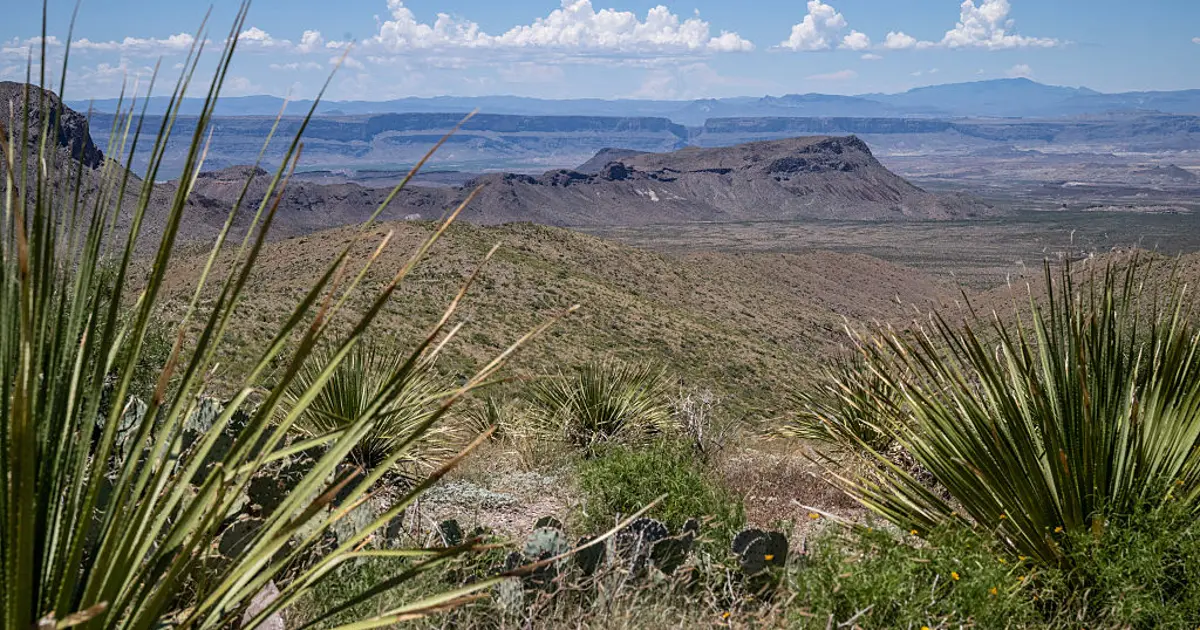
The Trump administration has asked the US Supreme Court to allow border barrier construction to resume in Texas’s Big Bend region, after a federal judge halted the work over concerns about the government’s legal authority and the environmental damage it could cause.
The emergency application, filed on Wednesday, October 21, seeks to overturn a preliminary injunction issued by US District Judge Kathleen Cardone on October 2. The order bars the Department of Homeland Security from carrying out border-wall construction or related ground-disturbing work in the Big Bend sector unless it complies with federal laws.
The case was brought by the Center for Biological Diversity, Friends of the Ruidosa Church and river guide Danny William Miller Jr. The plaintiffs argue that Homeland Security Secretary Markwayne Mullin could not waive environmental and other legal requirements without clear authorisation from Congress.
In a written opinion issued on October 14, Judge Cardone said the challengers were likely to succeed on at least one of their claims and faced serious, irreparable harm without an injunction. She concluded that the Big Bend sector had the lowest rate of illegal entry along the US-Mexico border, raising questions over whether it met the statutory definition of an area of “high illegal entry”.
The administration disputes that assessment. Its Supreme Court filing says Border Patrol recorded more than 89,000 apprehensions in the Big Bend sector between the 2021 and 2025 financial years, along with seizures of marijuana, cocaine, methamphetamine, heroin and fentanyl.
Officials say a gap of more than 300 miles in border defences would encourage cartels and other criminal groups to exploit the region as other routes become more heavily secured. The filing argues that the government has an overriding interest in strengthening border security, even where construction may affect protected landscapes.
Dispute over Big Bend border construction
The administration is relying on powers under the Illegal Immigration Reform and Immigrant Responsibility Act, which allows the Homeland Security secretary to order barriers and roads in areas deemed to have high levels of illegal entry. The law also permits the waiver of certain legal requirements to speed up construction.
Federal officials have argued that those powers cover environmental and other regulations that would otherwise delay the project. The Supreme Court application attacks Judge Cardone’s decision as an improper restriction on the secretary’s statutory authority.
Environmental groups say the work could permanently damage one of the country’s most remote landscapes, including river canyons, wildlife habitat and culturally significant sites. Zeynep Graves, a senior attorney for the Center for Biological Diversity, said the group was confident that the injunction would withstand the administration’s challenge.
“Once Big Bend’s canyons, cultural treasures and wild ecosystems are destroyed, they’ll be lost forever,” Ms Graves said. She added that the organisation would continue opposing the project on the grounds that only Congress could authorise walling off the entire US-Mexico border.
Construction activity, including the use of bulldozers and other heavy machinery, was observed in the region in August before the work was paused amid legal challenges. The Supreme Court has yet to decide whether to lift the injunction while the wider case proceeds.
