


Trump pardon brokers are charging wealthy applicants hundreds of thousands, and in some cases millions, of dollars while claiming they can use political connections to take clemency requests directly to the president.
The claims emerged during a hidden-camera operation involving Ammon Covino, a convicted wildlife trafficker whose application for a pardon had been rejected through the normal Department of Justice process.
Covino and his wife, Crystal, run zoos and aquariums. He served 23 months in prison after being convicted of illegal wildlife trafficking and had submitted a three-page application to the Justice Department.
“When the pardons came out we were on the list of rejections,” he said.
He was then asked to approach brokers who promised to bypass the department and put his case before President Donald Trump. The couple contacted 12 brokers, several of whom responded within hours claiming they could help.
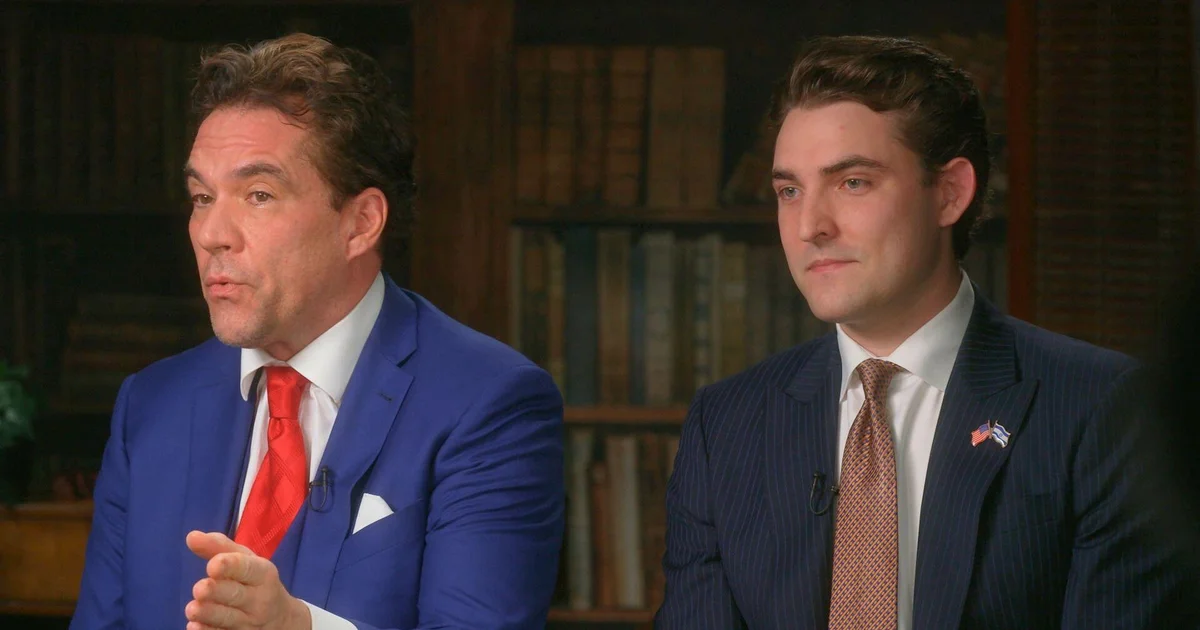
Among those who replied were Jack Burkman and Jacob Wohl, political activists whose robocall scheme aimed at suppressing Black voters in 2020 led to a criminal conviction. In conversations recorded without their knowledge, they said Covino’s case could be advanced by applying pressure from multiple directions within the White House’s orbit.
“With this particular White House, you have to put pressure on the president from all directions in a consistent way to force his hand,” Burkman said. “We literally want to put the pen in his hand and get him to sign it because he’s tired of hearing about it.”
The brokers sought 300,000 dollars. The money, they said, would cover activities including attending events at Mar-a-Lago, buying tickets to fundraisers, hiring contractors and using influencers to gain access to people close to the president.
Burkman also said they could mobilise members of Congress and other influential figures to contact Mr Trump. The proposed strategy was described as a “pincer movement” designed to keep the pardon request in front of him.
Covino’s wife said the regular application had cost no more than “a postage stamp”. Asked what the new route would cost, she replied: “$300,000.”
Claims of access to the White House
Burkman and Wohl made a similar offer to rapper Boosie Badazz after he was convicted on a gun charge. He said he paid the pair 600,000 dollars after being led to believe the money would secure a pardon.
Messages sent to the rapper’s lawyer listed people the brokers claimed they had recruited, including Laura Loomer, Erika Kirk and Mike Johnson, the Speaker of the House. Another message referred to Natalie Harp, described as an executive assistant close to the president, and suggested she would personally deliver the application to Mr Trump.
Boosie did not receive a pardon. The people named in the messages denied involvement in his case, while Burkman and Wohl denied sending the messages. The contract said Boosie would receive half his money back if the pardon was unsuccessful, but the brokers have refused to pay, arguing that the agreement is invalid. Boosie is suing.
“I said, ‘Just return it. You didn’t give me my pardon,’” he said. “It’s a bunch of BS.”
Professor Mark Osler, a law academic at the University of St Thomas in Minnesota who has spent 15 years helping people without means apply for pardons, said the process appeared to be increasingly shaped by wealth and access.
“That is not a system. That’s something different entirely. It’s anarchy,” he said, arguing that applicants could now believe their chances depended on finding someone able to reach the president at Mar-a-Lago or paying a million dollars to a supposed White House contact.
Mr Osler said traditional pardon applications generally involved lawyers preparing clemency petitions for a few thousand dollars. What had changed, he said, was the scale of the fees being demanded by brokers.
He also said that expressions of remorse did not appear to be central to some successful applications under Mr Trump. Instead, applicants were encouraged to argue that they had been victims of a “weaponized” Justice Department.
Burkman and Wohl advised Covino to present his prosecution as an Obama-era case that should never have happened. Wohl said Mr Trump made his own decisions and relied very little on the Justice Department, which he described as “an afterthought”.
Concerns over donations and pardons
Ed Martin, a Trump appointee who ran the Justice Department’s pardon office, rejected the suggestion that applicants were being forced to pay brokers to reach the president. About 16,000 applications were awaiting a decision, he said, and he had listened to thousands of people seeking clemency.
However, about 70 per cent of Mr Trump’s clemencies during his second term had not gone through the Justice Department. When pardons for those involved in the January 6 riot were included, the figure rose to 92 per cent.
Several pardons also followed sizeable donations or business dealings involving Mr Trump or his family, according to the investigation. A businessman convicted of fraud after promoting a fake zero-emission truck was pardoned after he and his wife donated almost two million dollars to support Mr Trump’s re-election campaign.
The chief executive of a cryptocurrency exchange was pardoned after his company supported a Trump family crypto venture. Both sides denied that the business relationship was connected to the pardon.
A healthcare executive convicted of tax crimes was pardoned after his mother paid one million dollars to attend a fundraiser at Mar-a-Lago.
Asked why such an arrangement did not amount to a pay-to-play system, Martin said the president’s power was constitutional and “complete” and “plenary”. He said he had not seen or heard evidence of a quid pro quo.
When told that brokers were boasting about going around his office, Martin said he did not see evidence of “magical brokers”. He described them as “snake oil salesmen” and “swamp salesmen”.
Burkman and Wohl denied that their work was corrupt or improper. Burkman said they were paid for navigating Washington on behalf of clients, comparing their role with other lobbyists hired to bring cases to the attention of powerful people.
After being told about the hidden-camera operation, the pair agreed to discuss their activities. They maintained that there was nothing improper about charging for access and said wealthy applicants needed help making their cases heard.
The White House said anyone spending money to lobby for pardons was “foolishly wasting their money”. It added that President Trump carried out his constitutional duties in an ethically sound manner and that suggesting otherwise was “either ill-informed or malicious”.
The Covinos said the system felt unfair but that, if they could afford the 300,000-dollar fee, they would consider using the brokers. “If that’s how the game’s played, then that’s how the game’s played,” Ammon Covino said.
