


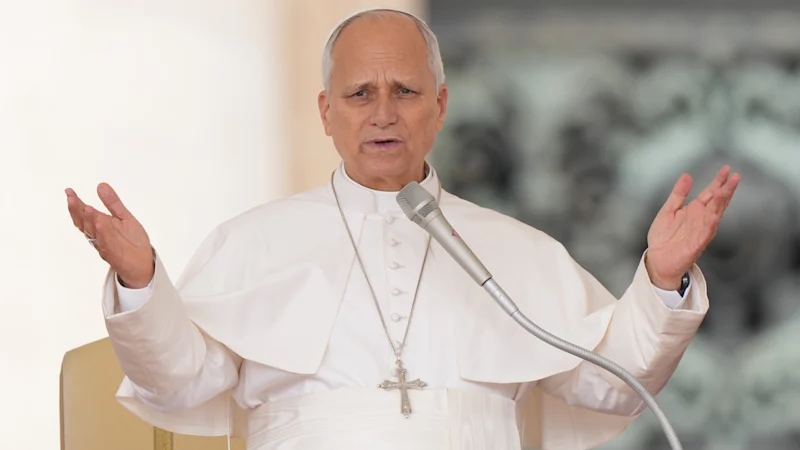
Pope Leo XIV has undergone surgery for lung cancer after doctors found a small growth during a routine health check, highlighting the growing concern over the disease among people who have never smoked.
The Vatican said the 71-year-old pontiff had lung adenocarcinoma, the most common form of lung cancer. He is a non-smoker and is recovering from the operation.
Although smoking remains strongly linked to lung cancer, cases are increasing among non-smokers, particularly younger women, according to research published by the World Health Organisation last year.
Fraser Brims, deputy director of the Institute for Respiratory Health and a professor at Curtin University, said lung cancer could affect anyone with lungs.
“One of the really important messages is that anybody with lungs can get lung cancer, and it’s certainly not just about smoking,” he said.
Why lung cancer can be difficult to detect
Possible causes include air pollution, radon, workplace exposure to dust, asbestos and silica, as well as genetics and family history. Australian researchers have also published a review containing what they described as the strongest evidence yet that vaping is likely to cause lung and oral cancer.
There is no known cancer risk from exposure to incense or candle smoke, Dr Brims said, with evidence commonly circulated online about such a link remaining inconclusive.
In Australia, lung cancer is the leading cause of cancer death among men and women combined, and the country’s fifth most commonly diagnosed cancer. Aboriginal and Torres Strait Islander people, those living in rural and regional areas, and people from lower socioeconomic backgrounds carry a disproportionate burden of the disease.
Most lung cancers produce no symptoms in their early stages. The most common warning signs include coughing up blood, a persistent cough, fatigue and weight loss.
People diagnosed with lung cancer in Australia have a 27.3 per cent chance of surviving for five years, although early detection can raise that figure to 70 per cent.
Who is eligible for lung cancer screening?
Australia’s National Lung Cancer Screening Program uses low-dose CT scans and is aimed at current and former smokers aged between 50 and 70. Unlike bowel and breast cancer screening, which is based on age, it is targeted at people considered to be at higher risk.
Health experts have cautioned against automatically extending screening to the whole population. Mark Brooke, chief executive of the Lung Foundation, said the benefits would need to be weighed against the risks of repeated CT scans and false-positive results, which can lead to invasive medical procedures.
Small growths known as lung nodules can be found in up to half of people screened, although most are not cancerous. Dr Brims said medical teams were working to identify which nodules required the greatest concern and that the screening process had so far proved effective.
The Lung Foundation has called for eligibility to be expanded to people aged 50 to 75 with a direct family history of lung cancer or a risk of occupational exposure. It is also seeking increased government funding for research and greater support for patients and carers.
Mr Brooke said anyone worried about their risk, or experiencing a persistent cough or another warning sign, should speak to their GP and discuss whether a CT scan might be appropriate.
