


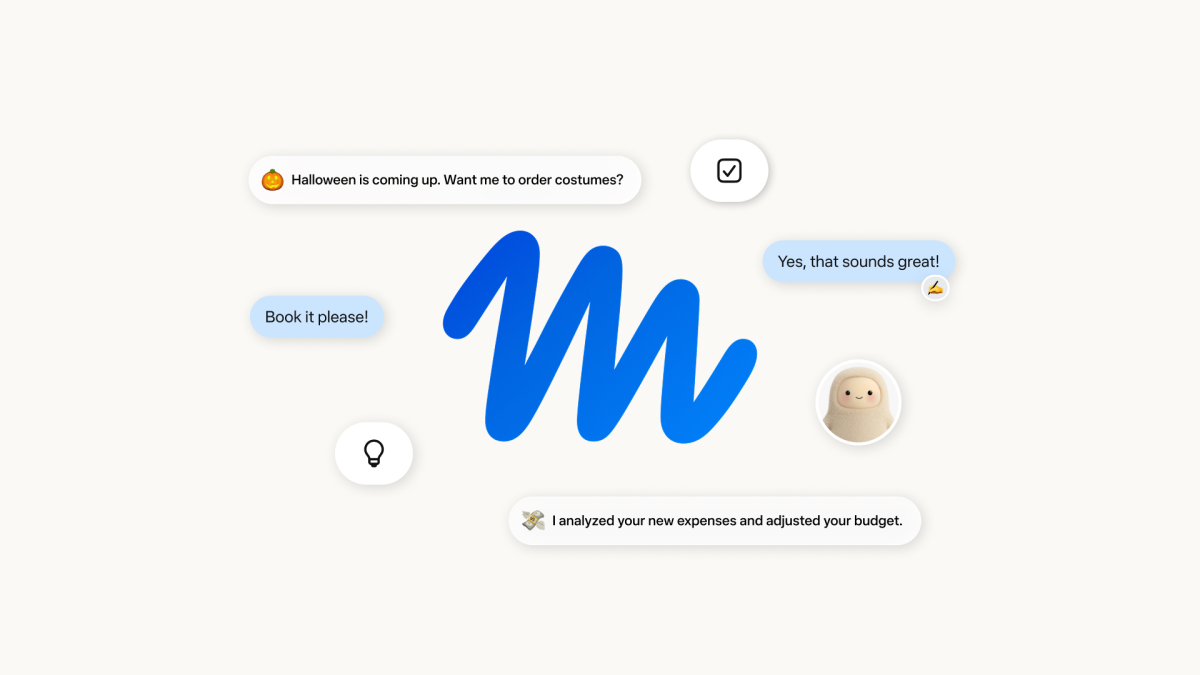
Meta has launched Muse, a personal AI agent designed to carry out everyday tasks for users in the US, in its biggest consumer artificial intelligence push yet.
The service can connect to email, calendars, payment systems and a range of other apps, including health and fitness, shopping, dining, music, events and smart-home platforms. That access allows Muse to act on a user’s behalf rather than simply answer questions.
Meta says the agent can send emails, book travel, negotiate lower bills, complete forms, prepare plans and turn recipe videos into shopping lists. It can also send invitations and make purchases, with checkout initially handled through Stripe’s Link service.
The launch comes less than two weeks after Meta agreed to an $18 billion multistate settlement concerning allegations about the harms caused by social media. It places the company’s record on privacy and consumer protection under renewed scrutiny as it asks people to share more personal information with its technology.
Users will choose which services Muse can access, connecting them individually rather than granting blanket permission. Where a service has a public application programming interface, the agent can establish a connection using credentials supplied by the user; otherwise, it can interact with the service through a browser.
Muse is powered by Meta’s Muse Spark model and will initially be available through its website, iPhone and Android applications and WhatsApp chats. The company also plans to bring it to its AI-enabled glasses.
The service will be free within usage limits, although users must provide a payment card when they sign up. Meta says an on-screen meter will show how much capacity remains and warn users before further use incurs a charge.
Two paid plans are being introduced: Power, costing $20 a month, and Maximum, priced at $100 a month. Both provide greater capacity for delegating tasks, while Meta expects most users to remain on the free tier.
Meta’s Muse AI agent raises privacy questions
Like other emerging AI agents, Muse can continue working after a user has left the application. Meta also says it will learn from conversations about what matters to each person and may make suggestions without being prompted.
The company has attempted to address concerns by placing Muse in what it calls a dedicated, secure computer with its own browser. Its “Muse Secure VM” is intended to isolate users’ information, while a separate Sentinel system is designed to monitor activity from another layer of the same virtual machine.
Meta says Muse will not be able to see users’ passwords or payment details, and that conversations and other data will not be shared with its advertising systems. The company has published technical material setting out those protections, although their effectiveness will need to be assessed by independent security specialists.
The agent can be personalised with a name, avatar, appearance and communication settings, a design intended to make it feel more like an ongoing personal assistant. Its ability to make purchases, access sensitive accounts and act without the user remaining in the app nevertheless creates a higher bar for trust than conventional chatbot services.
Meta’s privacy record is likely to form part of that judgement. The company settled allegations with the Federal Trade Commission in 2011 over the disclosure of users’ private information, and agreed to a then-record $5 billion settlement in 2019 over eight privacy-related violations. The FTC later accused Meta of breaching the order associated with that settlement.
Facebook also faced extensive criticism after the Cambridge Analytica scandal, in which data relating to millions of users was gathered by a third party without their consent. In 2019, the company disclosed that some users’ passwords had been stored in readable form.
Meta has since faced repeated questions from Congress and a series of lawsuits over the protection of children and teenagers on its platforms. Alongside the multistate settlement, the company was ordered to pay $942 million in a New Mexico case concerning alleged harm to children, while thousands of other claims remain pending.
Meta is entering a crowded market. Technology companies and start-ups are developing agents that operate through web browsers, messaging services and existing productivity tools, seeking to move beyond chatbots towards software that can complete tasks independently.
The success of Muse will depend not only on whether it can perform those tasks reliably, but on whether consumers are prepared to give Meta access to the services that contain their most valuable personal and financial information.
