


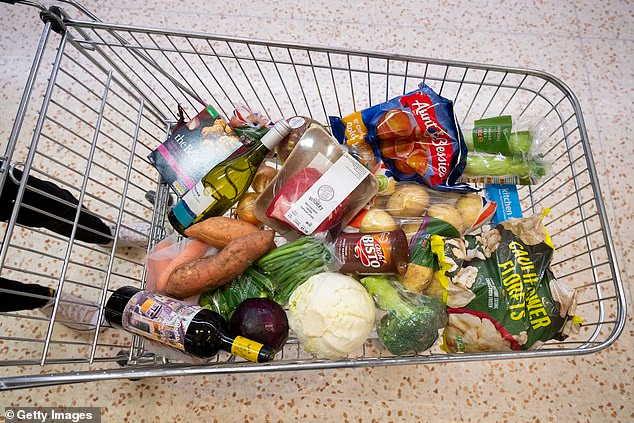
Nutrition experts have revealed the supposedly healthy foods they would leave on the supermarket shelf, from flavoured yoghurts and granola to protein bars and ready-made salad dressings.
Rachel Butcher, head of nutrition at London gym group Third Space, says healthy eating need not involve expensive “wellness” products or highly marketed snacks. After more than 15 years advising clients on weight management, strength and performance, she says her own weekly shop is built around simple staples.
That means plain yoghurt rather than sweetened varieties, tinned beans instead of dried ones and whole fruit and vegetables wherever possible. She also makes room for the occasional chocolate bar, arguing that some protein snacks are little different nutritionally.
Nutrition experts reveal the foods they avoid buying
One of the first items to be rejected is dried beans. Kidney, cannellini and other varieties are valuable sources of fibre, protein, vitamins and minerals, but registered dietitian Clementine Vaughan says the dried versions are rarely worth the extra preparation.
“Like many people, I don’t have time to soak them overnight and then cook them,” she says. “Pre-cooked beans in a can are just as good nutritionally and are very convenient.”
Tinned beans can also make it easier to include more of the pulses in everyday meals, from salads and soups to stews. Vaughan’s advice is to choose the convenient option if it makes healthy eating more realistic.
Flavoured yoghurts are another regular omission from Butcher’s trolley. Although yoghurt can provide protein and, in some cases, beneficial bacteria, she says strawberry and other sweetened varieties can contain levels of sugar comparable with a chocolate biscuit.
Her preferred choice is plain natural or Greek yoghurt. Frozen berries can be heated and added for sweetness, providing an alternative to buying a product with sugar already mixed in.
Products labelled “high in protein” or “for gut health” are not automatically better, Butcher adds. In her view, ordinary Greek yoghurt can provide many of the same benefits without the premium branding.
Granola is also treated with caution. The oat-based cereal is often associated with healthy breakfasts, but supermarket versions may contain substantial amounts of oil and sugar. Portion sizes, meanwhile, are easy to misjudge.
Butcher says the serving size printed on packaging is often considerably smaller than the amount people pour into a bowl. As a result, granola can end up providing more calories and sugar than many shoppers expect.
Pre-cut fruit and vegetables are another convenience food the experts say they would generally avoid. Xuxa Milrose, a nutritionist at London-based Feed Happy, says shoppers pay more for the preparation and may lose some freshness and nutrients once produce has been cut.
Her recommendation is to buy fruit and vegetables whole and prepare them at home. For those short on time, frozen chopped vegetables can be a practical alternative because they are usually frozen soon after harvesting.
Meal replacement and protein bars also fail to impress the panel. Butcher says some contain between 10g and 20g of protein, but may also be high in calories and include sweeteners and heavily processed ingredients.
She believes people can become comfortable eating several protein bars a day while viewing the same number of chocolate bars as excessive, despite similarities in their nutritional profiles.
Instead, she suggests meeting protein needs through foods such as meat, fish, poultry, legumes, Greek yoghurt and lentils, while choosing a chocolate bar occasionally if that is what is genuinely wanted.
Ready-made salad dressing is another item Milrose leaves behind. Some products contain emulsifiers, thickeners and considerable amounts of saturated fat or sugar, she says.
A homemade dressing can be prepared in about a minute using olive oil, lemon juice or vinegar, mustard and seasoning. The result is usually cheaper and gives shoppers control over the ingredients.
Finally, dietitian Clementine Vaughan advises caution with sugar-free chewing gum. She says the sweetener xylitol can irritate the gut in some people, causing bloating or wind, while larger amounts may have a laxative effect.
The experts’ overall message is not that every packaged food must be eliminated, but that supermarket claims should be treated carefully. In many cases, the simplest option — and the one with the shortest ingredient list — may be the most sensible choice.
