


OpenAI has claimed a breakthrough on the Navier–Stokes equations, one of the seven Millennium Prize Problems, but the announcement has been overshadowed by allegations that the company may have followed unpublished work by two mathematicians and tried to control how their findings were credited.
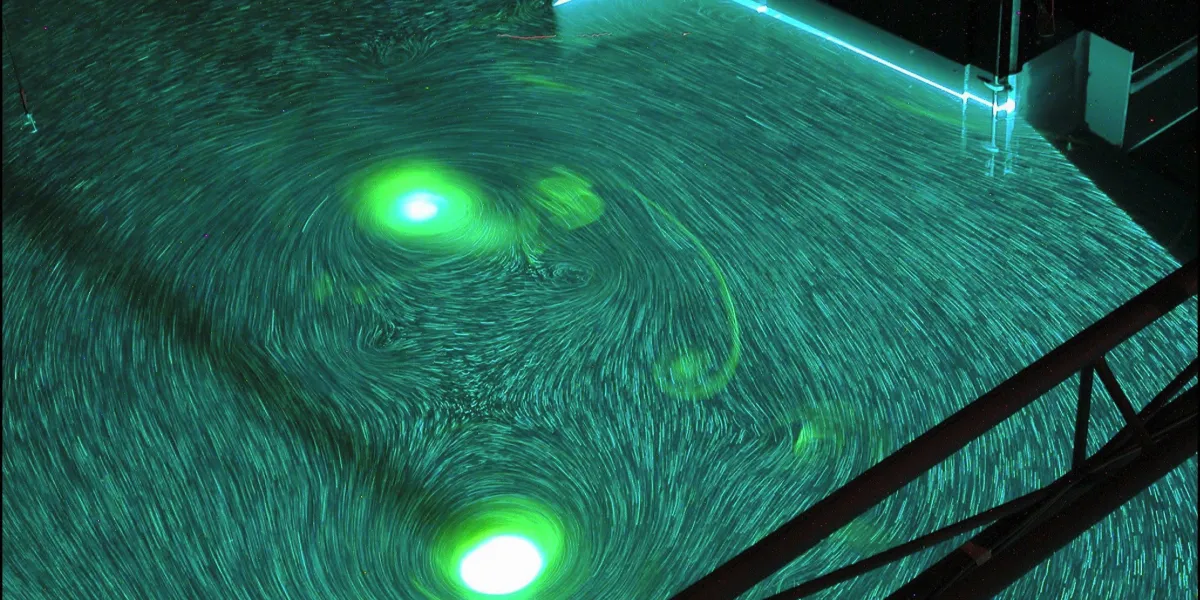
The company said on Tuesday, September 8, that an unreleased internal model had generated a proof showing that the equations governing fluid motion can develop a singularity — a point at which quantities such as velocity or pressure become infinite in finite time.
OpenAI said the work was produced by a multi-agent system, with as many as 10,000 software agents examining different approaches to the problem. Executives told reporters that the effort used computing resources costing millions of dollars.
The Navier–Stokes problem, selected by the Clay Mathematics Institute in 2000, asks mathematicians to establish whether smooth solutions to the equations always remain well behaved, or whether they can break down. A verified solution would qualify for a $1 million prize.
OpenAI has not said it will claim the award. The company has instead presented the result as evidence of the capabilities of its latest systems, which it says are significantly more powerful than its publicly available models.
OpenAI denies using private research
The announcement followed the publication of related work by Tristan Buckmaster, a mathematician at New York University’s Courant Institute, and Levent Alpöge, a researcher at rival AI company Anthropic.
Mr Buckmaster and Mr Alpöge said they had used Anthropic’s Claude and OpenAI’s Codex to make major progress on several related fluid-dynamics equations. Their work included results concerning the three-dimensional Euler equations, a simplified version of Navier–Stokes in which viscosity is absent, rather than a complete proof of the Millennium Prize problem itself.
Mr Buckmaster said the pair had spent much of the past year working slowly on ideas developed by mathematicians Diego Córdoba and Luis Martínez-Zoroa. Their progress accelerated in August, after they began using AI systems to develop and check the calculations.
He said OpenAI contacted him in early September and told him that an internal model had reached a result using what appeared to be the same broad line of attack. According to Mr Buckmaster, OpenAI acknowledged that its effort began only after rumours spread that Anthropic was close to a major mathematical announcement.
That timing prompted him to question whether the company’s model had accessed his private Codex conversations, where drafts and working notes had been stored, or whether those interactions had been used in training.
“I asked whether the model had been trained on, or had access to, our sessions in Codex,” Mr Buckmaster wrote in a statement. “I was told the model did not look up user data. I asked again, about training, and I did not get an answer.”
OpenAI has rejected the allegation. Sébastien Bubeck, the researcher who led the project, said neither the company’s researchers nor its AI agents had seen the mathematicians’ work before it was released publicly on September 7.
OpenAI’s account says the project began on September 1 after researchers heard a rumour that two Millennium Prize Problems had been solved. The company said it later discovered that the rumour referred to the work by Mr Buckmaster and Mr Alpöge, and that the approaches taken by the two groups appeared different once the papers were public.
Chief executive Sam Altman said the company had been curious to see whether its own systems could solve the problem. OpenAI has also said that no people or AI systems searched user data to produce the result, although it acknowledged that de-identified data from product use could not be ruled out as having helped improve its models.
Dispute over credit and alleged threat
The dispute intensified after Mr Buckmaster accused Mr Bubeck of proposing arrangements that would have allowed the mathematicians to publish their partial results alongside OpenAI’s announcement.
Mr Buckmaster said he was told that he and Mr Alpöge could publish first, with OpenAI announcing its own result the following day and describing them as the humans who had come closest to the solution. He also alleged that he was offered the chance to publish alone, provided he acknowledged OpenAI’s result and removed Mr Alpöge from the paper because of his employment by Anthropic.
Mr Buckmaster said he rejected the proposals and warned that he would make the conversation public. He alleges that Mr Bubeck then asked: “Why would you ruin your career?” and added: “If you don’t want me to be nice, then I don’t have to be nice.”
Mr Bubeck has described the claims as false and inflammatory. In a statement, he said he had approached the discussion in accordance with academic norms. During a briefing, he said OpenAI recognised the priority of Mr Buckmaster and Mr Alpöge’s work and congratulated them on what he called a major achievement.
The two accounts have not been independently reconciled, and OpenAI’s claimed proof has not yet gone through the full process of outside mathematical scrutiny required for broad acceptance. The central question is therefore not only whether the result is correct, but also how much of the work can properly be attributed to the model, its human operators and earlier mathematical research.
Concerns over AI-driven mathematics
The row has also revived wider concerns about the use of AI to tackle famous unsolved problems. Terence Tao, one of the world’s leading mathematicians, has warned that systems which produce answers without explaining why a particular idea works may offer limited insight into the development of mathematics.
He has argued that failed approaches and abandoned lines of enquiry are often as valuable as a final proof, because they can reveal techniques that later prove useful elsewhere. Keeping those processes hidden while presenting only a polished answer, he suggested, risks stripping away the context on which future research depends.
The episode has exposed the intensity of the rivalry between OpenAI and Anthropic, as both companies seek to demonstrate that their models can perform work previously associated with highly trained human researchers.
It has also raised a more immediate question for academics: whether confidential research carried out through commercial AI tools can remain genuinely private when the companies operating those systems are themselves racing to solve the same problems.
