


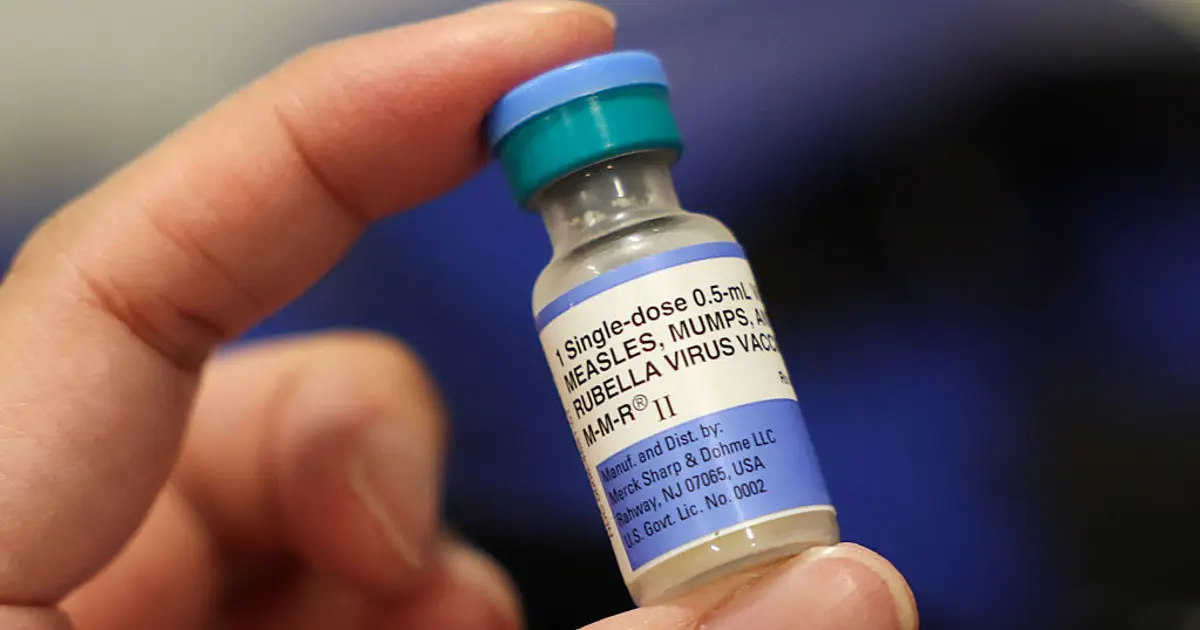
Pennsylvania has reported its sixth measles-associated death of 2026, as the state continues to experience the worst outbreak of the disease in the United States in decades.
The Franklin County Coroner’s Office said it investigated the death of a 39-year-old woman on Saturday, 10 October. She had several underlying health conditions and a recent diagnosis of measles for which she had received treatment.
Officials said the case met the Pennsylvania Department of Health’s definition of a measles-associated death. That requires a person to die within 30 days of symptoms beginning, have clinical evidence of measles and a positive laboratory test, with no unrelated cause of death.
The coroner’s office said it would not disclose further details that could identify the woman, citing privacy concerns for her family. It has not publicly confirmed whether she had been vaccinated.
The death was the first associated with measles in Franklin County for many years, according to the coroner’s office. The county has recorded seven measles cases during the current outbreak, according to local health data.
Pennsylvania measles outbreak passes 1,000 cases
The latest death follows five others reported in Pennsylvania this year. Two infants in Lancaster County died in August, while an 18-year-old in Mifflin County and a 40-year-old woman in Jefferson County died in September. A further Lancaster County resident died in a case announced by the state on 30 September.
The Pennsylvania Department of Health has reported 1,136 measles cases in 2026, including 157 recorded during the most recent seven-day period. State health centres have administered more than 5,500 MMR vaccinations since April in communities affected by the outbreak, while pop-up clinics have delivered more than 8,500 further doses.
Nationally, the US Centers for Disease Control and Prevention recorded 4,080 measles cases by 9 October, the highest annual total since 1991. Pennsylvania accounts for more than a quarter of those infections.
The state’s six reported measles-associated deaths are not yet reflected in full on the CDC’s national tracking system, which lists two deaths. The federal agency has said it is relying on records from the National Center for Health Statistics, which can take weeks to be completed and may lead to figures changing as cases are reviewed.
