


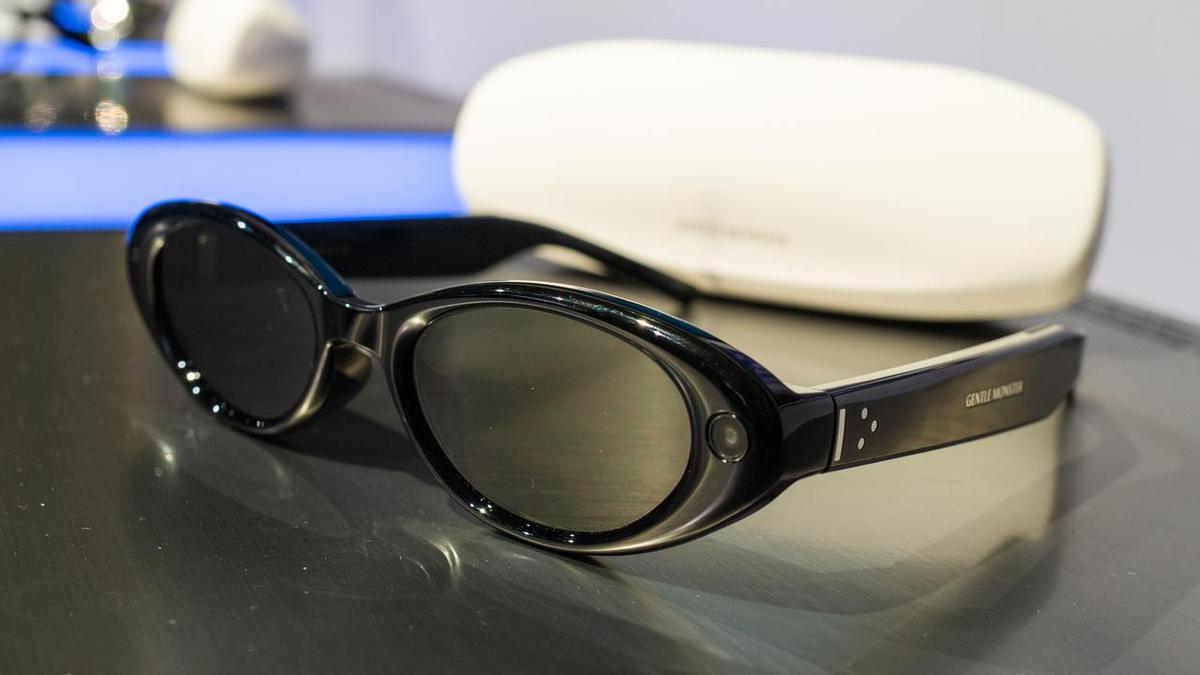
Disabled Australians have warned that a proposed ban on smart glasses could remove a valuable accessibility tool, as concerns grow over camera-equipped devices being used to record people without their knowledge.
The technology is spreading quickly across Australia, with cheaper models now available from retailers including Kmart. Critics say the low-cost glasses, which can capture audio, video and images while appearing similar to ordinary eyewear, create serious privacy and safety risks.
But Chris Hastings, chief mission officer at Vision Australia, said a blanket ban could make everyday tasks harder for people with sight impairments. Mr Hastings, who is totally blind, uses smart glasses to obtain information without having to repeatedly unlock his phone and navigate accessibility functions.
Reading something as simple as a restaurant menu once involved entering passcodes, opening the correct application and positioning his phone. He can now complete the task through a small number of hands-free commands.
“There have been people that can use phones irresponsibly and do the wrong thing,” he told the Australian Associated Press. “But the accessibility benefits are significant, and that needs to be part of this discussion.”
Smart glasses ban debate intensifies
Attorney-General Michelle Rowland on Monday defended the federal government’s decision not to impose an import ban, arguing that businesses and local councils should play a greater role in deciding where the devices can be used.
Her comments came as the Albanese Government released draft legislation and a consultation paper for the next stage of its privacy reforms. The proposals include stronger consent requirements, limits on the trading of personal information and a right to request the deletion of data held by large digital platforms.
Smart glasses are not dealt with in detail in the draft laws, which are intended to be technology-neutral. Supporting material indicates that businesses and councils could restrict their use in particular settings.
The government has invited submissions on the reforms until 18 September 2026. Ms Rowland said privacy protections had to address potential misuse without cutting off legitimate and beneficial applications of emerging technology.
“Disability advocates and groups and people who are directly impacted in a positive way by this technology also need to have their voices heard in this debate,” she said.
The Greens have instead called for a 12-month suspension of imports while stronger safeguards are developed. The party wants an exemption for genuine disability aids and is also seeking a compulsory prominent light or audible signal on every model to show when recording is taking place.
Greens senator David Shoebridge said the draft reforms did not go far enough, arguing that the Privacy Act still offered limited protection against an individual secretly filming another person.
University of Technology Sydney policy specialist Sarah Sacher said a temporary import measure could give ministers, regulators and disability organisations time to consider how the products should be controlled.
“Right now, we know these glasses aren’t safe. There could be a temporary measure to keep them off the market until we’ve got the right protections in place,” she said.
Ms Sacher said cheap alternatives, or “dupes”, were particularly concerning because standards for data collection and security could vary widely between manufacturers. She warned that the rapid arrival of poorly regulated products could open a “Pandora’s box” of misuse.
The eSafety Commissioner has also highlighted the risks. Its recent guidance says augmented-reality glasses can be used to record and livestream people covertly, and recommends measures including automatic face blurring, delays before livestreams begin and clear indicators when audio or video is being captured.
The regulator has referred to an incident in March 2025 in which footage of a Sydney woman was recorded using smart glasses and uploaded to social media without her consent or knowledge.
Brisbane City Council has separately moved to prohibit secret filming with smart glasses and other wearable recording devices at public swimming pools. Ms Rowland said other councils could consider similar restrictions in childcare centres and other public places under their control.
For disability advocates, the challenge is ensuring that privacy protections target covert surveillance without preventing people with low vision or other impairments from using technology that can help them participate more independently in everyday life.
