


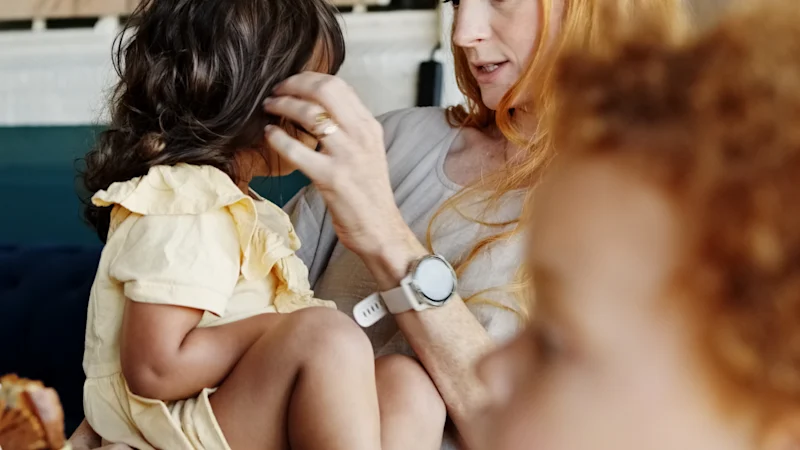
The quality parents should most want to pass on to their children may not be exceptional intelligence or academic brilliance, but a belief that they can influence what happens in their lives, economists and psychologists suggest.
Deborah Cobb-Clark, an economist at the University of Sydney, has highlighted the importance of an “internal locus of control” — the belief that personal choices and effort can shape future outcomes. The trait has been linked to saving, employment, entrepreneurship and the time parents invest in developing their children’s skills.
The idea dates back to the work of psychologist Julian Rotter in the 1960s. People with an internal locus of control tend to see themselves as capable of affecting events, while those with an external locus are more likely to attribute success or failure to luck, fate or other people.
Research by Cobb-Clark, Sonja de New and Mathias Sinning found that households with an internally orientated member saved more, both in absolute terms and as a proportion of permanent income. The difference in accumulated wealth was particularly marked among poorer households. ([iza.org](https://www.iza.org/en/publications/dp/7837/locus-of-control-and-savings?utm_source=openai))
The same outlook appears to affect behaviour in the labour market. Research involving newly unemployed people in Germany found that those with a more external outlook searched less intensively for work and were prepared to accept lower wages, consistent with the belief that effort has little influence over the eventual result.
An internal locus of control is also associated with turning intentions into action. Studies have linked it to greater willingness to start a business and to stronger self-control, which can support long-term financial decisions such as saving and investing.
How an internal locus of control affects parenting
The consequences may extend into the next generation. Research led by Warn Lekfuangfu found that a mother’s locus of control, measured during pregnancy, predicted both her approach to parenting and the amount of time she spent on activities intended to build her child’s early skills. ([wrap.warwick.ac.uk](https://wrap.warwick.ac.uk/id/eprint/81473/?utm_source=openai))
The explanation is that parents who believe their actions matter are more likely to think that reading, teaching and structured activities will produce lasting benefits. Parents with a stronger external outlook may be less convinced that such investments will change their child’s future.
People also commonly underestimate how much influence they have over other people. Research by Francis Flynn and Vanessa Lake found that participants expected far fewer strangers to agree to requests for help than actually did. In several experiments, people underestimated the likelihood of receiving help by as much as half. ([gsb.stanford.edu](https://www.gsb.stanford.edu/insights/francis-flynn-if-you-want-something-ask-it?utm_source=openai))
Another study, by University of Chicago economist Steven Levitt, examined people who were unable to decide whether to make a major change, such as leaving a job or ending a relationship. Those encouraged by a virtual coin toss to change course were more likely to do so and reported greater happiness six months later, suggesting that excessive caution can prevent people from acting on choices they already favour. ([nber.org](https://www.nber.org/papers/w22487?utm_source=openai))
The outlook is relevant in the workplace as well as at home. A 2026 study of employees at manufacturing companies in Shenzhen found that people with an internal locus of control were more likely to view the adoption of artificial intelligence as a challenge and share what they learned. Those with a more external outlook were more likely to regard it as a threat and withhold knowledge. ([ideas.repec.org](https://ideas.repec.org/a/pal/palcom/v13y2026i1d10.1057_s41599-026-06829-5.html?utm_source=openai))
For parents, the findings do not suggest that personality alone determines a child’s prospects, or that financial success can be guaranteed by a particular upbringing. But they point to the value of encouraging children to recognise the connection between effort, decisions and outcomes — while accepting that circumstances and luck still play a part.
