


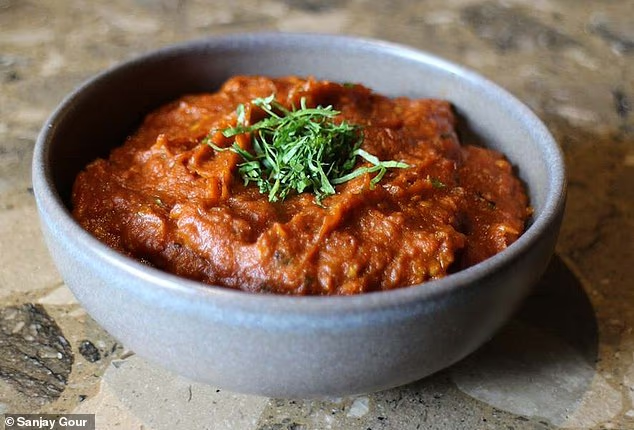
Chef Sanjay Gour has revealed the Indian restaurant dishes he would avoid ordering, warning diners to be wary of neon-red chicken tikka, poorly prepared biryani and menus offering every curry with a choice of meat or seafood.
Gour, co-founder of south London modern Indian restaurant KOKUM, said the appearance of a dish and the way a menu is constructed could offer clues about the freshness and care behind the cooking.
The chef, who grew up in Mumbai and worked at Michelin-starred restaurants including Murano by Angela Hartnett, said he was particularly cautious about restaurants with extremely extensive menus.
Indian restaurant dishes to avoid
“No kitchen can specialise in absolutely everything,” Gour said, explaining that a large menu could make it harder for each dish to receive the same level of attention and freshness.
His advice covers everything from tandoor-cooked favourites to fried starters, takeaway chaat and unusually cheap lamb curries.
Bright red chicken tikka
Chicken tikka with an almost fluorescent colour would immediately concern Gour. He said good tikka should be tender inside, properly marinated and marked by the smoky, slightly blackened edges created by cooking in a tandoor.
“The spices, chilli and marinade will naturally give it colour, but it shouldn’t look like somebody has attacked it with a pot of red food colouring,” he said.
For the chef, the quality of the marinade and the char matter more than a strikingly bright appearance.
Restaurants with enormous menus
Pages covering every possible curry, biryani, grill, seafood dish and regional speciality would make Gour cautious before ordering.
He said a more focused menu was preferable, particularly when it made clear which dishes the restaurant was known for. The greater the range, he argued, the more preparation was required and the more difficult it became to believe that everything was being cooked with equal care.
Vindaloo marketed as a heat challenge
Gour also advised against ordering a vindaloo if it was advertised primarily as the hottest curry available or as a test for diners.
He said the dish should offer more than heat, with acidity, garlic, spice and depth all contributing to the flavour. “Chilli should be part of the flavour, not a punishment,” he said.
In his view, a vindaloo should still allow diners to taste the meat or other ingredients rather than overwhelm them with chilli.
Biryani that resembles curry mixed with rice
A biryani should not look like plain rice combined with a spoonful of curry and brightly coloured grains, according to Gour.
He said the rice, meat or vegetables, spices and aromatics should be allowed to work together, producing an immediate fragrance when the dish is opened. The grains should remain separate, with flavour running throughout the dish.
“It’s a dish where shortcuts really show,” he said.
Pale, flat naan
Fresh naan should show signs of having been cooked in a hot tandoor, Gour said, including bubbles, blistered areas, charred patches and crisp edges around a softer centre.
A naan that is completely pale, flat and uniform could prompt questions about whether it was cooked fresh or bought in and reheated. The chef said it was at its best when served immediately after coming from the tandoor.
Chaat left in a takeaway bag
Chaat was another dish Gour said he would avoid ordering if it had to spend a long time in transit.
The appeal of chaat lies in the contrast between crunchy and soft elements, cold yoghurt and sweet, sour and spicy chutneys. But he said the crisp ingredients quickly absorb the sauces inside a closed container, meaning the dish could lose its intended texture during a journey of around half an hour.
He recommended eating chaat in the restaurant or immediately after it has been prepared.
Fried starters that are no longer fresh
Gour said diners could often tell when a bhaji or another fried starter had been sitting around. Instead of being hot, crisp and light, it would become soft, oily and heavy.
Because fried snacks are relatively simple, he said there was little opportunity to disguise a lack of freshness. He would prefer to order something else rather than eat food that had been fried earlier and reheated.
Curry with a choice of every protein
A menu listing the same curry with a choice of chicken, lamb, prawns or vegetables would also make Gour question how the dish was prepared.
He said the format could suggest that a large batch of sauce had been prepared in advance, with the chosen ingredient added later. While that did not necessarily mean the food would be poor, he noted that lamb, prawns and chicken each developed different flavours when cooked with spices and gravy.
Very cheap lamb curry
An unusually low price for a lamb curry would lead Gour to ask how the restaurant had achieved it. He said diners might want to consider the cut being used, how much lamb was actually in the dish and whether the meat was fresh or previously frozen.
He also questioned whether the lamb was British or a lower-cost imported product, such as frozen New Zealand lamb. Gour stressed that imported or frozen meat was not automatically inferior, but said the price and quality needed to correspond.
“Personally, I’d rather pay a little more and know that good-quality meat has gone into the dish,” he said.
When choosing what to order, Gour said he would begin by asking what the restaurant was known for and would look for a house speciality rather than automatically selecting the most familiar curry.
He would also consider dishes from the tandoor, a properly prepared biryani, and simple dals such as dal tadka or dal makhani. Regional dishes with an explanation of their origins or traditional preparation would also catch his attention, he said, because they suggested there was a specific reason for being on the menu.
