


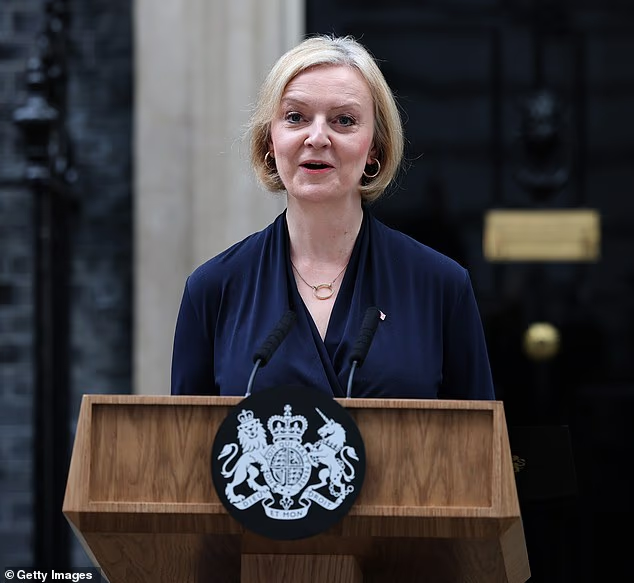
Liz Truss has defended her disastrous 49-day premiership, claiming the economy is now in a more fragile state under Andy Burnham than it was during her time in Downing Street.
In a new book, Bank Job, the former prime minister argues that the radical measures announced in her 2022 mini-Budget would have left the public finances in better shape. She blames the market turmoil that followed on the financial establishment and the Bank of England.
The mini-Budget, delivered by her then chancellor Kwasi Kwarteng, included £45 billion of tax cuts, among them a proposed reduction in the 45p rate paid by higher earners. Bond yields surged and the pound fell sharply, contributing to Ms Truss’s removal from office.
Her book is being published ahead of Chancellor John Healey’s Budget on Wednesday, which is expected to offer modest assistance with household energy bills and targeted support for businesses.
The measures are expected to be funded through higher taxes on banks and by reducing the Government’s fiscal headroom, amid low growth and rising debt-servicing costs.
Ms Truss writes that Britain under Mr Burnham is losing its economic edge, claiming: “Billionaires are leaving Britain at a rapid rate. We top the world league table for departures.
“The City of London, one of the last remaining success stories, is being eclipsed. We are losing out in the tech race and the capital race.”
She also rejects the argument that her tax cuts would have damaged the public finances, writing: “People said my tax cuts would… worsen the public finances. We’ve now tried the opposite and the public finances are worse.”
Ms Truss adds: “The 30-year gilt yield has gone past 6 per cent – much higher than back in 2022. This is now reflecting… a lack of trust in the entire system.”
Bank Job is described as a short account of how the Bank of England “broke the bond market and brought down the government”. It also accuses former minister Michael Gove and other “Tory Traitors” of being more interested in remaining in office than “saving Britain”, while blaming the media and political establishment for promoting what she calls a false narrative about unfunded tax cuts.
The book’s cover depicts Ms Truss at a desk with five men standing behind her, including Tony Blair and two former Bank of England governors. She says her brief time as prime minister should be seen as evidence of “the system’s speed and how close I was to the target”, rather than proof that her ideas were foolish.
Andy Haldane, the Bank of England’s former chief economist, has cited Ms Truss as a warning to Mr Burnham, saying the prime minister must “take the knife” to public spending in the Budget or risk a crisis that would “crater” the economy.
Mr Haldane said Britain was “close to being taxed out and maxxed out in terms of borrowing”, and accused the Government of failing to understand the precariousness of the country’s finances.
Ms Truss’s argument has been rejected by some of her former colleagues. Sir Conor Burns, who served as her trade policy minister, said: “The markets and the party realised she was a nutjob and financially illiterate. And she was, mercifully, ejected.
“She is now an international embarrassment with zero self-awareness.”
