


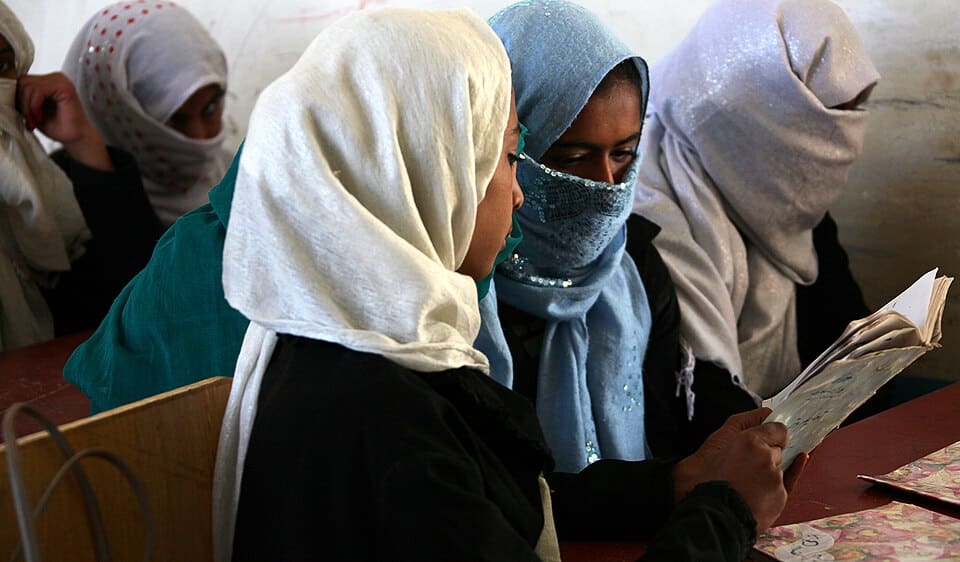
A flagship UK-funded programme designed to help a million women and girls across Africa, Asia and the Middle East gain access to higher education has been scrapped just two years after it was launched, as part of a wider retreat in British aid spending on women’s and girls’ education.
The scheme, known as Strengthening Higher Education for Female Empowerment, or SHEFE, was unveiled with a £45m budget under the outgoing Conservative government and built on the legacy of an earlier FCDO initiative, the Strategic Partnerships for Higher Education Innovation and Reform programme. Beyond simply widening access to universities, SHEFE had been designed to tackle complex barriers facing young women in higher education, including sexual exploitation, abuse and harassment, and to establish a new centre of expertise to share best practice across the FCDO’s global network. The Foreign, Commonwealth and Development Office has now confirmed its tender for the scheme has been withdrawn.
The decision sits awkwardly alongside the government’s recent public messaging. Only in May, the foreign secretary, Yvette Cooper, launched a new international strategy on women and girls and said she was “determined to work across borders to ensure women’s safety is a worldwide priority.” Bambos Charalambous, the Labour MP who chairs the all-party parliamentary group on global education, said he was alarmed that a flagship programme “designed to empower women and girls and help them achieve their potential appears to have been scrapped because of the aid cuts.” He said the FCDO had itself acknowledged how such partnerships could transform lives while benefiting British institutions, and that officials needed to start planning now for how to rebuild similar work once the cuts had passed.
Evidence cited in support of programmes like SHEFE points to their wider social impact: girls who complete higher education are up to six times less likely to marry as children, are less likely to experience violence from a partner in later life, and tend to earn significantly more over their lifetimes.
Campaigners and policy experts say SHEFE’s cancellation is far from an isolated case. The Home Office has separately blocked new study visas for applicants from Afghanistan, Sudan, Myanmar and Cameroon, closing off a route for women whose educational opportunities at home have already been curtailed, even as British universities continue to rely heavily on the higher fees paid by international students. Joseph Nhan-O’Reilly, co-founder of the International Parliamentary Network for Education, argued that the government “talks up its commitment to women and girls” while repeatedly withdrawing support for the intervention with, in his view, the clearest evidence of impact: access to higher education.
A similar pattern has played out in South Sudan, one of the world’s poorest countries and one with among the highest rates of children out of school. The FCDO’s Girls’ Education South Sudan programme, which cost close to £67m and had supported 1.5 million girls into education since 2018, concluded in March and was due to be succeeded by a new £150m scheme, Education for All South Sudan. That successor programme’s tender has since been cancelled amid a wider review of FCDO budgets, according to Nhan-O’Reilly. South Sudan’s minister of general education, Kuyok Abol Kuyok, has said he was told by the British embassy that only the tender, not the underlying commitment, had been cancelled, but that he remained concerned about what would follow.
Further cuts have hit girls’ education programmes in the Democratic Republic of the Congo, where tens of thousands of girls had begun attending school for the first time under a UK-backed scheme now being wound down, as well as in Ethiopia, Sierra Leone, Nigeria and Zimbabwe. The FCDO’s own Girls’ Education Department has seen its funding cut by 51%. Separate analysis produced for the House of Lords Library found that 10 of the 12 FCDO programmes put forward for closure or pause in the current funding round were equalities-focused, even as the department maintains a public commitment to ensuring 90% of its bilateral aid programmes contribute to gender equality by 2030.
The scale of the retrenchment is significant. Combined FCDO funding for education, health, and gender and equality work is projected to fall by 72% between 2024–25 and 2026–27, from £1.54bn to £433m, before partially recovering by the end of the decade to a level still around a fifth below where it stood before the cuts began. A spokesperson for Bond, the UK network for international development and humanitarian organisations, warned that cuts of this kind “threaten to reverse hard-won progress on ending gender-based violence and exploitation, and advancing gender equality worldwide,” and pointed to polling last year by More in Common that found most of the British public wanted programmes protecting women and girls shielded from any reductions to the aid budget.
The UN’s children’s agency, Unicef, has estimated that global cuts to education aid — from donors including the UK and the US — will reduce funding by $3.2bn, or around 24%, this year alone, putting 6 million more children at risk of dropping out of school by the end of 2026, almost a third of them in humanitarian crisis settings. Nhan-O’Reilly said the UK, long regarded as one of the leading international champions of girls’ education, had effectively followed the lead set by US cuts to gender programming made last year. “These cuts can’t be seen on their own,” he said, arguing they had shaped the posture of other donor governments too.
The reductions stem from a decision announced by the prime minister, Sir Keir Starmer, to cut the UK’s aid budget from 0.5% of gross national income to 0.3% by 2027, which would leave it at its lowest level since records began — well below the UN’s 0.7% target that former Conservative prime minister David Cameron had pledged to meet as far back as 2012. The move marked a reversal of Labour’s own manifesto commitments and prompted the resignation of Anneliese Dodds as international development minister in February last year. Nhan-O’Reilly described the sector as “flabbergasted and devastated” by cuts carried out under a Labour government, calling it “a huge mistake and betrayal.”
The FCDO has defended the decision as a necessary trade-off to fund higher defence spending. “National security is the first duty of this government,” a spokesperson said, adding that this did not mean stepping back from the department’s values, since protecting women and girls remained a Foreign Office priority and funding to tackle violence against women and girls had been protected this year.
