


US forces struck two Iranian rocket launchers on Larak Island in the Strait of Hormuz on Sunday, in the first publicly acknowledged American attack on Iran in almost a month.
Washington said Islamic Revolutionary Guard Corps personnel had been preparing to fire rockets carrying sea mines into the strategic waterway, prompting the strike. The operation ended a fragile lull in fighting during a conflict that has continued intermittently for more than six months.
Iran vowed retaliation, with the Revolutionary Guard saying several soldiers and civilians had been killed or wounded. Iranian state television later broadcast footage it said showed ballistic missiles being launched at US bases in Jordan.
There were no immediate reports of damage from the reported missile attack. Iranian media said the strikes targeted the King Hussein and Al-Azraq bases, while the Revolutionary Guard described the US operation as a “response and punishment” that would carry military and economic consequences for Washington.
Strait of Hormuz remains at the centre of the conflict
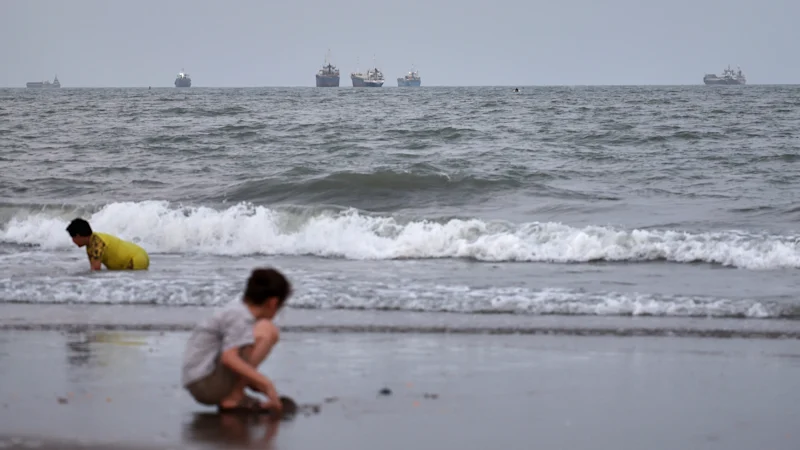
The US attack came as commercial traffic through the Strait of Hormuz remained at sharply reduced levels. The waterway normally carries about a fifth of the world’s oil, but relatively few tankers and liquefied natural gas vessels are now attempting the crossing.
A US Central Command spokesman, Tim Hawkins, said American forces had observed preparations to deploy mines into the strait. US forces also cleared lingering mines from international shipping routes last week and said they remained ready to protect commercial traffic.
Donald Trump has repeatedly insisted that the Strait of Hormuz is open, claiming that 24 vessels crossed last week. That remains a fraction of the roughly 130 vessels a day that used the passage before the war began.
The British military’s United Kingdom Maritime Trade Operations agency said an unidentified projectile struck a tanker north of Khasab, Oman, on Saturday. The vessel was travelling inbound, and no casualties or environmental damage were reported. No group immediately claimed responsibility.
The latest strikes mark a sharp change in emphasis for the Trump administration, which had recently said it would prioritise economic pressure and sanctions over further military action in an effort to force Tehran to negotiate.
The last US strikes publicly confirmed by Washington were on July 29, when American forces attacked dozens of Revolutionary Guard targets, including coastal surveillance and defence installations. On August 1, Mr Trump said he would pause further attacks after appeals from Qatar, Saudi Arabia and the United Arab Emirates.
US officials have said the military has redirected 83 commercial vessels and disabled three as part of its blockade of Iranian ports. The renewed exchange of fire now threatens to draw the region back into open conflict, with Iran continuing to use the Strait of Hormuz as leverage despite the damage inflicted on its naval and air forces.
