


Australia’s proposed social media algorithm opt-out is likely to weaken the reach of One Nation and other right-wing political groups, experts have warned, as the Albanese government faces accusations that it is disguising censorship as online safety reform.
The draft Digital Duty of Care laws, released on Tuesday, would require platforms to give users aged over 16 a choice between a personalised feed shaped by algorithms and a chronological-style feed showing posts from accounts they have chosen to follow.
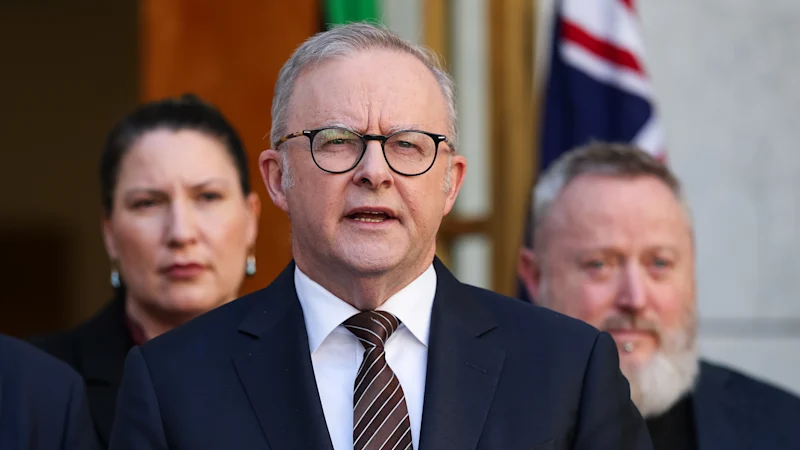
Prime Minister Anthony Albanese said the plan was intended to return control to users rather than restrict political speech.
“This is not about giving government control, it is about giving people control,” he said as the government launched the proposed “My Feed, My Way” system.
Platforms including Facebook, Instagram and TikTok would be required to notify new and existing users of the choice. The decision could be changed repeatedly, according to Communications Minister Anika Wells.
The government says the wider duty of care will force online services to reduce foreseeable harms, with companies facing penalties of up to 109.2 million Australian dollars if they fail to comply. The proposed rules would also apply to online games, apps and artificial intelligence chatbots.
Critics accuse Labor of targeting political opponents
The reforms have triggered a political backlash from conservative politicians, who argue that removing algorithmic recommendations could reduce the ability of right-wing parties to reach people beyond their established supporters.
Liberal frontbencher Jacinta Nampijinpa Price accused Labor of trying to reshape the online information environment for its own advantage.
“Slowly but surely, [Labor] are wanting to control social media. They are wanting to control the media to benefit them, not the Australian people,” she said in Canberra.
Price said the government was acting because it believed social media algorithms were no longer working in its favour, a claim Labor has rejected.
One Nation MP Barnaby Joyce also alleged that the proposal was politically motivated, arguing that many people had become involved in politics through online communities and that Labor viewed his party’s digital presence as a threat.
“If the Labor Party are to beat us, and the Coalition are to compete with us, they need to be a better party than us,” Joyce said.
The opposition has not yet committed to supporting or rejecting the draft legislation. Shadow communications minister Sarah Henderson described the proposal as a potential threat to free speech and objected to the minister’s proposed ability to add new categories of harmful content through regulation.
Nationals leader Matt Canavan said he was “deeply sceptical” of giving any government the power to decide what people read on their phones.
Labor insists the measures do not give ministers authority to police political opinions or misinformation. Wells said the legislation was focused on platform design, illegal material and users’ control over their feeds.
“When it comes to adults, it’s just a question of illegality and choice,” she said.
Experts predict a major change to political campaigning
Timothy Graham, an associate professor at Queensland University of Technology who studies online influence and algorithms, said the changes could have a profound effect on Australian political communication.
He said right-wing politicians would probably receive less attention and engagement if their content was no longer automatically inserted into users’ feeds.
Political strategist Ed Coper said the reforms were likely to affect One Nation particularly heavily. He argued that the party’s growing support had coincided with its success in using algorithm-driven platforms to distribute confrontational political content.
“She’s been saying the same thing for 30 years, but now with the algorithm on her side, she’s more popular,” Coper said, referring to One Nation leader Pauline Hanson.
He rejected the idea that Labor had introduced the policy simply to disadvantage its opponents, saying the more significant motivation was the government’s broader attempt to curb online harm and force technology companies to change the way their services operate.
Independent senator David Pocock, who has built a substantial social media following, said current systems often reward outrage and could pose a danger to democratic debate. He said the details of the legislation and its enforcement would be crucial.
The Greens have indicated they are willing to negotiate on the proposal, but have called for stronger protections and previously backed a system that would make algorithmic feeds opt-in rather than opt-out.
The government plans to consult on the draft before introducing legislation to parliament later this year. The proposal is expected to face a prolonged dispute over the balance between online safety, political campaigning and freedom of expression.
