


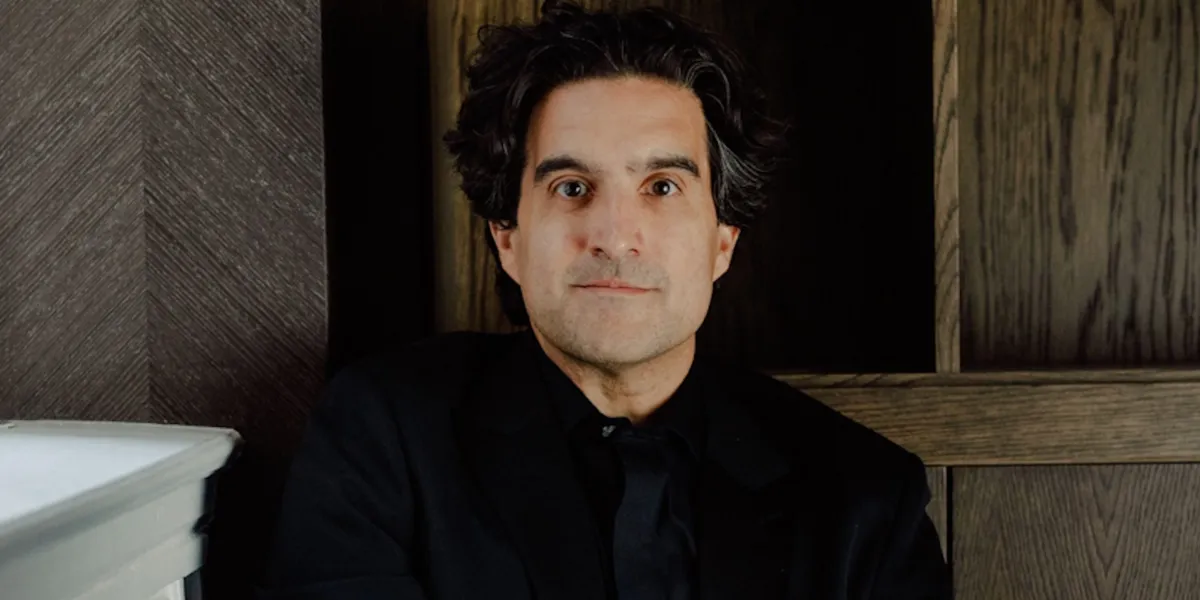
Andy Dunn, the co-founder of menswear brand Bonobos, has described how a severe bipolar episode in 2016 led to his hospitalisation, an arrest and a six-month effort to rebuild his personal and professional life before the company was sold to Walmart for $310 million.
Dunn, who was diagnosed with Bipolar I while at university, said the episode came after mounting pressure at Bonobos, the departure of his co-founder, changes among senior executives and an increasingly lavish lifestyle in New York.
During the episode at his apartment, Dunn believed he was the president of the United States and Batman. He injured his head on a doorway and struck Manuela, then his girlfriend and now his wife, when she tried to help him. He also fought with her mother before eight police officers arrived and restrained him.
Dunn spent a week in the psychiatric ward at Bellevue Hospital in Manhattan. Over the following six months, he worked to repair his relationships with Manuela, his family and his business.
“I went through some pretty calamitous events that led to good news on the other side of that, which was getting healthier, acknowledging the condition, being in treatment,” Dunn said. “A new chapter of my life opened up once this was all in the light.”
Andy Dunn’s bipolar episode and the pressure of building Bonobos
Dunn was first diagnosed with Bipolar I as a senior at Northwestern University in 1999. He said he was in denial about the condition for a period, while the demands of entrepreneurship appeared to mask and intensify its effects.
He co-founded Bonobos with Brian Spaly at the age of 28, investing $60,000 of their own money in a business selling men’s trousers online. The company reached an annual revenue run rate of $2 million within a year, later secured funding from Accel and Lightspeed, and began recording more than $1 million in monthly sales in 2010.
Bonobos subsequently attracted $16.4 million from Nordstrom and raised a further $85 million over the next two years. Walmart bought the company in 2017, when it was generating about $120 million in annual sales, and retained Dunn as chief executive until the sale.
Looking back, Dunn said some of the characteristics associated with entrepreneurship could resemble hypomania, including reduced sleep, high energy, bursts of creativity, risk-taking and an elevated sense of confidence.
“The characteristics of an entrepreneur are really convergent with the diagnostic criteria for what’s called hypomania,” he said. “It’s more or less an entrepreneur having a good day.”
It took six months to find a combination of medication that made Dunn feel like himself again. He began therapy, saw a doctor weekly and said he had not missed a day of medication in the decade since the episode. Sleep, exercise, sunlight and a more measured relationship with work became central to managing his condition.
Manuela remained with him during the aftermath, including visiting him in hospital, and the couple later married. Dunn has since spoken publicly about Bipolar I in TED talks and in his 2022 book, Burn Rate.
Pie’s mission to tackle loneliness
Dunn later moved away from clothing and founded Pie, a social media company focused on helping people form friendships and develop connections in the real world.
The idea began as a dating app for older people, launched while Dunn was trying to find a husband for his mother-in-law. After that plan failed, he shifted the business towards platonic relationships and a broader focus on belonging and community.
Pie was founded in 2020 and initially made little progress. After Dunn moved from New York to Chicago and struggled to form social connections himself, he relocated the company and began targeting local events, interest groups and recurring communities.
The app now operates across all 50 US states and 100 cities, with more than 310,000 users. It has raised $24 million, and in July this year brought Nadya Okamoto on board as a co-founder.
Dunn said his experience had also changed his relationship with the company’s fortunes. “Bonobos was very much wrapped up in my ego and my identity…Whether it succeeded or not was a direct referendum on me as a person,” he said.
“And now, with Pie, it’s so important to me that we win, and I have so much belief this is going to be a big and important and enduring company. And I know that it’s a company—it’s not me.”
