


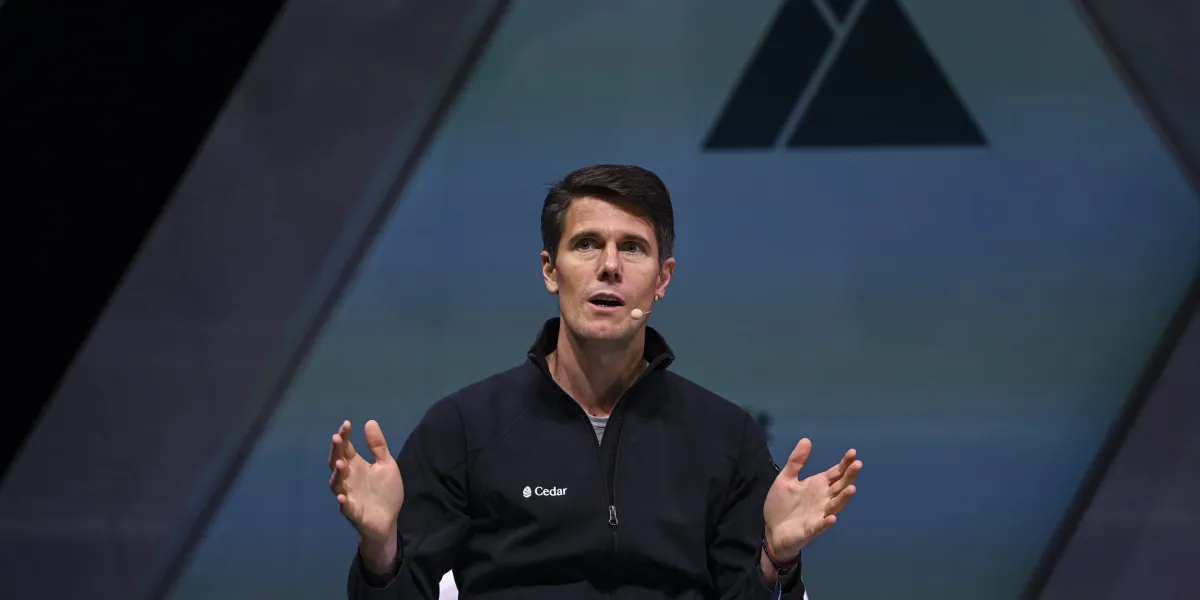
A German-born founder of healthcare company Cedar has argued that immigrant entrepreneurs are central to America’s economic strength, while warning that uncertainty over immigration policy could drive future talent elsewhere.
Writing about his experience building Cedar, a company focused on improving the patient medical billing experience, the founder said the United States’ advantage rested on three factors: people prepared to take risks, policies that allowed them to remain in the country, and regulation clear enough for businesses to operate in difficult sectors.
He contrasted the entrepreneurial cultures of Germany and the US, saying his home country valued precision, established processes and getting things right before acting. By comparison, he described the American response to Cedar’s early idea as more willing to accept risk and test an unproven solution.
The founder said that difference was particularly important for immigrant entrepreneurs, who often arrive with experience of more than one national system. His exposure to Germany’s healthcare system, he said, made the confusion and fragmentation of American medical billing stand out as a business opportunity.
He cited figures showing that immigrants had founded or co-founded 59% of America’s privately held billion-dollar start-ups in the year covered, compared with 55% several years earlier. Nearly 80% of US unicorn companies were said to have an immigrant founder or an immigrant in a key leadership role.
The contribution also extends to established companies, according to the figures cited. Immigrants or their children founded 231 of the 2025 Fortune 500 companies – 46.2% of the total – which together generated 8.6 trillion dollars in revenue and employed more than 15 million people worldwide.
The Cedar founder said immigrant entrepreneurs could identify problems that people raised within a single system might take for granted. He added that moving countries could also alter an individual’s attitude to failure, making the decision to start again seem less daunting.
US startup visa gap
He warned, however, that entrepreneurial drive could not compensate for a lack of certainty over the right to remain in the United States. The country has no dedicated start-up visa, leaving founders without an employer sponsor with few dependable routes to stay and develop their companies.
That uncertainty could also affect the next generation of technology businesses, he said. US institutions employ 59% of the world’s elite artificial intelligence researchers, a lead he described as largely dependent on foreign-born talent.
He argued that early-stage founders and researchers needed a more predictable immigration route before committing years to building companies in America. Without that assurance, groups of talented people could instead choose countries offering clearer answers.
Regulation was identified as the third part of the equation. The founder said rules were not inherently hostile to innovation, particularly in sectors such as healthcare, finance and defence, but warned that complexity increased as companies grew and state and federal requirements overlapped.
Clear, demanding regulation could be navigated, he argued, whereas ambiguity was what undermined innovation. For companies operating in regulated industries, following the rules should remain a viable route to building a durable business rather than becoming a competitive disadvantage.
The founder said he had moved to the US not because it was easy, but because the country gave new ideas the opportunity to be tested and developed. He credited the welcome he received and said America’s willingness to value outside perspectives remained a competitive advantage, provided its immigration and regulatory systems continued to support it.
