


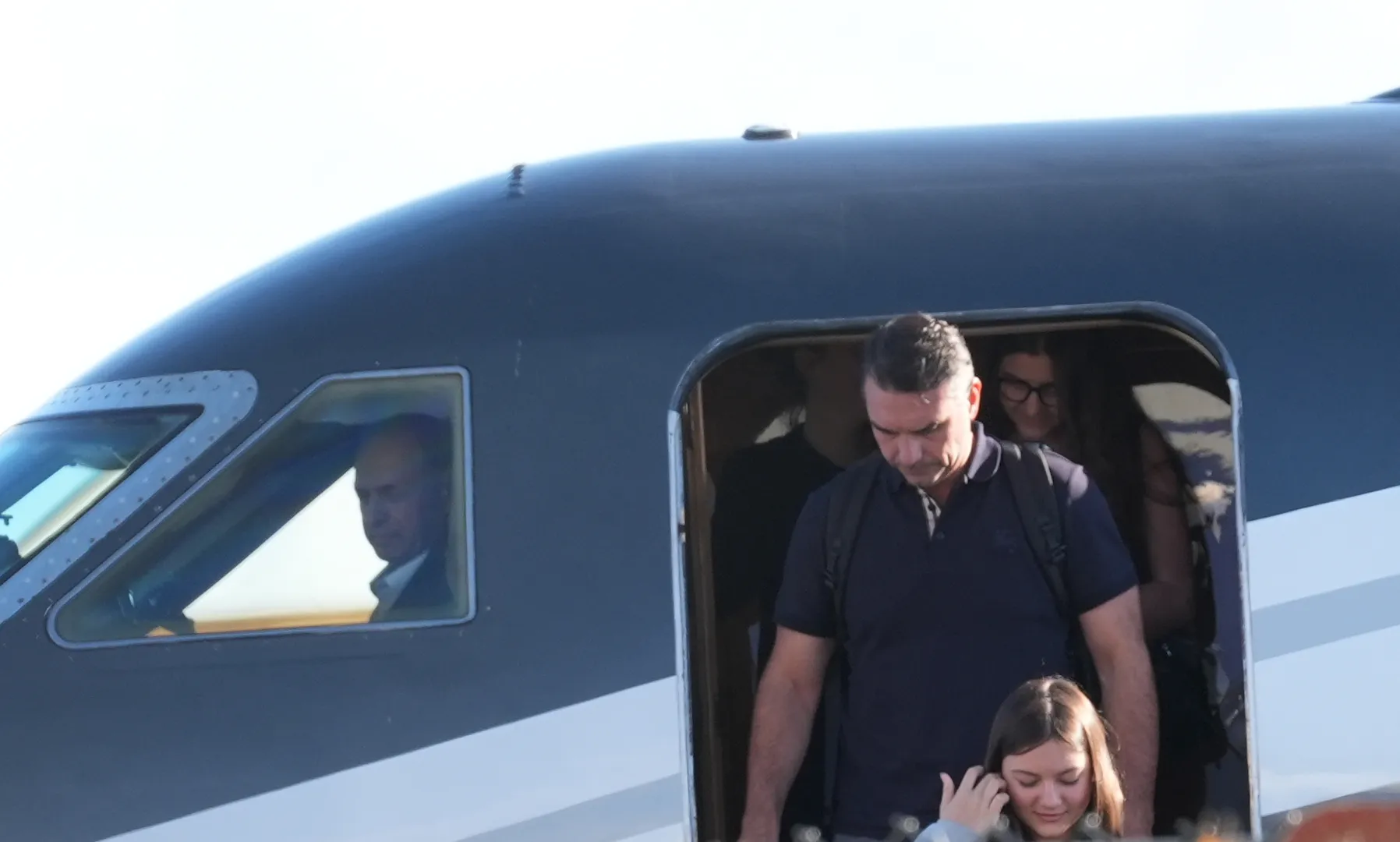
Brazilian senator Flavio Bolsonaro has travelled to Miami with his wife and two daughters, days after losing the presidential run-off election and as a Supreme Court investigation examines allegations of money laundering and currency evasion involving him and an associate.
The family left Brazil by land for Argentina late on Tuesday before boarding a private aircraft bound for Ecuador. The plane later continued to Miami, where they arrived on Wednesday morning at Opa-Locka Executive Airport.
Supreme Court Justice Alexandre de Moraes ordered Flavio Bolsonaro to surrender his ordinary and diplomatic passports late on Sunday, citing concerns that he could flee the country. His associate, Willer Tomaz, is also involved in the investigation and is understood to have left Brazil for Miami two weeks ago.
The United States State Department confirmed on Tuesday that visas would be issued to Bolsonaro and his family.
Flavio Bolsonaro has not accepted defeat in Sunday’s election, in which centre-left incumbent Luiz Inacio Lula da Silva won re-election with 51.8 per cent of the vote, compared with Bolsonaro’s 48.2 per cent. Lula’s margin was more than 4.4 million votes.
At a press conference after the result, Bolsonaro said it would be “impossible” for him to acknowledge the outcome and announced that he would seek to have the election annulled.
His challenge centres on a Supreme Court decision that extended voting by two hours after both candidates requested more time because of transport shortages and poor weather. Official records show that fewer than 35,000 votes were cast during the extension, making it far smaller than Lula’s winning margin.
Bolsonaro family faces questions over future
The senator’s departure prompted anger among some voters in São Paulo. Cristiana Cunha, 36, said he was “acting like a coward who’s unwilling to face the consequences of his actions”, while psychoanalyst Priscila Cardoso described the move as “a joke, it’s like a parasite fleeing through the sewer”.
Cardoso also compared his refusal to concede to that of a “spoiled child who loses a game and takes the ball home with them”.
Political analyst Paulo Roberto de Souza, of the Democracy in Check Institute, said leaving Brazil could intensify a struggle for influence on the political right and weaken the Bolsonaro family’s position.
“By leaving the country, he’s made it easier for the right wing to start a fight over the Bolsonaro’s spoils,” he said, describing the election defeat as humiliating for the family.
Although Flavio Bolsonaro has rejected the result, his Liberal Party has recognised the outcome. Allies have also begun looking beyond the defeated candidate, including São Paulo Governor Tarcisio de Freitas, who won re-election in the first round and released a video setting out his own political project while mentioning Bolsonaro only once.
De Souza said de Freitas was now “the main figure in this reorganisation process on the Brazilian right”, but would need to balance political pragmatism with the support of hardline Bolsonaro followers.
He said it was unlikely that a member of the Bolsonaro family would stand for president in 2030, suggesting they were more likely to endorse candidates than appear on the ticket themselves.
Some voters remain unconvinced that the family will withdraw from national politics. Cunha pointed to the election of Flavio’s brother Carlos and mother-in-law Michelle to Senate seats, saying: “I definitely think there could be a Bolsonaro on the ballot in 2030; I just don’t know which one.”
