


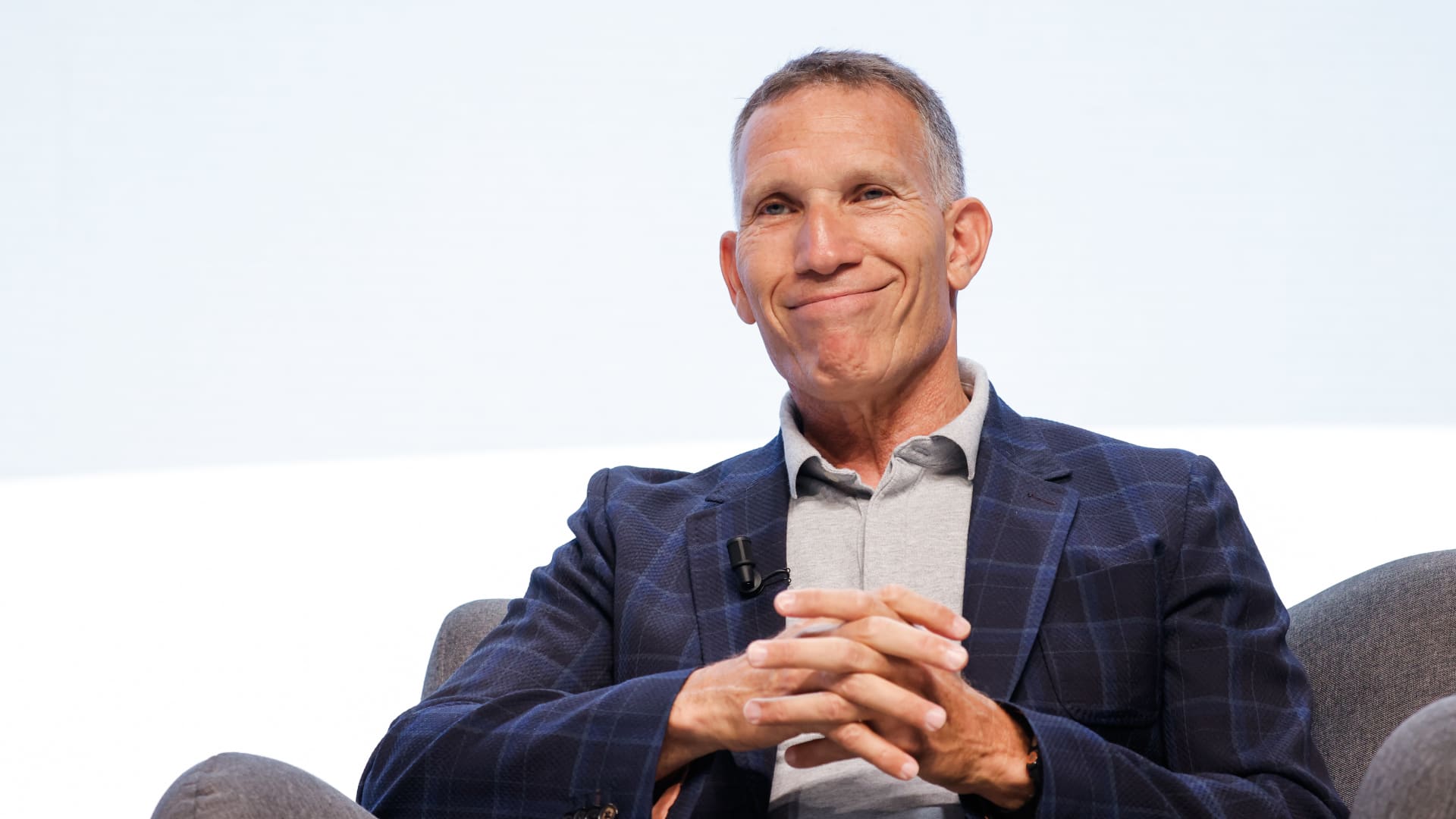
Ynon Kreiz, the outgoing chief executive of Mattel, is to become co-CEO of the combined Paramount Skydance and Warner Bros Discovery business as David Ellison expands his media empire.
The appointment will take effect when the merger closes on Tuesday, with the new company to be known simply as Skydance. Kreiz will join Paramount Skydance on Monday and take responsibility for day-to-day management and the integration of the two businesses.
Ellison, who built Skydance from a film production company into a major media group, will focus on long-term strategy, creative direction, technology and capital allocation.
The merger will bring together the Paramount and Warner Bros film studios, CBS, pay-TV networks including CNN, TNT, MTV and BET, and the Paramount+ and HBO Max streaming services.
Kreiz’s appointment addresses questions over whether Ellison, the son of billionaire technology executive Larry Ellison, can lead a sprawling legacy media company after pursuing the acquisitions of Paramount and Warner Bros Discovery.
Ellison was chief executive of Skydance less than 18 months ago, when the company’s main successes included the Tom Cruise-led Mission: Impossible films and Top Gun: Maverick. He closed an acquisition of Paramount worth about $8 billion in August 2025 before beginning his campaign for Warner Bros Discovery the following month.
The resulting transaction is valued at roughly $110 billion on an enterprise basis and will unite two of Hollywood’s biggest media companies.
Ynon Kreiz’s turnaround record
Kreiz brings about 30 years of experience in media and entertainment. Before joining Mattel, he was chairman and chief executive of Maker Studios, which was sold to Disney in 2014, and led television production company Endemol Group.
Earlier in his career, he co-founded Fox Kids Group Europe, a children’s entertainment business that was also acquired by Disney.
He took charge of Mattel in 2018, becoming the toy company’s fourth chief executive in four years. Its Fisher-Price, Barbie and American Girl brands were struggling to keep pace with changing consumer tastes, while the collapse of Toys R Us had added to pressure on the business.
Mattel had suffered a four-year decline in revenue and had moved from being profitable to making losses, according to Eric Handler, managing director and senior media and entertainment analyst at Roth Capital Partners. He said Kreiz turned the situation around “in like two years”.
Under Kreiz, Mattel cut costs, reduced the number of toys it made, closed manufacturing facilities and cut its workforce by 2,200 employees. The company also restructured its supply chain, concentrated on generating free cash flow and worked to reduce its debt.
Gerrick Johnson, an equity research analyst at Seaport Research Partners, said the company had eliminated products and rationalised its business lines, cutting about $1 billion in costs and making it “more flexible, quicker to market”.
Matthew Condon, an analyst at Citizens Bank, said Kreiz’s experience in restructuring Mattel and developing intellectual property made him well suited to help integrate Paramount Skydance and Warner Bros Discovery.
“We view the appointment of Ynon Kreiz positively, as his operating experience and brand/IP focus uniquely position him to help lead the integration of Paramount Skydance and WBD and build the combined business into a best-in-class content and IP platform,” Condon wrote.
Barbie success and questions over Mattel
One of Kreiz’s first major moves at Mattel was to establish an in-house film division, using cinema releases to help drive toy sales and strengthen the company’s brands.
The strategy led to a partnership with Warner Bros on Barbie, directed by Greta Gerwig and starring Margot Robbie and Ryan Gosling. The film took more than $1.4 billion at the global box office and revived the Barbie brand.
However, most of the film’s revenue went to Warner Bros and its theatrical partners. Mattel reported a $150 million increase in revenue in 2023, the year of the film’s release.
Analysts have questioned whether the focus on entertainment came at the expense of Mattel’s core toy business. Johnson said the company’s revenue, margins and innovation had stagnated after the Covid pandemic, while Barbie revenue had fallen by 22% since the year of the film’s release.
Jaime Katz, a senior analyst at Morningstar, said Kreiz’s strategy of establishing Mattel as an intellectual-property-led toy company had “largely fallen flat”. Mattel’s shares had roughly doubled during his tenure before falling back to about $15 each, she wrote.
Matthew Dolgin, another Morningstar senior equity analyst, said Kreiz had extensive media and entertainment experience but was not necessarily “the best conceivable choice” for the integration. He described the appointment as filling a gap and said Kreiz’s role was likely to be closer to that of a chief operating officer, despite the co-CEO title.
Cost savings and integration challenge
The combined Skydance business is expected to take between two and three years to integrate. Paramount Skydance has promised $6 billion in cost savings within three years of the deal closing, while the enlarged company will carry about $79 billion in debt.
Laura Martin, an analyst at Needham, said savings could eventually exceed the target. Paramount executives have said most of the reductions will come from non-labour costs, although the precise areas affected have not been set out.
Ellison has also said Paramount+ and HBO Max will be combined into a single streaming platform, a move that could reduce the infrastructure supporting the two services.
The enlarged film operation will include the Warner Bros and Paramount studios, as well as the DC studio. It must release at least 30 films a year in 2027 and 2028, rising to at least 32 annually from 2029 to 2031, under an agreement reached to settle a lawsuit brought by state attorneys general seeking to block the merger on antitrust grounds.
It remains unclear how much cost-cutting the studios can absorb while meeting those production commitments. A report from the Department of Economic Opportunity in Los Angeles has suggested that 4,500 film and television jobs in the county could be at risk over three years as the businesses combine.
Handler said Kreiz faced a “huge amount of debt” and a “massive integration situation”, but added: “I think he’ll do a great job with it.”
