


Gloria Steinem, the journalist and activist who helped define modern feminism in the United States, has died aged 92, leaving behind a movement that has transformed women’s lives but remains fiercely contested.
Steinem died peacefully at her home in New York City on Wednesday, September 2, surrounded by people close to her, according to a statement from her foundation. She had continued working for equality until the end of her life and had recently completed a memoir, An Unexpected Life, due to be published later this month.
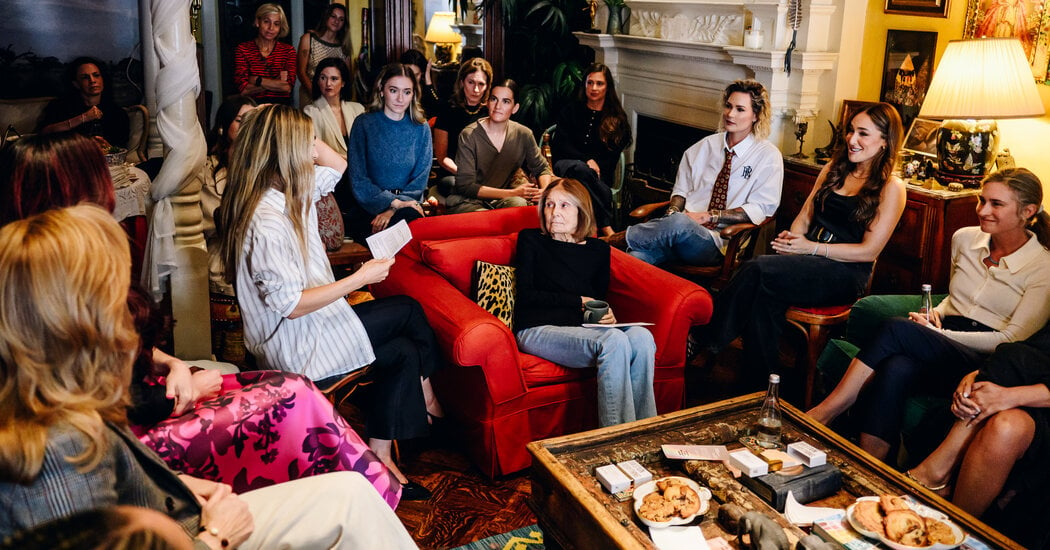
For generations of campaigners, Steinem was both a public symbol of the women’s movement and a private source of encouragement. Her Upper East Side home became a meeting place where women gathered for “talking circles”, sharing personal experiences and discussing political strategy.
Those who visited in recent years often expected to find her dispirited by the fall of Roe v Wade, Donald Trump’s return to political prominence and the resurgence of online movements hostile to women’s rights. Instead, friends said, she remained more interested in measuring progress than dwelling on defeat.
After speaking at universities and conferences, Steinem would return with stories of organising and social change taking place across the country. She believed the advances secured since the 1970s were real, even when they appeared vulnerable to a new wave of backlash.
“She felt that battles were unfinished,” said Letty Cottin Pogrebin, who co-founded Ms. magazine with Steinem and other women. “But she focused me and everybody else on the future.”
Gloria Steinem’s feminist legacy
Steinem’s influence extended from journalism and publishing to electoral politics and reproductive rights. She co-founded Ms. magazine, helped establish the National Women’s Political Caucus and campaigned for the Equal Rights Amendment, becoming one of the most recognisable advocates for women’s equality in America.
Her work challenged a society in which women had fewer legal rights than men, limited access to professional careers and little protection from domestic violence. Her advocacy also helped bring arguments over work, family, sex, abortion and political power into mainstream public debate.
Hillary Clinton described her as “one of the architects of the entire structure of women’s equality”, while tributes from writers, activists and public figures poured in after her death.
Yet Steinem’s passing has also prompted a more difficult question: whether the progress she helped secure is being steadily dismantled. Abortion access has been curtailed in many American states since the US Supreme Court overturned Roe v Wade, while influencers promoting traditional gender roles and the wider online “manosphere” have gained cultural influence.
Debbie Walsh, director of the Center for American Women and Politics at Rutgers University, said the women’s movement no longer had a single organisation or figure capable of speaking for it.
“There are so many folks writing and thinking about these issues that it’s hard to have any one entity hold up that mantle,” she said. “Our world is more diffuse.”
Walsh said some gains were firmly established, noting that women now lead major corporations and outnumber men in US law schools. But she described the progress as “slow and painful”, followed repeatedly by political and cultural resistance.
That pattern has been visible throughout Steinem’s career, from Phyllis Schlafly’s successful opposition to the Equal Rights Amendment to the present-day debate in parts of the manosphere over whether women should retain the vote.
Marcia Ann Gillespie, a former editor of Essence and longtime editor at Ms., said younger generations could find it difficult to imagine the social and economic changes of the past half-century being reversed. But she warned that the threat to abortion rights had not been met with enough urgency during the 2016 presidential campaign.
“The last thing we can ever do is assume that because something is, it will always be,” she said.
Steinem resisted the idea that she should nominate a successor. When asked who would inherit her “torch”, she replied: “I’m keeping my torch. And I’m using it to light other people’s torches.”
“The whole idea that there is only one torch is the problem,” she added.
That instinct to encourage others was central to her leadership. Writer Susan Faludi said Steinem brought together activists and thinkers across lines of race, class, age and sex long before the term “intersectionality” became widely used.
“For so many years she knitted together the big baggy state of feminism,” Faludi said.
Faludi recalled that Steinem contacted her after the publication of Backlash: The Undeclared War Against American Women and later appeared with her on the cover of Time. “She just took me under her wing as she did over and over and over with young women,” Faludi said.
Former Essence editor Gillespie also remembered Steinem’s practical support. After Gillespie left the magazine in 1980, Steinem invited her to write for Ms.. The pair later helped raise money to buy the publication from a male entrepreneur and travelled across America to secure its future.
The magazine has since lost some of its former reach, while other organisations associated with Steinem’s era have weakened as the feminist movement has become more fragmented. Even so, those who knew her said her legacy did not depend on a single institution surviving unchanged.
Shelby Knox, who unexpectedly became Steinem’s housemate in 2007, said Steinem disliked being called her mentor. “No, no, we’re learning from each other,” she would insist.
But Steinem’s advice stayed with Knox: do not be afraid to disagree with older activists, do not become discouraged and remember that the fight for equality was historically young.
“The more successful we are, the more backlash there will be,” Knox recalled her saying.
Steinem’s New York home is expected to remain a gathering place for social justice activists, according to the announcement of her death. In that sense, the work she began will continue not through a single heir, but through the many people she persuaded that they could carry it forward.
