


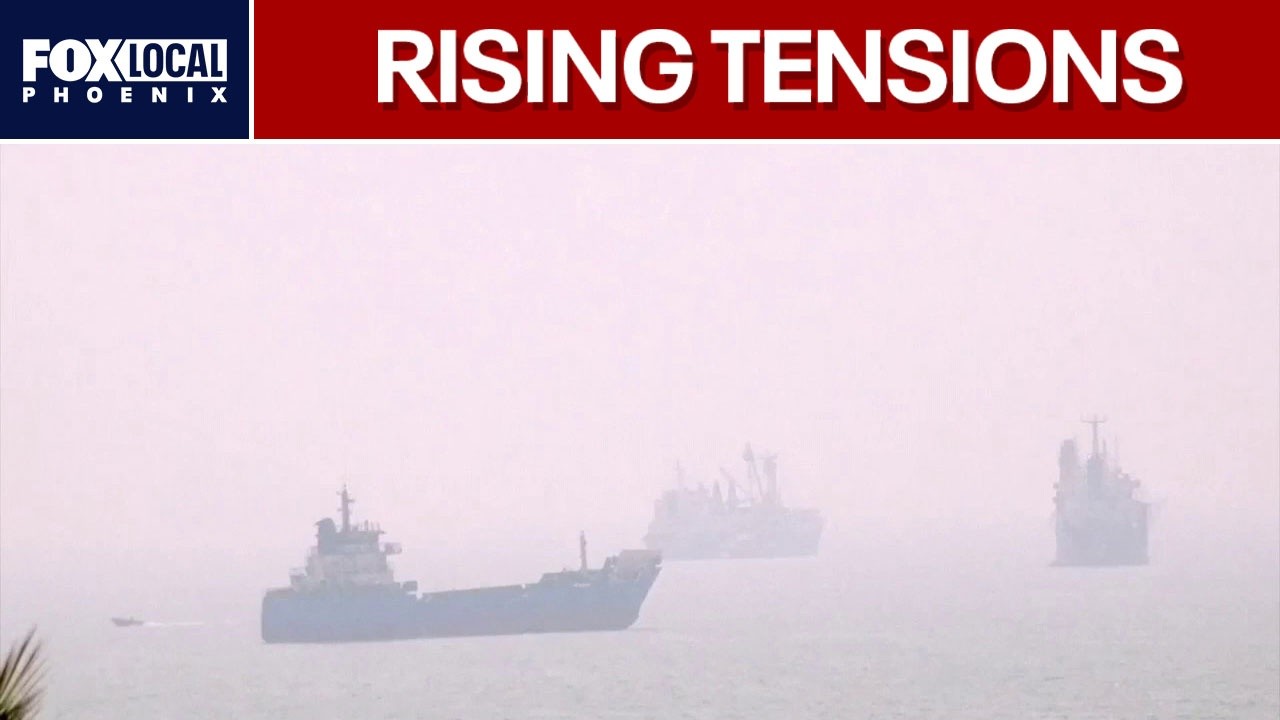
Shipping through the Strait of Hormuz has slowed to a fraction of its normal level as US sanctions and a naval blockade increase pressure on Iran, while talks aimed at ending the war remain stalled.
Only a small number of vessels have been recorded passing through the vital waterway, which links the Persian Gulf with the Gulf of Oman. The stand-off has left commercial operators facing heightened security risks and uncertainty over whether ships can transit safely.
Shipping data reviewed on April 27 showed at least seven vessels, mainly dry bulk carriers, had crossed the strait in the previous 24 hours. The figure was well below the average of about 140 daily passages before the war began on February 28.
The vessels included ships departing from Iraqi ports and one dry bulk carrier leaving Iran, according to tracking information from Kpler and satellite analysis by SynMax.
US Central Command said 37 vessels had been redirected since Washington imposed a blockade on Iranian ports on April 13. Satellite analysis also indicated that six Iranian tankers had returned to Iranian ports before sailing back through the strait carrying about 10.5 million barrels of oil.
The movement of Iranian oil has added to tensions over the enforcement of US sanctions, with roughly four million barrels reported to have passed through the blockade on April 24.
Washington and Tehran have both indicated that they remain open to a diplomatic solution, but neither side appears willing to make the concessions needed to restore normal shipping. The dispute has consequently turned the Strait of Hormuz into a central pressure point in the wider conflict.
The waterway is one of the world’s most important energy routes, and prolonged disruption risks further pressure on fuel markets and supply chains. For now, vessels continue to wait, divert or proceed only under heightened restrictions as the US-Iran stand-off shows no clear sign of easing.
