


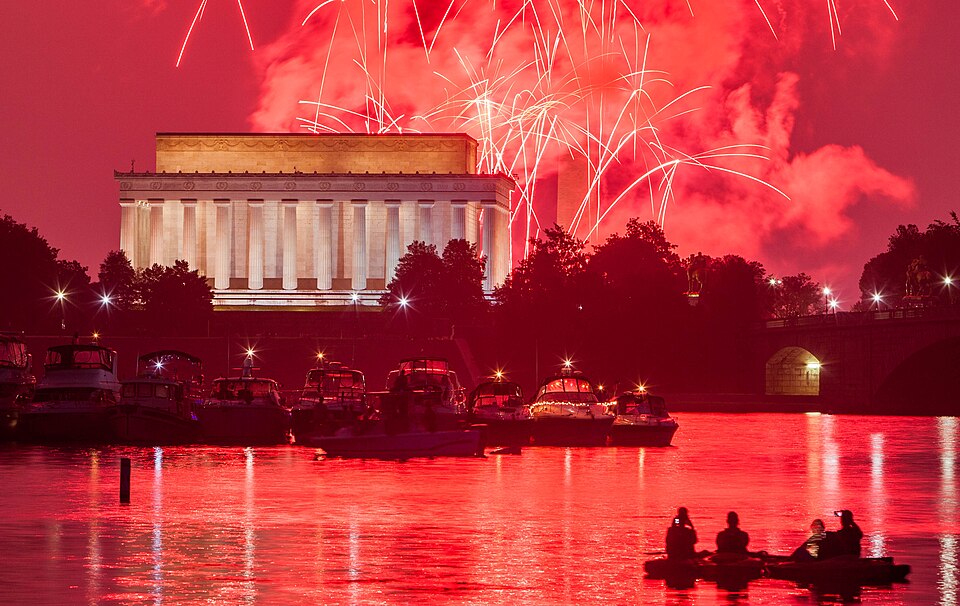
Washington’s Fourth of July celebrations are unfolding this year under an unprecedented federal security operation, compounded by a dangerous heatwave that has already forced organisers to cancel a morning parade and delay other festivities on the National Mall.
As visitors flock to the National Mall for the celebrations, it is essential to stay informed about the security measures in place.
These measures are especially critical for anyone planning to enjoy the festivities at the National Mall.
Understanding the layout of the National Mall will help visitors navigate the crowds and security checkpoints more efficiently.
Visitors should take note that all security measures are concentrated around the National Mall area.
The National Mall is expected to be bustling with activity, requiring heightened awareness from all participants.
Stay hydrated and use the resources available on the National Mall to ensure a safe experience.
With so much excitement planned at the National Mall, attendees should prepare for an unforgettable experience.
For the first time, this year’s fireworks display and surrounding events have been designated a National Special Security Event, a rare classification reserved for occasions of major national significance such as presidential inaugurations. The designation places the US Secret Service in overall command of coordinating security across federal, state and local agencies for a day that will culminate in a speech by President Trump and a record-attempt fireworks show marking America’s 250th anniversary.
Visiting the National Mall During July 4th Celebrations
The physical security footprint is extensive. According to CBS News, measures include 19 miles of anti-scale fencing, 3.5 miles of road closures and a further 3 miles of closures on the Potomac River. The National Nuclear Security Administration is screening for hazardous materials at checkpoints, and all attendees must pass through magnetometers. A strict clear-bag policy is in force, permitting a single clear bag no larger than 12 by 6 by 12 inches, according to WTOP; backpacks, coolers, folding chairs, drones, firearms and aerosols are all barred, though blankets, strollers and handheld fans are allowed.
The scale of the operation reflects a heightened threat environment in the capital this year. Speaking at a briefing ahead of the event, Darren B. Cox, assistant director in charge of the FBI’s Washington Field Office, said authorities were “not tracking any credible threats related to the July 4th event,” while stressing that “D.C. on a normal day is a target-rich environment” and that agencies were “prepared for any threats,” according to the PBS NewsHour. His caution follows a string of recent incidents in the capital: a man, Cole Tomas Allen, has been charged with attempting to assassinate the president after sprinting past security at the White House Correspondents’ Association dinner in April, a charge to which he has pleaded not guilty; two further incidents saw gunfire directed at Secret Service officers in the weeks that followed; and the FBI has said it disrupted a separate plot targeting a Trump-attended event at the White House. Matt Dallek, a political scientist at George Washington University who studies extremism, told PBS that Trump represents an unusual security challenge, acting as “both an accelerant and a target of political violence,” and drew a parallel to the 1976 bicentennial, when two assassination attempts were made on then-president Gerald Ford in the ten months before that year’s celebrations. Officials say more than 5,000 National Guard troops have been deployed alongside thousands of law enforcement personnel for this year’s event.
Layered on top of the security operation is an escalating public health concern. Washington remains under an Extreme Heat Warning from the National Weather Service, with a heat index expected to reach as high as 113 degrees on Saturday. The city’s Independence Day parade was cancelled late on Friday because of the heat, and the opening of the accompanying Great American State Fair on the National Mall was both delayed and, at one stage, temporarily closed altogether as temperatures climbed. In response, organisers pushed back public entry to the Mall grounds from an originally planned 1pm to 5pm, and advised attendees not to begin queuing before 4pm. The Secret Service said in a statement that it had worked with US Park Police, the National Park Service and FEMA to “adjust event timing and expand cooling resources, water stations, and medical support across the grounds,” adding: “The safety and well-being of every guest remains our top priority as we celebrate this historic 250th Independence Day… We are proud to welcome the public to a safe, well-prepared, and truly memorable celebration of America’s 250th birthday.” Organisers also loosened their usual rules to let attendees bring an empty, reusable, non-metal water bottle to refill at hydration points, alongside free water distribution and misting stations across the site.
The day’s events are being staged by Freedom 250, the Trump-administration-backed public-private partnership behind the Mall’s “Salute to America” programme, distinct from the separate, congressionally funded America 250 organisation. Under the current schedule, military flyovers are due to begin at 1.15pm and continue hourly until sunset, before Trump delivers remarks at 9.45pm ahead of a fireworks display at 10.30pm. According to WTOP and CNN, the display is intended to set a new Guinness World Record for the largest fireworks show ever staged, with roughly 850,000 shells launched from ten sites spanning the Lincoln Memorial Reflecting Pool, barges on the Potomac River and West Potomac Park — surpassing the current record of 810,904 shells set at a New Year celebration in the Philippines in 2016. To help manage crowds, Metro fares across Washington’s rail system will be free from 5pm on the Fourth until 2am the following morning, alongside a $15 credit for Lyft rides across the DC region during the same window.
