


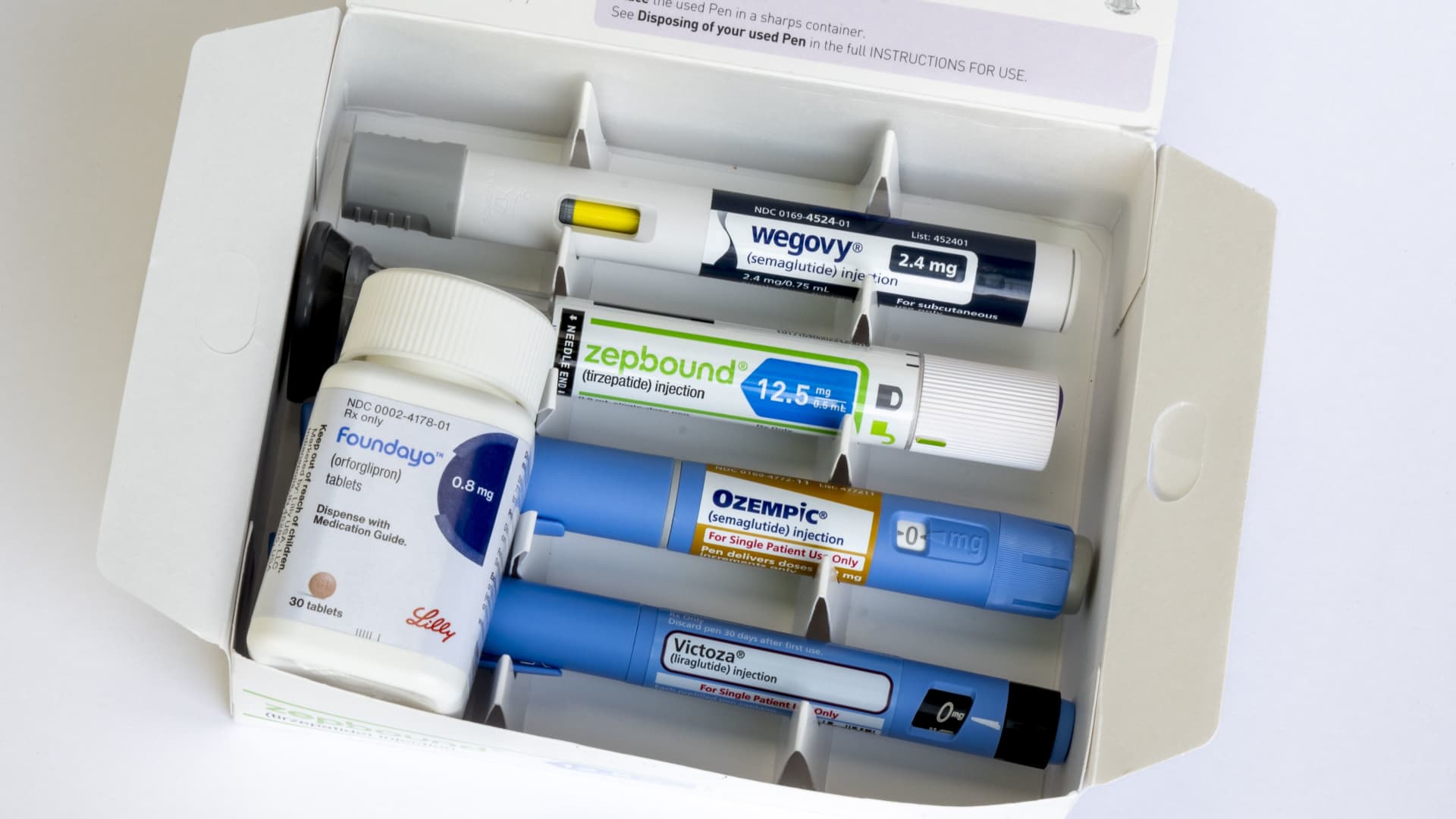
Amylin-based obesity drugs are emerging as a potential next step in treatment, with Eli Lilly and Novo Nordisk developing medicines designed either to complement GLP-1 therapies or offer an alternative to patients who do not respond adequately to them.
Lilly’s experimental drug eloralintide produced significantly greater weight loss when combined with tirzepatide, the active ingredient in its Zepbound and Mounjaro injections, according to Phase 2 trial results involving people with obesity and Type 2 diabetes.
After 48 weeks, patients given the highest-dose combination lost an average of 23.3% of their body weight. Those receiving a high dose of tirzepatide alone lost 14.8%, based on an analysis assuming patients remained on treatment.
“These are encouraging results,” said Benjamin Bikman, a professor at Brigham Young University who specialises in metabolic health and insulin resistance. He noted that adults with Type 2 diabetes typically lose less weight from these treatments than people without the condition.
Eloralintide is being developed both as a standalone medicine and as part of a combination treatment with tirzepatide. David Risinger, an analyst at Leerink Partners, forecasts that Lilly’s eloralintide products could generate $23.2 billion in annual sales by the end of 2035.
He expects the standalone treatment to launch in 2029, followed by the combination therapy in 2030. Risinger said the drug could provide an alternative for more than 10 million people who have tried GLP-1 medicines but stopped because of limited effectiveness, tolerability problems or a lack of response.
“We think this novel mechanism, this amylin analog … will offer a major new treatment alternative for patients, both as a monotherapy and as a combination therapy,” he said.
Ken Custer, president of Lilly Cardiometabolic Health, said some patients might not achieve the results they need from tirzepatide alone, while others might not benefit sufficiently from eloralintide on its own.
Bikman said combining the two medicines could also help people whose weight loss had levelled off after starting tirzepatide.
However, Lilly’s findings came from a relatively small Phase 2 study and will need to be confirmed in Phase 3 trials, which are due to begin later this year. Tolerability will be a key test, with between 10.8% and 27% of patients taking the combination stopping treatment because of side effects, depending on the dose, compared with 2.9% of those taking tirzepatide alone.
“A therapy is only effective if patients can remain on it, so tolerability in Phase 3 will be as important as efficacy,” Bikman said.
Caroline Apovian, co-director of the Center for Weight Management and Wellness at Brigham and Women’s Hospital, said: “27% is not a good number.”
Amylin drugs target a different pathway
Amylin is a hormone released by the pancreas alongside insulin. It helps regulate hunger and fullness by signalling that a person is satiated, suppressing appetite and slowing the movement of food through the stomach.
Although those effects are similar to those associated with GLP-1 medicines, amylin acts through a different biological pathway. Newer treatments are designed to imitate the hormone over a longer period and can be administered once a week, rather than requiring multiple daily injections.
“It’s the same outcome, but a different approach,” Bikman said.
Novo Nordisk has also been pursuing amylin treatments. Its experimental drug cagrilintide has shown meaningful weight loss as a standalone treatment in a late-stage trial, while combining it with semaglutide produces greater weight loss in clinical studies.
The combination, known as CagriSema, is expected to launch early next year, with standalone cagrilintide and a higher-dose version of CagriSema planned for 2028.
Novo is also testing amycretin, or zenagamtide, a single molecule that targets both GLP-1 and amylin. It is being developed as a once-weekly injection and a daily tablet, and showed promising Phase 2 results earlier this year.
New research presented by Novo suggested that CagriSema could affect more than weight. In a year-long functional MRI study, the treatment was associated with reduced “food noise” – persistent thoughts about food – as well as changes in responses to tempting, high-calorie foods in areas of the brain linked to cravings, pleasure and self-control.
Novo’s chief scientific officer, Martin Holst Lange, said the findings showed a change in brain activity “in a way that actually is associated with improved quality of life”.
The development of medicines targeting several hormone pathways is expanding beyond amylin. Lilly’s retatrutide combines GLP-1 with GIP and glucagon, while tirzepatide already targets GLP-1 and GIP.
It remains unclear whether combination amylin medicines will prove superior to tirzepatide or other treatments in development. Further clinical trials and regulatory reviews will be needed, but the competing programmes reflect the push to give patients a wider range of obesity and diabetes treatments.
