



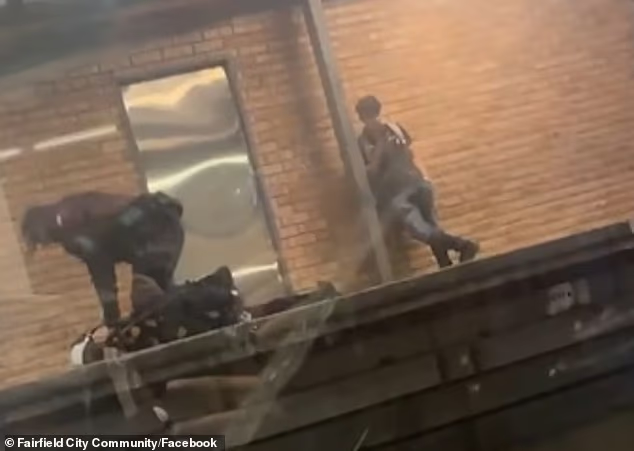
Footage of an officer striking a man pinned to a platform at Cabramatta station has divided opinion, with police saying the six-second clip shows only part of an incident that began with reports of a knife – and a Greens MP calling it “violence with impunity”.
This incident has raised significant questions about police conduct and the appropriate use of force in situations involving mental health crises and public safety. Understanding the context of such interactions is crucial in addressing public concerns regarding policing methods.
The public’s perception of law enforcement is often shaped by media portrayals of police actions. This incident, caught on camera, serves as a reminder of the scrutiny officers face in high-pressure situations. It’s essential to consider the psychological effects on both the officers and those involved in such encounters.
Furthermore, incidents like this compel communities to engage in dialogue about police training and the effectiveness of de-escalation techniques. Comprehensive training on recognizing and responding to mental health issues could potentially alter the course of such confrontations.
Research into police use of force has shown that incidents often escalate when officers are not equipped with the proper tools or strategies to handle volatile situations. These findings advocate for reform in training programs to incorporate conflict resolution and communication skills, which may lead to reduced instances of violence.
Furthermore, the public’s trust in law enforcement hinges on transparency and accountability. Community outreach initiatives can help bridge the gap between police and citizens, fostering a sense of cooperation and understanding that benefits all parties involved.
The reactions to this event are reflective of broader societal concerns about law enforcement practices, particularly those that involve minorities and marginalized groups. Engaging with community leaders to address these issues can lead to more effective policing strategies that prioritize safety and respect for all individuals.
Moreover, the legal implications of such incidents raise questions about the judicial process and the rights of the accused. The balance between public safety and individual rights is a delicate one that requires ongoing dialogue among lawmakers, law enforcement, and the community.
Additionally, the role of media in shaping public perception cannot be understated. Balanced reporting on such incidents is essential in promoting informed discussions rather than polarized opinions. Engaging experts in criminal justice and sociology can provide valuable insights that contribute to a more nuanced understanding of these complex situations.
In conclusion, the incident at Cabramatta station highlights the urgent need for reform in policing practices and community relations. All stakeholders, including the police force, government officials, and citizens, must work together to ensure that such events lead to constructive change rather than further tension.
New South Wales Police have defended one of their officers after footage emerged showing him apparently punching a man repeatedly while pinning him to the ground at a Sydney train station.
The six-second video, filmed by onlookers at Cabramatta station in the city’s south-west on Monday night, shows the officer kneeling on the man’s back as he lies face down on the platform, delivering what appear to be multiple blows to his upper body.
A NSW Police spokeswoman told the Daily Mail the force was aware of the clip, but said it captured only “an isolated moment” of the wider incident, and that the technique used was an “approved manoeuvre”. Body-worn camera footage from the arresting officers has been reviewed by their commander, she added.
According to police, the sequence of events began at nearby Canley Vale, where officers were called over reports that a man armed with a knife was behaving aggressively towards female commuters. It is alleged the man assaulted a male commuter who attempted to intervene, before boarding a train to Cabramatta, where he is accused of threatening other passengers.
When police confronted him there, he allegedly tried to run, and was arrested after a brief foot chase. The spokeswoman said officers repeatedly directed him to show his hands during the arrest, given the earlier public reports that he was carrying a knife, and that the “approved manoeuvre” was employed when he allegedly failed to comply.
Police further allege that the 21-year-old spat at one officer and assaulted several others after being taken to hospital. He has been charged with 10 offences in total, including assault occasioning actual bodily harm, assaulting a frontline emergency worker, hindering or resisting police, wilfully interfering with the comfort or safety of others, and four counts of assaulting a police officer in the execution of duty. He appeared in court on Tuesday and was refused bail.
The footage has prompted sharply divided reactions, with some viewers arguing the officer went too far. NSW Greens MP Sue Higginson was among the critics, writing that “this is not policing, this is violence with impunity”, and arguing that the man was already face down, restrained and unarmed when the blows were delivered. “It’s got to stop,” she said.
Police Minister Yasmin Catley confirmed that body-worn camera footage was under review, and said the full circumstances of the incident should be established before any further comment was made.
